























How Technology Makes a Hospital Visit Easier
Hospital visits are often a challenge for patients and loved ones. Many hospitals embrace technology to make care as smooth as possible for patients and providers alike. Here are a few ways technology helps ease a hospital stay.
Personal Information Security
To keep your personal information secure, many protection methods are in place when it comes to releasing medical records. Hospitals must use best practices for release of information. Often, a patient’s records come from multiple sources, such as primary care providers or specialty clinics. Many hospitals use companies that provide release of information services to manage and protect your medical records.
Wayfinding
Whether you are a patient or a visitor, navigating a hospital can be challenging. Even if it’s a facility you’re familiar with, you may need to visit departments you haven’t been to before. Feeling lost or unsure can add to the stress of a visit. Some hospitals have adopted wayfinding apps to help visitors navigate their way to the hospital, through the parking areas and throughout the facility. Visitors can download the app on their phones and use it to find their way to the department or area they need. Some wayfinding technology is available on kiosks throughout the hospital. Visitors or patients can download or print a map to their destination, saving the time and stress of going the wrong direction.
Robotics
Robotic technology has been used in hospitals for years. Robots can assist in surgery with precise movements that reduce error and make procedures less invasive. They can also deliver radiation to exact locations and angles on a patient, increasing accuracy.
During the COVID-19 pandemic, hospitals are finding new ways to use robots. Robots can provide patient care by delivering food and linens and perform basic tasks for those in isolation. They can also provide video and audio technology, allowing the patient to talk to a healthcare professional without a clinician having to enter the room. In this capacity, robotic technology can help reduce the amount of personal protective equipment needed to treat a patient. Some robots can even use ultraviolet light to kill pathogens, making it safe for humans to enter without increasing the spread of viruses or bacteria.
3D Printing
New uses for 3D printing evolve every day. Hospitals have harnessed its potential by using it to make supplies as varied as masks, face shields, nasal swabs, oxygen tubes and parts for ventilators. The potential for 3D printing in hospitals is as boundless as the imagination of innovators and will likely see growth in the future.
Wearable Devices
Once a patient no longer requires hospitalization but needs ongoing care, providers can use remote technology to collect patient data through wearable devices. The patient’s vitals and symptoms are transmitted through the device and uploaded to a dashboard at the medical facility, where clinicians can monitor and interpret the data. Biometric data can also be tracked using mobile apps, tablets or voice platforms. Implementing the use of wearable devices allows patients to go home sooner and eliminates follow up visits that may be burdensome.
Telehealth
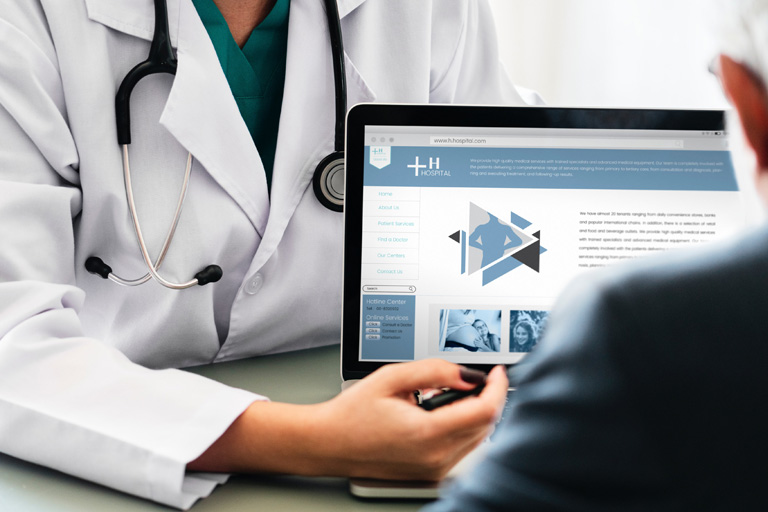
As the COVID-19 pandemic took hold, telehealth became a vital tool used by health care facilities across the world. Telehealth allows doctors and patients to connect without the need for an in-person visit. While some procedures will necessarily have to take place in the hospital, telehealth has its place in patient care. Visits that may only require dialogue between patient and provider can take place without the patient traveling to the medical facility. A virtual visit can be especially helpful for patients who must travel a long way to a hospital, or for whom travel may be difficult for physical reasons such as wheelchair use. While telehealth found its place during the pandemic, its continued use will likely be seen for years to come.
Health care changes rapidly, and technology is keeping up to make your next hospital stay as comfortable as possible and get you home sooner.


