





























InterSystems at HIMSS20 will highlight its new offering, HealthShare Managed Connections. The interoperability technology is designed to dramatically reduce the time and cost of connecting healthcare organizations. Today, most cross-organization connections are one-to-one, even though they include numerous interfaces to the same electronic health records and multiple connections to the same organizations.
Connecting to an interoperability hub
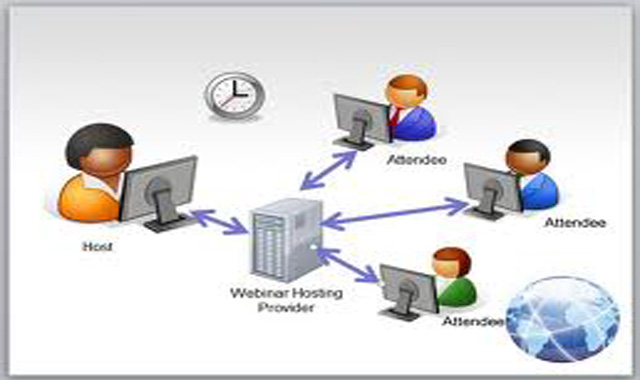
“With HealthShare Managed Connections, we take a different approach: Each participating organization connects to a Managed Connections hub operated by InterSystems,” said Don Woodlock, vice president of HealthShare at InterSystems. “Through the hub, any number of participants can exchange information in a safe, controlled, reliable and efficient manner with built-in patient consent.”
In addition to the extensive network of InterSystems clients, the hub also offers access to national networks such as Commonwell and Carequality, taking the burden of those implementations off the provider organizations, he added.
“With HealthShare Managed Connections we aim to transform the world of healthcare interoperability with faster onboarding, easier maintenance, higher availability and lower costs,” he contended.”Having the data aggregated, normalized, deduplicated and cleaned can open up significant opportunities for population health, research, analytics and artificial intelligence.”
There are other networks on the market today, with the national networks being forerunners. InterSystems does not compete with these national networks, but rather leverages them.
“But typically, those networks do not add connections on request,” Woodlock explained. “InterSystems brings the concept of national networks to the table, plus the network of customers we have already signed up – on top of that we then add the connections the customer would like. So if a health system has a need to connect to dozens of affiliates not available yet on other networks, we will build those.”
HealthShare Managed Connections provides vendor-agnostic connectivity to national networks such as Commonwell, for example – a single connection for clients to the network regardless of the multitude of EHRs they might have, he added.
Interoperability in healthcare today
The traditional model of interoperability was having an integration engine – if an organization had hundreds of connections to build, it could be most productive, scalable and reliable building them through an integration engine.
“But even better than quickly building connections is having connections already built as part of your EHR or your HealthShare purchase,” Woodlock said. “This advance, led by many EHR vendors, has remarkably increased the volume of data sharing in our market.”
Further, one of the larger trends is moving away from just message-based interoperability where one copies a transaction from one place to another, he asserted.
“Wouldn’t it be better if systems could ask each other for information in real time and not necessarily have to copy it all around?” he asked. “This advancement toward interactive representational state transfer REST-based interoperability with FHIR, we think, will significantly accelerate the volume of data being properly shared as well. Data can be used as needed and on-demand instead of creating repository after repository of the same information.”
And on another front, as healthcare looks toward analytics, machine learning and bringing together disparate data – clinical, payer, social determinants of health, genomics, etc. – the industry values the unification and cleaning of data into what InterSystems calls “healthy data.”
“A caregiver or a patient can look at a record in unclean form and have it be moderately useful,” Woodlock said. “But having the data aggregated, normalized, deduplicated and cleaned can open up significant opportunities for population health, research, analytics and artificial intelligence, never mind an easier-to-digest picture of a single unified patient record. This concept moves us from traditional point A to point B interoperability to interoperability as a platform.”
Tackling interoperability challenges
To tackle the challenges that come along with all these interoperability trends, HealthShare Managed Connections, Woodlock said, builds on the company’s core of technology and a wide network of partner organizations.
“By connecting our customers to each other as well as to these vast national networks we are trying to speed up interoperability in a reusable and economic fashion that benefits everyone,” he explained. “We are very aware that healthcare organizations are not static so the requirements for these connections keep changing, which is why we focus on connections on-demand in addition to what can be provided out of the box.”
Combining this pure interoperability-focused approach with the new HealthShare Managed Solutions offering to hold onto the data then provides a way to unify it into a patient-centric view independent of the variety of clinical applications an organization may have, he concluded.


