
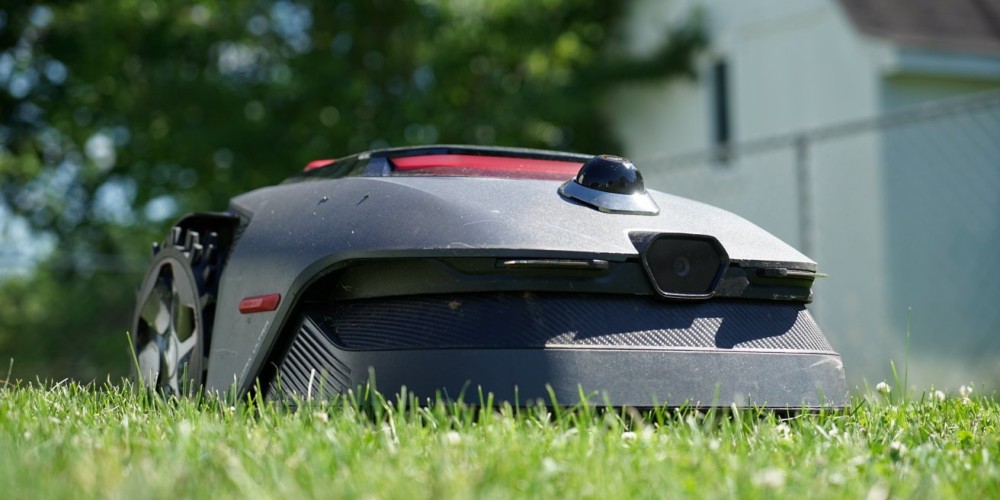
Maintaining a vibrant, green lawn in Canada is a unique challenge. Canadian homeowners face a relatively short, intense growing season, drastic seasonal temperature swings, and cool-season turfgrasses like Kentucky Bluegrass, Fine Fescue, and Perennial Ryegrass. These grasses thrive in moderate temperatures but stress easily under summer heat, drought, or improper mowing habits.
Traditionally, Canadian yard maintenance meant hauling out a heavy gas mower once a week, taking off top growth, and bagging the clippings. However, traditional mowing methods often shock the grass, strip essential nutrients, and leave lawns susceptible to weeds and thatch buildup. Transitioning to automated turf management using a robotic lawn mower changes the math completely, transforming weekly yard chores into a continuous strategy for healthier soil and thicker grass.
The Science of Lawn Care: Why High-Frequency Mowing Wins
To understand why autonomous mowers produce healthier turf, it helps to review basic plant physiology. Cool-season grasses store energy in their crowns and roots. Cutting too much grass blade at once forces the plant to divert resources away from root development to rebuild lost tissue.
1. The One-Third Rule and Stress Reduction
A foundational principle in agronomy is the “one-third rule”: never remove more than one-third of the grass blade in a single cut.
When you mow once every 7 to 10 days, grass grows significantly between sessions. Scalping the lawn removes vital photosynthetic surface area, causing root growth to stall. In contrast, autonomous mowers cut tiny fractions of an inch every day or two. By maintaining a consistent height, the turf experiences minimal shock, allowing roots to grow deep into Canadian soil—a critical defense mechanism against summer heat waves and winter frost heave.
2. Natural Micro-Mulching as Organic Fertilizer
Traditional mowing often requires bagging clippings to prevent unsightly clumps. Bagging, however, removes valuable nutrients that the soil needs to sustain growth.
Automated mowers utilize continuous micro-mulching. Because the mower clips tiny blade tips daily, these tiny clippings drop straight down to the soil line. They decompose within days, acting as a natural organic fertilizer. Research shows that consistent micro-mulching returns up to 25 percent of a lawn’s required nitrogen back into the root zone, keeping the soil moist and reducing the need for synthetic chemical fertilizers.
3. Increasing Turf Density to Block Weeds
Broadleaf weeds like dandelions and plantain thrive when lawn canopy is thin and sunny soil patches are exposed. Daily light trimming encourages grass plants to grow laterally rather than competing vertically. This side-to-side tiller growth forms a dense, carpet-like turf matrix. A dense grass canopy blocks sunlight from reaching buried weed seeds, offering natural weed control without requiring heavy herbicide application.
Navigating Canadian Terrain: Slopes, Wet Turf, and Variable Property Sizes
Canadian landscapes vary widely, from tight suburban yards in Toronto to sprawling, sloped acreages in British Columbia or Alberta. Selecting an automated solution tailored to specific yard profiles ensures consistent maintenance across all zones.
| MODEL | MAX COVERAGE | MAX SLOPE | BEST CANADIAN YARD TYPE |
| LiDAX Pro 800 | Up to 0.2 Acres | Standard Slopes | Small Suburban Backyards |
| LiDAX Ultra 1000 | Up to 0.25 Acres | 45% (24 Degrees) | Mid-Sized Urban Lawns |
| LiDAX Ultra 2000 | Up to 0.5 Acres | 45% (24 Degrees) | Open Medium Properties |
| LiDAX Ultra 2000 AWD | Up to 0.5 Acres | 80% (38 Degrees) | Steep Slopes & Rough Turf |
| LiDAX Ultra 3000 AWD | Up to 0.75 Acres | 80% (38 Degrees) | Large Estates & Slopes |
Handling Steep Slopes and Uneven Ground
Spring melt and heavy autumn rains often leave Canadian yards prone to soft ground and slick inclines. Standard two-wheel-drive equipment can slip, damaging turf crowns.
For properties featuring steep embankments, terraced landscaping, or undulating ground, all-wheel-drive traction becomes essential. Advanced models like the MOVA LiDAX Ultra 2000 AWD and the MOVA LiDAX Ultra 3000 AWD tackle inclines up to 80 percent (38 degrees). Multi-wheel drive systems distribute power evenly to prevent wheel spinning and maintain continuous, uniform cutting across sloped terrain.
Wire-Free Navigation and Perimeter Precision
Traditional robotic mowers required users to manually bury perimeter boundary wires around property edges—a tedious setup process vulnerable to damage from winter frost heave and garden aerators. Modern autonomous mowers use advanced 3D LiDAR and visual sensing systems to map properties wire-free.
For standard residential properties, models like the MOVA LiDAX Ultra 1000 and MOVA LiDAX Ultra 2000 use 3D LiDAR mapping to navigate multi-zone yards without perimeter cabling. Compact properties benefit from agile models like the MOVA LiDAX Pro 800, which navigate tight passages and garden pathways easily. Modern edge-cutting technology allows blades to operate close to hardscaping boundaries, fence lines, and raised flowerbeds, reducing manual string-trimming work.
Seasonal Canadian Lawn Care Best Practices
Integrating an autonomous mower into your home maintenance routine works best when combined with key seasonal care habits:
- Spring Awakening: As snow melts and soil temperatures reach roughly 10°C (50°F), remove winter debris, aerate compacted soil, and set mower height higher for the initial cuts of the season.
- Summer Maintenance: Raise the cutting deck to around 3 inches during peak summer heat. Taller grass shades the soil, conserves moisture, and protects root structures from high temperatures.
- Autumn Preparation: As growth slows in late September or October, lower the cutting height slightly to prevent tall grass from matting under heavy winter snow cover, which reduces the risk of snow mold in early spring.
- Winter Storage: Clean the underside of your mower deck to remove accumulated organic debris, charge the battery to manufacturer specifications, and store the equipment in a dry, freeze-protected garage or shed.
Switching from traditional weekly mowing to continuous automated cutting protects turf health, conserves water, and supports a resilient, lush lawn suited for the Canadian climate.