



























As consumerism has become a powerful force in the healthcare industry, the patient experience has become more important than ever. Patients want to be treated right and treated well or they will do their research and switch caregivers and provider organizations.
To help healthcare organizations in the patient experience realm, Allison Esenkova, vice president at technology and management consulting firm Pariveda Solutions, who has 20 years’ experience working with healthcare organizations, recently offered her perspective on three patient experience trends and what healthcare CIOs and other health IT leaders can do to capitalize on them.
Eyes on me
“Relationship quality is a major predictor of patient loyalty,” she said. “There is an increasing wave of competition with nontraditional players, such as workplace health centers and retail-based clinics, and retention through direct experience with the provider is becoming more important. This relationship-focused experience is what motivates and retains doctors and other clinicians, as well – it is the fulcrum of the ecosystem.”
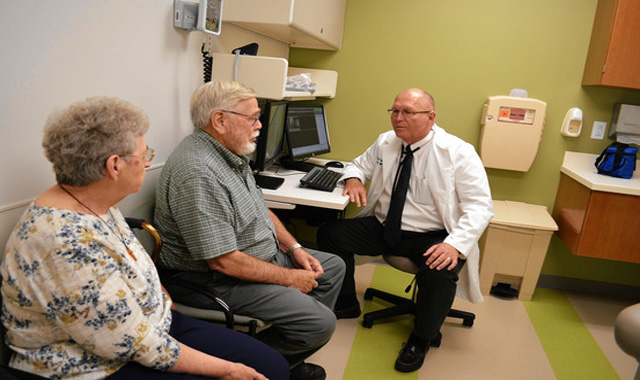
IT leaders need to prioritize automation of clinical documentation and other administrative processes, she contended. There are some very basic process- and technology-based improvements available, and also emerging technologies such as natural language processing that get the doctor’s eyes back on the patient for relationship building, she said.
Digital front door
The second emerging patient experience trend is the “digital front door,” said Eskenova. “Health systems are moving toward more comprehensive approaches to access and patient engagement,” she explained. “IT leaders will need to enable their organizations to engage with patients via omnichannel – seamless experiences across devices and channels – and ensure higher-touch communication from scheduling to post-visit.
“The designers need to be able to take the perspective of the various patient personas,” she continued, “and create minimal friction processes across the patient journey leveraging technologies that are in patients’ hands today.”
Patient enablement
And the third patient experience trend is what Esenkova calls patient enablement. “Patient experience positively correlates to both prevention and disease management, and the quality of patient experience increases when patients feel empowered to manage their care,” she said. “It is tempting for IT leaders to huddle smart and creative people from within the organization to innovate by piloting AI, wearables, etc. This is a dead-end approach. It is important to engage patients early in the process and hear their voices.”
Also, through behavioral economics healthcare knows that there are chasms between what patients will express interest in and what they will actually do, she said. Ensure that transformational efforts are driven through robust methodologies that are informed directly by patients and that include upfront testing for customer acceptance, she advised.


