




























Events Calendar

Mon
Tue
Wed
Thu
Fri
Sat
Sun
M
T
W
T
F
S
S
30
2
3
4
5
6
7
9
12
13
14
15
17
19
22
25
27
12:00 AM - HLTH 2019
28
29
30
31
1
2
3
01 Oct
2019-10-01 - 2019-10-02    
All Day
The UK’s leading health technology and smart health event, bringing together a specialist audience of over 4,000 health and care professionals covering IT and clinical [...]
08 Oct
2019-10-08 - 2019-10-09    
12:00 am
Looking to maximize the efficiency of your current Revenue Cycle solution? Join us as we present strategies for analyzing your MEDITECH Revenue Cycle, and learn from other [...]
2019 Southwest Dental Conference
2019-10-10 - 2019-10-11    
All Day
ABOUT 2019 SOUTHWEST DENTAL CONFERENCE For 91 years, the Southwest Dental Conference has been the meeting of choice for quality professional development and innovative educational [...]
Annual Conference & Exhibition Lyotalk USA 2019
2019-10-10 - 2019-10-11    
All Day
ABOUT ANNUAL CONFERENCE & EXHIBITION LYOTALK USA 2019 Lyotalk is USA’s largest annual conference on Lyophilization/Freeze Drying. Lyotalk attracts gathering from of 150+ experts from [...]
Lab Indonesia 2019
2019-10-10 - 2019-10-12    
All Day
ABOUT LAB INDONESIA 2019 LabAsia is Southeast Asia’s leading laboratory exhibition, serving as the region’s trade platform for laboratory equipment & services suppliers to engage [...]
30th International Conference on Clinical and Experimental Ophthalmology
2019-10-11 - 2019-10-12    
All Day
ABOUT 30TH INTERNATIONAL CONFERENCE ON CLINICAL AND EXPERIMENTAL OPHTHALMOLOGY The 30th International Conference on Clinical and Experimental Ophthalmology is going to be held during October [...]
7th International Conference on Cosmetology & Beauty 2019
Cosmetology and Beauty 2019 passionately welcomes each one of you to attend a global conference in the field of cosmetology which is held on October [...]
16 Oct
2019-10-16 - 2019-10-17    
All Day
ABOUT 17TH INTERNATIONAL CONFERENCE ON CANCER RESEARCH AND THERAPY Cancer Research Conference 2019 coordinates addressing the principal themes and in addition inevitable methodologies of oncology. [...]
Global Cardio Diabetes Conclave 2019
2019-10-18 - 2019-10-20    
All Day
ABOUT GLOBAL CARDIO DIABETES CONCLAVE 2019 A strong correlation between cardiovascular diseases and diabetes is now well established. The American Heart Association considers that individuals [...]
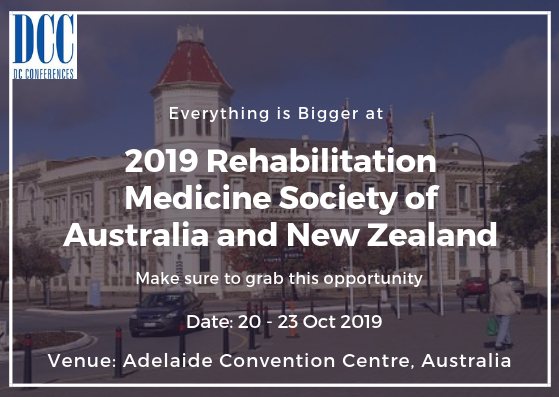
2019 Rehabilitation Medicine Society of Australia and New Zealand
2019-10-20 - 2019-10-23    
All Day
ABOUT 2019 REHABILITATION MEDICINE SOCIETY OF AUSTRALIA AND NEW ZEALAND On behalf of Rehabilitation Medicine Society of Australia and New Zealand (RMSANZ) and the organising [...]
21 Oct
2019-10-21 - 2019-10-23    
All Day
ABOUT GLOBAL CONFERENCE ON SURGERY AND ANESTHESIA (GCSA 2019) Global Conference on Surgery and Anesthesia (GCSA 2019) scheduled on October 21-23 2019 in Dubai, UAE [...]
21 Oct
2019-10-21 - 2019-10-22    
All Day
ABOUT 10TH INTERNATIONAL CONFERENCE ON MASS SPECTROMETRY AND CHROMATOGRAPHY ME Conferences is excited to announce the “10th International Conference on Mass Spectrometry and Chromatography” that [...]
MEDICAL JAPAN 2019 TOKYO
2019-10-23 - 2019-10-25    
All Day
ABOUT MEDICAL JAPAN 2019 TOKYO B to B Trade Show Covering All the Products/Services/Technologies in the Healthcare Industry! MEDICAL JAPAN TOKYO, a sister show of [...]
15th ACAM Laser and Cosmetic Medicine Conference 2019
2019-10-23 - 2019-10-25    
All Day
ABOUT 15TH ACAM LASER AND COSMETIC MEDICINE CONFERENCE 2019 As the new president of ACAM, I am delighted to welcome you all to the 15th [...]
23rd European Nephrology Conference
2019-10-24 - 2019-10-25    
All Day
ABOUT 23RD EUROPEAN NEPHROLOGY CONFERENCE Theme: The Imminent of Nephrology: Current & Advance Approaches to treat Kidney Diseases 23rd European Nephrology Conference is the world’s [...]
FNCE 2019 Food & Nutrition Conference & Expo
2019-10-26 - 2019-10-29    
All Day
ABOUT FNCE 2019 – FOOD & NUTRITION CONFERENCE & EXPO Experience dynamic educational opportunities not available elsewhere. Gain access to new trends, perspectives from expert [...]
HLTH 2019
2019-10-27 - 2019-10-30    
All Day
ABOUT HLTH 2019 HLTH is the largest and most important conference for health innovation. It’s an unprecedented, large-scale forum for collaboration across senior leaders from [...]
Events on 2019-10-01
01 Oct
Events on 2019-10-08
08 Oct
8 Oct 19
Massachusetts
Events on 2019-10-10
Events on 2019-10-18
Global Cardio Diabetes Conclave 2019
18 Oct 19
Bidhannagar
Events on 2019-10-23
Events on 2019-10-24
Events on 2019-10-26
Events on 2019-10-27
HLTH 2019
27 Oct 19
Las Vegas
Articles

5 Methods Hospitals Use To Prepare for Handling Natural Disasters

prefilled syringe

5 Methods Hospitals Use To Prepare for Handling Natural Disasters

One of the most important pieces of infrastructure during a natural disaster is a hospital, but hospitals are just as vulnerable to natural disasters as any other building. Here are five methods hospitals use to prepare for handling natural disasters.

1. Employee Training

All hospital staff, from doctors to janitorial staff, should be made aware of any disaster preparedness protocols and go through both basic training and training specific to their positions. Online training courses and lectures can be made available, and staff can go through in-person training scenarios such as evacuation and lockdown drills. Training in emergency first aid may also be helpful for non-medical staff.

2. Backup Power Supplies and Systems

A backup power supply is essential for hospitals weathering natural disasters. Because so much of the equipment necessary for testing, providing treatment and stabilizing patients requires electricity to run, and because a significant percentage of that equipment is life-saving, hospitals must be able to keep their equipment online and powered up even in the event of a disaster. Additionally, different disasters can affect power supplies and technology in different ways, so hospitals must prepare different methods of keeping their equipment running. For example, a hurricane may disrupt power lines, so hospitals should have some kind of uninterruptible power supply available, while something that could cut power lines entirely, such as an earthquake, may require a longer-term solution, such as backup generators.

3. Disaster Preparedness Plans

While a hospital in the midwest may not have to deal with a hurricane and one in the northeast may be unlikely to encounter tornadus, these facilities still need to create disaster preparedness plans for a wide variety of scenarios, both common and uncommon. Lockdown protocols need to be drawn up in case of severe storms, flooding or earthquakes. Evacuation plans will need to be put in place for events such as fires. In a hospital, these plans tend to be much more intricate than they are for other facilities, due to the nature of the work done in hospitals. While in a corporate office, most people could file out of the building by themselves, hospital patients may be hooked up to equipment, in the middle of a test or simply unable to move on their own. All of these and other scenarios require staff coordination to ensure patients are kept safe in the event of an emergency. Additionally, healthcare providers must be able to provide any critical or necessary care even during an emergency event, such as patients who require life-sustaining treatment like respirators.

4. Supply Stockpiles

A hospital should have emergency supplies stockpiled in case of natural disaster. The typical recommended supplies are necessary, such as food, potable water and light sources. Hospitals should also keep emergency supplies of all disposable medical equipment, such as personal protective equipment, tools and medical instruments, such as syringes, and treatment supplies, such as blood bags and medications.

5. Implementing Crisis Care Standards

Even in a crisis, patient care is considered to be of utmost importance. That said, in the event that a natural disaster creates too much patient volume for the staff or equipment to handle at once, a system of triage may need to be implemented where patients who could normally receive care fairly quickly, for example, those with broken bones, may need to wait longer so patients with more severe injuries can be cared for first. Patients who are already being treated at the hospital when a natural disaster occurs must be taken into account as well. For example, any patient not receiving life-sustaining care may need to have his or her treatment put on hold to free up staff and equipment for emergency situations. Crisis care standards may vary by hospital, depending on region and any specialty care centers attached to the hospital.

If a hospital is prepared for multiple kinds of natural disasters, it is more likely to be capable of being used to help people medically affected by those disasters, so it’s imperative that hospitals develop plans and stockpile the appropriate supplies in case of such emergencies.


