









Researchers Develop Enhanced Digital Tool for Early Childhood Asthma Detection Using EHR Data
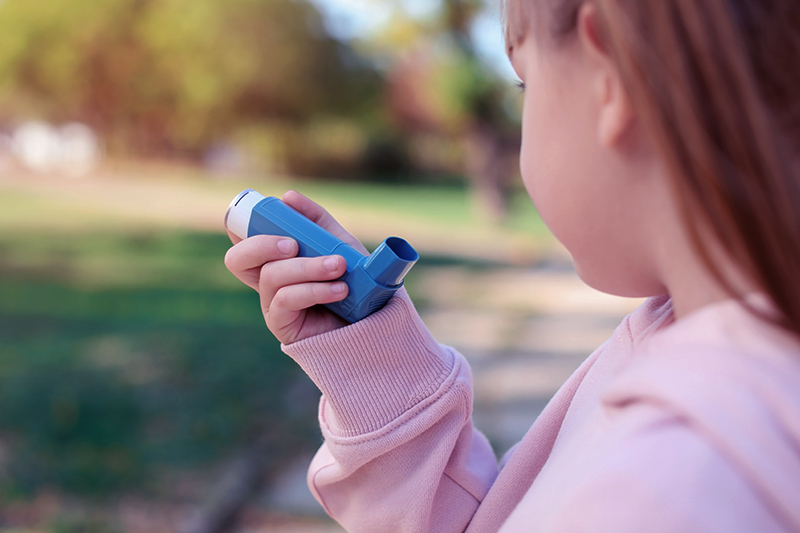
A team from the Indiana University School of Medicine and the Regenstrief Institute has created a more accurate and cost-effective method for predicting childhood asthma using standard electronic health records (EHRs). This scalable approach could significantly improve early diagnosis and reduce the likelihood of asthma progression in young patients.
The researchers improved upon the existing Pediatric Asthma Risk Score by tailoring it to utilize EHR data, resulting in a new “passive digital marker.” This marker is derived from routinely collected medical history information and is designed to assess asthma risk in children without requiring additional input from clinicians. The study was led by Arthur Owora, PhD, MPH, associate professor of pediatrics at IU School of Medicine and research scientist at the Regenstrief Institute.
“Our goal is to integrate this passive digital marker into clinical settings to identify high-risk children earlier, enabling timely interventions that may enhance asthma control and lower the risk of hospitalization,” said Dr. Owora. “Ultimately, we aim to determine if early intervention can slow or prevent the progression to more severe asthma, which is often linked with increased healthcare demands and costs. This would benefit not only the children and their families but also physicians and the broader healthcare system.”
Dr. Owora collaborated with Dr. Benjamin Gaston, vice chair of translational research and the Billie Lou Wood Professor of Pediatrics, and Dr. Malaz Boustani, director of the Center for Health Innovation and Implementation Science, both from the IU School of Medicine.
“This tool is highly scalable because it leverages data already present in EHRs, requiring no additional time from clinical staff,” noted Dr. Boustani. “Such innovations in pediatrics offer tremendous potential to improve public health outcomes for future generations.”
The study analyzed data from nearly 70,000 children born between 2010 and 2017, sourced from the Indiana Network for Patient Care. Findings showed that the new passive digital marker outperformed the traditional Pediatric Asthma Risk Score in predicting asthma diagnoses between ages 4 and 11.
Dr. Owora emphasized that although clinicians are generally skilled at identifying asthma risk, the new tool can streamline the process by summarizing a patient’s medical history more efficiently. Earlier, more accurate predictions can lead to timely preventive actions—like minimizing exposure to asthma triggers, starting controller medications, or offering education and personalized treatment plans.
The research team’s next step is to conduct a randomized clinical trial to assess whether the tool increases early diagnosis rates among high-risk children and reduces the time from meeting diagnostic criteria to receiving an official diagnosis.
“If the trial proves successful, we hope to scale the implementation of this tool across the state and potentially nationwide to ensure more children benefit from early asthma detection,” said Dr. Owora.