








































Events Calendar

Mon
Tue
Wed
Thu
Fri
Sat
Sun
M
T
W
T
F
S
S
25
27
28
29
1
3
5
6
7
8
11
13
15
17
18
19
20
21
22
24
25
27
28
29
31
1
2
3
4
5
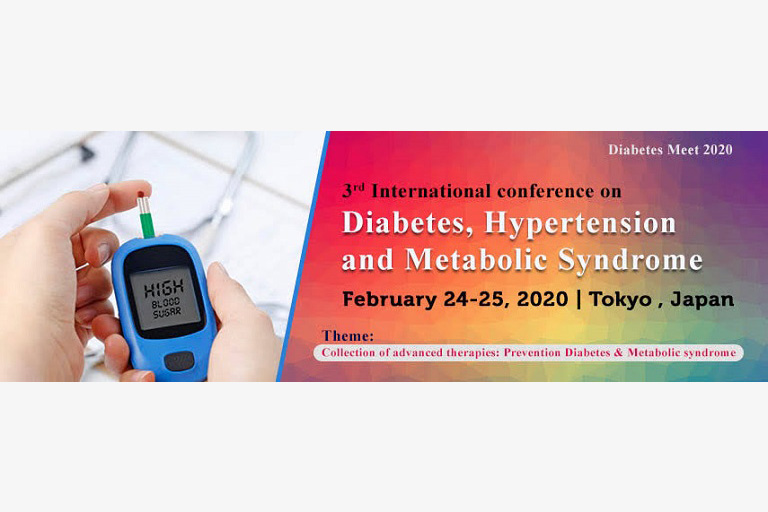
3rd International conference on  Diabetes, Hypertension and Metabolic Syndrome
2020-02-24 - 2020-02-25    
All Day
About Diabetes Meet 2020 Conference Series takes the immense Pleasure to invite participants from all over the world to attend the 3rdInternational conference on Diabetes, Hypertension and [...]
3rd International Conference on Cardiology and Heart Diseases
2020-02-24 - 2020-02-25    
All Day
ABOUT 3RD INTERNATIONAL CONFERENCE ON CARDIOLOGY AND HEART DISEASES The standard goal of Cardiology 2020 is to move the cardiology results and improvements and to [...]
Medical Device Development Expo OSAKA
2020-02-26 - 2020-02-28    
All Day
ABOUT MEDICAL DEVICE DEVELOPMENT EXPO OSAKA What is Medical Device Development Expo OSAKA (MEDIX OSAKA)? Gathers All Kinds of Technologies for Medical Device Development! This [...]
Beauty Care Asia Pacific Summit 2020 (BCAP)
2020-03-02 - 2020-03-04    
All Day
Groundbreaking Event to Address Asia-Pacific’s Growing Beauty Sector—Your Window to the World’s Fastest Growing Beauty Market The international cosmetics industry has experienced a rapid rise [...]
IASTEM - 789th International Conference On Medical, Biological And Pharmaceutical Sciences ICMBPS
2020-03-04 - 2020-03-05    
All Day
IASTEM - 789th International Conference on Medical, Biological and Pharmaceutical Sciences ICMBPS will be held on 4th - 5th March, 2020 at Hamburg, Germany . [...]
Global Drug Delivery And Formulation Summit 2020
2020-03-09 - 2020-03-11    
All Day
Innovative solutions to the greatest challenges in pharmaceutical development. Price: Full price delegate ticket: GBP 1495.0. Time: 9:00 am to 6:00 pm About Conference KC [...]
Inborn Errors Of Metabolism Drug Development Summit 2020
2020-03-10 - 2020-03-12    
All Day
Confidently Translate, Develop and Commercialize Gene, mRNA, Replacement Therapies, Small Molecule and Substrate Reduction Therapies to More Efficaciously Treat Inherited Metabolic Diseases. Time: 8:00 am [...]
Texting And E-Mail With Patients: Patient Requests And Complying With HIPAA
2020-03-12    
All Day
Overview:  This session will focus on the rights of individuals to communicate in the manner they desire, and how a medical office can decide what [...]
14 Mar
2020-03-14 - 2020-03-21    
All Day
Topics in Family Medicine, Hematology, and Oncology CME Cruise. Prices: USD 495.0 to USD 895.0. Speakers: David Parrish, MS, MD, FAAFP, Alexander E. Denes, MD, [...]
International Conference On Healthcare And Clinical Gerontology ICHCG
2020-03-14 - 2020-03-15    
All Day
An elegant and rich premier global platform for the International Conference on Healthcare and Clinical Gerontology ICHCG that uniquely describes the Academic research and development [...]
World Congress And Expo On Cell And Stem Cell Research
2020-03-16 - 2020-03-17    
All Day
"The world best platform for all the researchers to showcase their research work through OralPoster presentations in front of the international audience, provided with additional [...]
25th International Conference on  Diabetes, Endocrinology and Healthcare
2020-03-23 - 2020-03-24    
All Day
About Conference: Conference Series LLC Ltd is overwhelmed to announce the commencement of “25th International Conference on Diabetes, Endocrinology and Healthcare” to be held during [...]
ISN World Congress of Nephrology 2020
2020-03-26 - 2020-03-29    
All Day
ABOUT ISN WORLD CONGRESS OF NEPHROLOGY 2020 ISN World Congress of Nephrology (WCN) takes place annually to enable this premier educational event more available to [...]
30 Mar
2020-03-30 - 2020-03-31    
All Day
This Cardio Diabetes 2020 includes Speaker talks, Keynote & Poster presentations, Exhibition, Symposia, and Workshops. This International Conference will help in interacting and meeting with diabetes and [...]
Trending Topics In Internal Medicine 2020
2020-04-02 - 2020-04-04    
All Day
Trending Topics in Internal Medicine is a CME course that will tackle the latest information trending in healthcare today.   This course will help you discuss options [...]
2020 Summit On National & Global Cancer Health Disparities
2020-04-03 - 2020-04-04    
All Day
The 2020 Summit on National & Global Cancer Health Disparities is planned with the goal of creating a momentum to minimize the disparities in cancer [...]
Events on 2020-02-26
Events on 2020-03-02
Events on 2020-03-09
Events on 2020-03-10
Events on 2020-03-16
Events on 2020-03-26
Events on 2020-03-30
Events on 2020-04-02
Events on 2020-04-03
Latest News

AI-augmented diabetic retinopathy screening programs cheaper than human grading

AI-augmented diabetic retinopathy screening programs cheaper than human grading

Implementation of either an automated or semi-automated deep learning system for diabetic retinopathy screening could lead to cost savings at the health-system level, according to an economic analysis modeling study recently published in The Lancet Digital Health.

Backed by Singapore’s Ministry of Health, the investigation looked at data from a national diabetic retinopathy screening program conducted within the country in 2015, and modeled the simulated costs of substituting the human-led approach with artificial intelligence-augmented screening techniques.

TOPLINE DATA

Based on the study’s models, diabetes patients would incur a 12-month total cost of $77 per patient when assessed by a human. Using a fully automated screening process would cut this price by 14.3%, to $66 per patient per year, while a semi-automated approach would increase savings by 19.5%, to $62 per patient per year.

Costs relating to the human graders, screening specificities and IT considerations had the greatest impact on these prices. For the former, the researchers highlighted the roughly two minutes a human grader would require to assess each image, which a deep learning system could cut down almost entirely.

Meanwhile, the major difference between the fully automated model and the semi-automated model, which only reduced human grading costs by 74%, was follow-up care driven by each screening method’s specificity.

“The fully automated model … yields greater savings,” the researchers wrote. “This is because of a higher rate of false positives, and therefore more unnecessary specialist visits, under the fully automated model. The higher costs of graders in the semi-automated model is more than offset by the lower consultation costs. However, this is … based on the wages in Singapore, and might not apply to other settings.”

HOW IT WAS DONE

The study relied on a historical dataset of 39,006 diabetes patients screened through a tele-ophthalmology platform as part of the Singapore Integrated Diabetic Retinopathy Programme.

The recorded cost of screening these patients against the hypothetical two deep learning system-based approaches using a decision tree model developed by the research team. Parameters included in this model included diabetic retinopathy prevalence rates, screening costs of each approach, their sensitivity and specificity, and resulting medical consultation costs.

Diagnostic performance and disease prevalence values were collected from local sources or based on the researchers’ prior work. The costs of goods and services were either obtained in 2015, or were adjusted for inflation to reflect their price in June 2015.

THE LARGER TREND

A number of academic teams and major tech providers have been developing algorithm-based approaches to diabetic retinopathy screening, some of which involve devices that are easily mounted onto a smartphone to encourage point-of-care diagnoses. Google in particular has been beating the drum of machine learning-based screening for the last few years, having published study data regarding their system in 2018 and announcing its first real-world clinical use in 2019.

IN CONCLUSION

“Our study shows that both the fully automated and semi-automated [deep learning systems] were less expensive than the current manual grading system for diabetic retinopathy screening in Singapore. By 2050, Singapore is projected to have close to 1 million people with diabetes; if a [deep learning system] is adopted, this could translate into savings of $15 million,” the researchers concluded.


