




















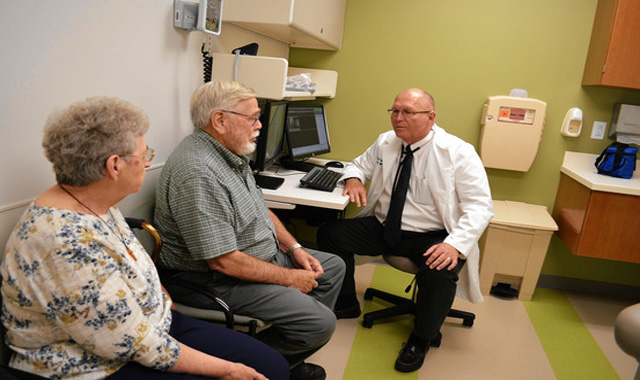




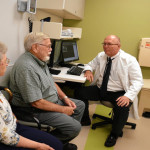


If you have been to Community Medical Center, your physician’s office or even your dentist’s office, you more than likely noticed the increase in computers, keyboards, monitors and laptops. This is because all patient data is becoming digital and being stored electronically.
Patient’s charts are now located on the computer; these are called electronic medical records. By 2015, all hospitals are required to switch to electronic medical records by the federal government.
Using computer-based technology can enhance the patient experience by maximizing safety and increasing the quality of care given by all health care professionals. The accuracy of computers has drastically reduced the likelihood of human error. For example:
- Computer systems can instantly identify interactions of medications being taken at home with a patient’s listed allergies and compare these with new medications ordered, decreasing the risk of medication and allergic reactions.
- Implementation of computerized physician order entry improves communication and transcription errors; illegibility of handwritten orders no longer exists.
- Computerized calculation of intravenous medications and weight- based medication doses reduce the chance of human calculation errors.
- Clinical nurses now practice barcode scanning of medications. This is when the nurse scans the patient’s barcoded patient identification bracelet then scans the medication to be given. This ensures the “five rights” nurses make prior to medication administration – right patient, right medication, right dose, right time and right route.
Electronic medical records streamline the patient’s medical information, making it readily accessible to all professionals caring for the patient.
Doctors now have links to the computer systems, so they can easily access patient charts from their office or their home. Thus they can also view critical information and place orders pertinent to providing safe and quality care for the patient. Critical values and alerts can be identified and
rapidly communicated to clinicians automatically, through a system similar to email. Nurses and doctors can both be in a patient’s medical record reviewing the same information at the same time. Nurses also have this function when giving shift-to-shift hand-off report, thereby increasing effectiveness in reviewing orders and tasks needing to be done or already completed.
The location of documented patient information is unchanged when navigating through electronic medical records, promoting ease of accessibility to the user. Patient orders, assessments, medications, histories and pain levels are organized in the same format for documentation consistency; promoting efficiency and quality care.
In today’s systems, electronic medical records can be considered a tool used to improve communication, make knowledge more accessible, and assist with calculations and clinical decisions. Electronic medical records provide a reliable and efficient source for patient information, thereby improving patient safety by structuring actions, catching errors and promoting patient-centered evidenced-based practice.


