









































Events Calendar

Mon
Tue
Wed
Thu
Fri
Sat
Sun
M
T
W
T
F
S
S
28
29
30
31
1
2
3
4
5
6
9
10
12
16
17
19
22
23
27
29
30
1
10th Asian Conference on Emergency Medicine (ACEM 2019)
ABOUT 10TH ASIAN CONFERENCE ON EMERGENCY MEDICINE (ACEM 2019) It is a great pleasure and an honor to extend to you a warm invitation to [...]
APAPU SPUNZA Conference 2019
2019-11-08 - 2019-11-10    
All Day
ABOUT APAPU/ SPUNZA CONFERENCE 2019 We look forward to welcoming you to the combined APAPU/ SPUNZA meeting in Perth – the first time the event [...]
2nd World Cosmetic and Dermatology Congress
2019-11-11 - 2019-11-12    
All Day
ABOUT 2ND WORLD COSMETIC AND DERMATOLOGY CONGRESS 2nd World Cosmetic and Dermatology Congress is going to be held at Helsinki, Finland during November 11-12, 2019. International Congress on Cosmetic [...]
Global Experts Meet on Advanced Technologies in Diabetes Research and Therapy
2019-11-11 - 2019-11-12    
All Day
ABOUT GLOBAL EXPERTS MEET ON ADVANCED TECHNOLOGIES IN DIABETES RESEARCH AND THERAPY It is an incredible delight and a respect to stretch out our warm [...]
Global Congress on Cancer Immunology and Epigenetics
2019-11-13 - 2019-11-14    
All Day
ABOUT GLOBAL CONGRESS ON CANCER IMMUNOLOGY AND EPIGENETICS Epigenetics Conference, The world’s largest Epigenetics Conference and Gathering for the Research Community. Join the Global Congress [...]
Advantage Healthcare-India 2019
ABOUT ADVANTAGE HEALTHCARE-INDIA 2019 ADVANTAGES OF HEALTHCARE AND WELLNESS INDUSTRY IN INDIA: State of the art Hospitals with Excellent Infrastructure Largest pool of Highly qualified [...]
4th International Conference on Obstetrics and Gynecology
2019-11-14 - 2019-11-15    
All Day
ABOUT 4TH INTERNATIONAL CONFERENCE ON OBSTETRICS AND GYNECOLOGY Theme: Current Breakthroughs and Innovative Approaches towards Improving Women’s Reproductive HealthIt’s our pleasure to invite all the [...]
Encompass Health at AAPM&R 2019 in San Antonio
2019-11-15 - 2019-11-17    
All Day
Encompass Health at AAPM&R 2019 in San Antonio San Antonio, Texas Nov 14, 2019 11:00 a.m. CST Headed to AAPM&R’s 2019 Annual Assembly? Swing by [...]
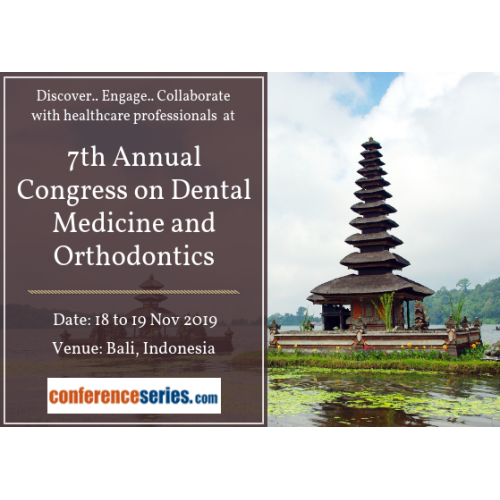
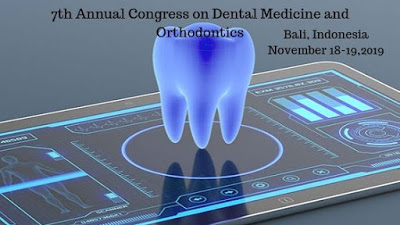
7th Annual Congress on Dental Medicine and Orthodontics
ABOUT 7TH ANNUAL CONGRESS ON DENTAL MEDICINE AND ORTHODONTICS Dentistry Medicine 2019 is a perfect opportunity intended for International well-being Dental and Oral experts too. [...]
ABOUT MEDICA 2019
2019-11-18 - 2019-11-21    
All Day
ABOUT MEDICA 2019   MEDICA is the world’s largest event for the medical sector. For more than 40 years it has been firmly established on [...]
7th Annual Congress on Dental Medicine and Orthodontics
2019-11-18 - 2019-11-19    
All Day
ABOUT 7TH ANNUAL CONGRESS ON DENTAL MEDICINE AND ORTHODONTICS Dentistry Medicine 2019 is a perfect opportunity intended for International well-being Dental and Oral experts too. [...]
20 Nov
2019-11-20 - 2019-11-21    
All Day
  Connected Insurance: The USA’s Premier Gathering Defining the Future of Insurance Since the year 2000, 50 percent of the Fortune 500 companies have disappeared [...]
International Conference on Pathology and Infectious Diseases
2019-11-21 - 2019-11-22    
All Day
ABOUT INTERNATIONAL CONFERENCE ON PATHOLOGY AND INFECTIOUS DISEASES Infectious disease 2019 gathers the world’s leading scientists, researchers and scholars to exchange and share their professional [...]
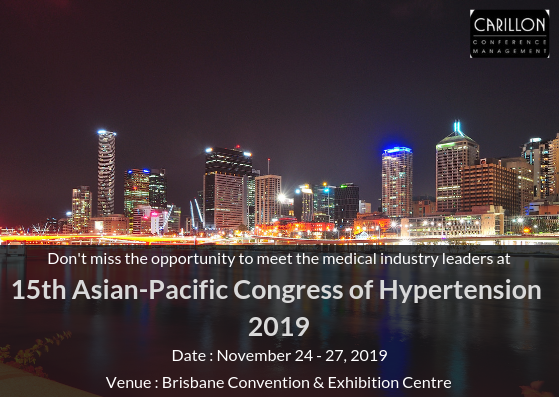
15th Asian-Pacific Congress of Hypertension 2019
2019-11-24 - 2019-11-27    
All Day
ABOUT 15TH ASIAN-PACIFIC CONGRESS OF HYPERTENSION 2019 The Asian-Pacific Society of Hypertension will hold the 15th Asian Pacific Congress of Hypertension (APCH2019) in Brisbane, Australia, [...]
18th Annual Conference on Urology and Nephrological Disorders
2019-11-25 - 2019-11-26    
All Day
ABOUT 18TH ANNUAL CONFERENCE ON UROLOGY AND NEPHROLOGICAL DISORDERS Urology 2019 is an integration of the science, theory and clinical knowledge for the purpose of [...]
2nd World Heart Rhythm Conference
2019-11-25 - 2019-11-26    
All Day
ABOUT 2ND WORLD HEART RHYTHM CONFERENCE 2nd World Heart Rhythm Conference is among the World’s driving Scientific Conference to unite worldwide recognized scholastics in the [...]
Digital Health Forum 2019
ABOUT DIGITAL HEALTH FORUM 2019 Join us on 26-27 November in Berlin to discuss the power of AI and ML for healthcare, healthcare transformation by [...]
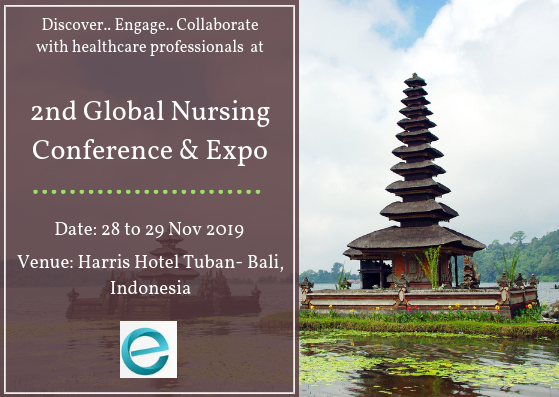
2nd Global Nursing Conference & Expo
ABOUT 2ND GLOBAL NURSING CONFERENCE & EXPO Events Ocean extends an enthusiastic and sincere welcome to the 2nd GLOBAL NURSING CONFERENCE & EXPO ’19. The [...]
International Conference on Obesity and Diet Imbalance 2019
2019-11-28 - 2019-11-29    
All Day
ABOUT INTERNATIONAL CONFERENCE ON OBESITY AND DIET IMBALANCE 2019 Obesity Diet 2019 is a worldwide stage to examine and find out concerning Weight Management, Childhood [...]
Events on 2019-11-07
Events on 2019-11-08
Events on 2019-11-13
Events on 2019-11-14
Events on 2019-11-15
Events on 2019-11-20
20 Nov
20 Nov 19
Chicago
Events on 2019-11-21
Events on 2019-11-24
15th Asian-Pacific Congress of Hypertension 2019
24 Nov 19
Merivale St & Glenelg Street
Events on 2019-11-26
Digital Health Forum 2019
26 Nov 19
Marinelli Rd Rockville
Events on 2019-11-28
Articles

Aug 26 : Can Fitbit Data Save Lives?

healthcare it
Some docs are now claiming fitness tracker data holds no medical value. Meet the tech-savvy Kansas doctor who is proving them wrong.
Several stubborn ideas have steered much of the discourse around health care. One is that doctors need to work more efficiently and that technology will help—another, that conservatives have no legitimate ideas for health care reform.For practicing physicians, it’s long been obvious that the first idea is wrong. So far, incorporating technology into our work has made us less efficient while failing to improve patient care. (Some doctors say that electronic medical records, for example, have turned us into data entry clerks, and rather than engage with patients, we spend the visit—and often late into the evening—wrestling with the unwieldy software.) Of course, this hasn’t stopped digital-health advocates from hyping the idea that all we need the right “disruptive technology” to get better data, faster—and that’ll fix primary care.But last week the idea that sometimes we should say no to unproven technology was finally given a hearing. Media outlets like Vox raced to proclaim: Doctors don’t want patients’ Fitbit data.

This hardly warrants a headline, since it’s clear if you stop to think about it: continuously dumping data onto the doctor’s desk is a bad idea. It’s such a bad idea that it’s hard to know where to start: from malpractice risk and privacy issues to the fact that a lot of the data itself will be pretty much meaningless.

But there is one doctor who does want your personal digital-health data. Dr. Josh Umbehr, a family physician in Wichita, Kansas, has apparently cracked the code for utilizing data from gadgets like Fitbit. The key to his success is working in a practice that gives him time to innovate.

Umbehr’s group, AtlasMD Health, runs on monthly membership fees of as low as $10 a month for kids. As I’ve detailed previously, this kind of Direct Primary Care (DPC) model eliminates administrative and insurance hassles and allows doctors to focus on patient care. Indeed, Umbehr sees somewhere between 18 and 30 patients a week – instead of 18 to 30 a day that assembly-line doctors are forced to see.

In direct care practices, patients get all the time they need—and doctors can focus on optimizing their patient care. “When we first started I had nine different software programs open when I was seeing a patient,” Umbehr told The Daily Beast, “we were able to design a single program that incorporates all of that.” His system, AtlasMD, generates invoices for patients, prints labels for pills, and collects data from MyFitnessPal and, yes, Fitbit.

“I used to ask myself, ‘How is it we can place microchips on your skin that can report your blood sugar, but we can’t get that data into a computer?” said Umbehr, who not only solved that problem, but also figured out how to make that data useful by creating a software that flags abnormal values.

So the real disruptive innovation is to slow down the pace of the doctor’s day, not to perpetually speed it up. Indeed, Umbehr’s medical record works great in the context of his practice: he only manages about 600 patients, as opposed to 2,400 or so that assembly line physicians carry. When the doctors in his group get fitness band data, they have time to put some thought into what the information implies.

“We don’t know what all this data means, yet,” Umbehr said, “but I can discuss it with the patients and we can both follow it.” Until now, there’s no accepted approach for incorporating this kind of data into medical care. Early adopters like Umbehr’s group may be able to figure out how this data can be used.

(For example—and this is strictly hypothetical—imagine some patients have blood pressure spikes only at night. Let’s say months later these patients develop some condition such as, say, diabetes. We might then realize that sudden nocturnal hypertension is a sign of accelerating insulin resistance – and we will begin to intervene before the diabetes starts.)

“I used to ask myself, ‘How is it we can place microchips on your skin that can report your blood sugar, but we can’t get that data into a computer?”

But gathering this data and developing new clinical insights is predicated on physicians not only having time, but also independence. “I was able to create this software because I didn’t have to ask permission of the insurers,” Umbehr said. Direct care groups are springing up around the country implying that there is a strong need in the “health care marketplace” for independent physicians with the time to be fully responsive to their patients’ needs. Although some thought leaders worry that direct care makes life easier for doctors, but costlier for patients – and many patients won’t be able to afford the monthly fees. But Umbehr doesn’t see it that way, he says that Direct Care fills the gaps left by most of the new insurance policies.

Although this is a model that is appealing to physicians and patients of all political stripes, it’s particularly appealing to Umbehr who described himself as the “lone evil Republican” in medical school. These days Umbehr has a distinct Libertarian outlook. Indeed, he is running for lieutenant governor of Kansas with his father (a lawyer) at the top of the libertarian ticket against Republican Sam Brownback. “We have a difficult race—but it’s certainly possible, with our rising poll ratings…that we can win. But, I’m also doing this to get the word out about Direct Care.”

It’s going to take a lot to get the word out. Many employed physicians—the ones who don’t want your Fitbit data—are too underwater financially and inundated with work to even imagine opening their own direct practice. They also feel intimidated by all the technology that purveyors of conventional wisdom claim patients are demanding.

Umbehr thinks that’s misguided. In fact, he offers free consulting services to doctors who want to go into direct care. Often, doctors think they can’t get enough capital or offer a large enough suite of technology (like fancy EMRs, Xrays, laboratory, bone density machines, etc) to open a practice. Umbehr doesn’t want physicians to be stalled by this. Umbehr tells them, “To get started all you need is a shoestring and a stethoscope.”

To be sure, there are still very good reasons to be skeptical about the future of American health care. Thoughtful observers believe there are powerful forces who don’t like the implications of direct care— who don’t want physicians practicing independently, and who want to steal physician wages and leave patients with exhausted, disenchanted doctors who can do little else but order unnecessary tests and prescribe expensive medicines by guideline.

But Umbehr is optimistic. He’s disrupting the paradigm that constantly asks more of physicians, while squeezing their salaries. He’s a guy who loves gadgets but isn’t pretending that expensive technology is required to do good medicine. And he’s proving that patients can get better care—while paying less.

Who says that conservatives don’t have any good ideas for health reform? Maybe we shouldn’t be listening to those people, either.


Source
