












































Events Calendar

Mon
Tue
Wed
Thu
Fri
Sat
Sun
M
T
W
T
F
S
S
28
29
30
31
1
2
3
4
5
6
9
10
12
16
17
19
22
23
27
29
30
1
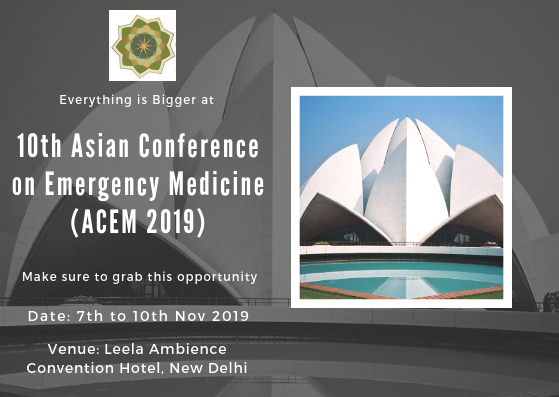
10th Asian Conference on Emergency Medicine (ACEM 2019)
ABOUT 10TH ASIAN CONFERENCE ON EMERGENCY MEDICINE (ACEM 2019) It is a great pleasure and an honor to extend to you a warm invitation to [...]
APAPU SPUNZA Conference 2019
2019-11-08 - 2019-11-10    
All Day
ABOUT APAPU/ SPUNZA CONFERENCE 2019 We look forward to welcoming you to the combined APAPU/ SPUNZA meeting in Perth – the first time the event [...]
2nd World Cosmetic and Dermatology Congress
2019-11-11 - 2019-11-12    
All Day
ABOUT 2ND WORLD COSMETIC AND DERMATOLOGY CONGRESS 2nd World Cosmetic and Dermatology Congress is going to be held at Helsinki, Finland during November 11-12, 2019. International Congress on Cosmetic [...]
Global Experts Meet on Advanced Technologies in Diabetes Research and Therapy
2019-11-11 - 2019-11-12    
All Day
ABOUT GLOBAL EXPERTS MEET ON ADVANCED TECHNOLOGIES IN DIABETES RESEARCH AND THERAPY It is an incredible delight and a respect to stretch out our warm [...]
Global Congress on Cancer Immunology and Epigenetics
2019-11-13 - 2019-11-14    
All Day
ABOUT GLOBAL CONGRESS ON CANCER IMMUNOLOGY AND EPIGENETICS Epigenetics Conference, The world’s largest Epigenetics Conference and Gathering for the Research Community. Join the Global Congress [...]
Advantage Healthcare-India 2019
ABOUT ADVANTAGE HEALTHCARE-INDIA 2019 ADVANTAGES OF HEALTHCARE AND WELLNESS INDUSTRY IN INDIA: State of the art Hospitals with Excellent Infrastructure Largest pool of Highly qualified [...]
4th International Conference on Obstetrics and Gynecology
2019-11-14 - 2019-11-15    
All Day
ABOUT 4TH INTERNATIONAL CONFERENCE ON OBSTETRICS AND GYNECOLOGY Theme: Current Breakthroughs and Innovative Approaches towards Improving Women’s Reproductive HealthIt’s our pleasure to invite all the [...]
Encompass Health at AAPM&R 2019 in San Antonio
2019-11-15 - 2019-11-17    
All Day
Encompass Health at AAPM&R 2019 in San Antonio San Antonio, Texas Nov 14, 2019 11:00 a.m. CST Headed to AAPM&R’s 2019 Annual Assembly? Swing by [...]
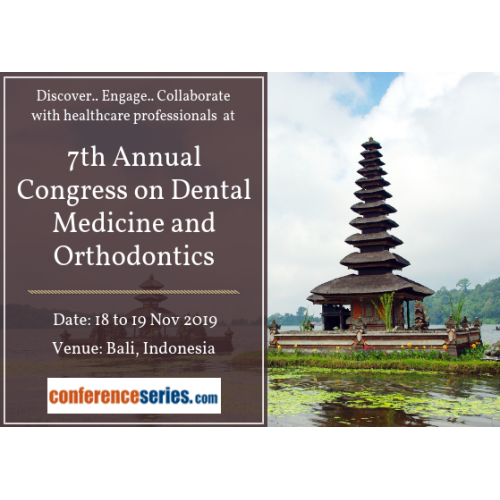
7th Annual Congress on Dental Medicine and Orthodontics
ABOUT 7TH ANNUAL CONGRESS ON DENTAL MEDICINE AND ORTHODONTICS Dentistry Medicine 2019 is a perfect opportunity intended for International well-being Dental and Oral experts too. [...]
ABOUT MEDICA 2019
2019-11-18 - 2019-11-21    
All Day
ABOUT MEDICA 2019   MEDICA is the world’s largest event for the medical sector. For more than 40 years it has been firmly established on [...]
7th Annual Congress on Dental Medicine and Orthodontics
2019-11-18 - 2019-11-19    
All Day
ABOUT 7TH ANNUAL CONGRESS ON DENTAL MEDICINE AND ORTHODONTICS Dentistry Medicine 2019 is a perfect opportunity intended for International well-being Dental and Oral experts too. [...]
20 Nov
2019-11-20 - 2019-11-21    
All Day
  Connected Insurance: The USA’s Premier Gathering Defining the Future of Insurance Since the year 2000, 50 percent of the Fortune 500 companies have disappeared [...]
International Conference on Pathology and Infectious Diseases
2019-11-21 - 2019-11-22    
All Day
ABOUT INTERNATIONAL CONFERENCE ON PATHOLOGY AND INFECTIOUS DISEASES Infectious disease 2019 gathers the world’s leading scientists, researchers and scholars to exchange and share their professional [...]
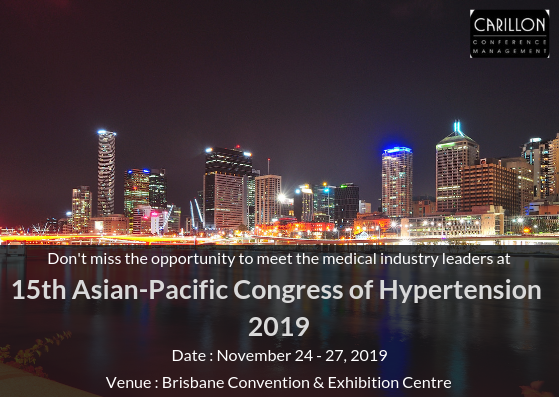
15th Asian-Pacific Congress of Hypertension 2019
2019-11-24 - 2019-11-27    
All Day
ABOUT 15TH ASIAN-PACIFIC CONGRESS OF HYPERTENSION 2019 The Asian-Pacific Society of Hypertension will hold the 15th Asian Pacific Congress of Hypertension (APCH2019) in Brisbane, Australia, [...]
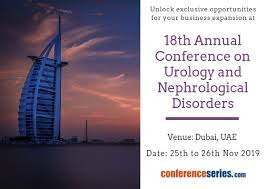
18th Annual Conference on Urology and Nephrological Disorders
2019-11-25 - 2019-11-26    
All Day
ABOUT 18TH ANNUAL CONFERENCE ON UROLOGY AND NEPHROLOGICAL DISORDERS Urology 2019 is an integration of the science, theory and clinical knowledge for the purpose of [...]
2nd World Heart Rhythm Conference
2019-11-25 - 2019-11-26    
All Day
ABOUT 2ND WORLD HEART RHYTHM CONFERENCE 2nd World Heart Rhythm Conference is among the World’s driving Scientific Conference to unite worldwide recognized scholastics in the [...]
Digital Health Forum 2019
ABOUT DIGITAL HEALTH FORUM 2019 Join us on 26-27 November in Berlin to discuss the power of AI and ML for healthcare, healthcare transformation by [...]
2nd Global Nursing Conference & Expo
ABOUT 2ND GLOBAL NURSING CONFERENCE & EXPO Events Ocean extends an enthusiastic and sincere welcome to the 2nd GLOBAL NURSING CONFERENCE & EXPO ’19. The [...]
International Conference on Obesity and Diet Imbalance 2019
2019-11-28 - 2019-11-29    
All Day
ABOUT INTERNATIONAL CONFERENCE ON OBESITY AND DIET IMBALANCE 2019 Obesity Diet 2019 is a worldwide stage to examine and find out concerning Weight Management, Childhood [...]
Events on 2019-11-07
Events on 2019-11-08
Events on 2019-11-13
Events on 2019-11-14
Events on 2019-11-15
Events on 2019-11-20
20 Nov
20 Nov 19
Chicago
Events on 2019-11-21
Events on 2019-11-24
15th Asian-Pacific Congress of Hypertension 2019
24 Nov 19
Merivale St & Glenelg Street
Events on 2019-11-26
Digital Health Forum 2019
26 Nov 19
Marinelli Rd Rockville
Events on 2019-11-28
Latest News

Both long term abstinence and heavy drinking may increase dementia risk

People who abstain from alcohol or consume more than 14 units a week during middle age (midlife) are at increased risk of developing dementia, finds a study in The BMJ today.

However, the underlying mechanisms are likely to be different in the two groups.

As people live longer, the number living with dementia is expected to triple by 2050. So understanding the impact of alcohol consumption on ageing outcomes is important.

Previous studies indicate that moderate drinking is associated with a reduced risk of dementia, whereas both abstinence and heavy drinking are associated with a risk of dementia. But the evidence is far from conclusive, and the reasons underlying these associations remain unclear.

So a team of researchers from Inserm (French National Institute of Health and Medical Research) based in France and from UCL in the UK set out to investigate the association between midlife alcohol consumption and risk of dementia into early old age. They also examined whether cardiometabolic disease (a group of conditions including stroke, coronary heart disease, and diabetes) has any effect on this association.

Their findings are based on 9,087 British civil servants aged between 35 and 55 in 1985 who were taking part in the Whitehall II Study, which is looking at the impact of social, behavioural, and biological factors on long term health.

Participants were assessed at regular intervals between 1985 and 1993 (average age 50 years) on their alcohol consumption and alcohol dependence.

Alcohol consumption trajectories between 1985 and 2004 were also used to examine the association of long term alcohol consumption and risk of dementia from midlife to early old age.

Admissions for alcohol related chronic diseases and cases of dementia from 1991, and the role of cardiometabolic disease were then identified from hospital records.

Of the 9,087 participants, 397 cases of dementia were recorded over an average follow-up period of 23 years. Average age at dementia diagnosis was 76 years.

After taking account of sociodemographic, lifestyle, and health related factors that could have affected the results, the researchers found that abstinence in midlife or drinking more than 14 units a week was associated with a higher risk of dementia compared with drinking 1-14 units of alcohol a week. Among those drinking above 14 units a week of alcohol, every 7 unit a week increase in consumption was associated with 17% increase in dementia risk.

In the UK, 14 units of alcohol a week is now the recommended maximum limit for both men and women, but many countries still use a much higher threshold to define harmful drinking.

History of hospital admission for alcohol related chronic diseases was associated with a four times higher risk of dementia.

In abstainers, the researchers show that some of the excess dementia risk was due to a greater risk of cardiometabolic disease.

Alcohol consumption trajectories showed similar results, with long term abstainers, those reporting decreased consumption, and long term consumption of more than 14 units a week, all at a higher risk of dementia compared with long term consumption of 1-14 units a week.

Further analyses to test the strength of the associations were also broadly consistent, suggesting that the results are robust.

Taken together, these results suggest that abstention and excessive alcohol consumption are associated with an increased risk of dementia, say the researchers, although the underlying mechanisms are likely to be different in the two groups.

This is an observational study, so no firm conclusions can be drawn about cause and effect, and the researchers cannot rule out the possibility that some of the risk may be due to unmeasured (confounding) factors.

The authors say their findings “strengthen the evidence that excessive alcohol consumption is a risk factor for dementia” and “encourage use of lower thresholds of alcohol consumption in guidelines to promote cognitive health at older ages.” They also say these findings “should not motivate people who do not drink to start drinking given the known detrimental effects of alcohol consumption for mortality, neuropsychiatric disorders, cirrhosis of the liver, and cancer”

This study is important since it fills gaps in knowledge, “but we should remain cautious and not change current recommendations on alcohol use based solely on epidemiological studies,” says Sevil Yasar at Johns Hopkins School of Medicine, in a linked editorial.

She calls for further studies and ideally a government funded randomized clinical trial to answer pressing questions about the possible protective effects of light to moderate alcohol use on risk of dementia and the mediating role of cardiovascular disease with close monitoring of adverse outcomes.

In summary, she says, “alcohol consumption of 1-14 units/week may benefit brain health; however, alcohol choices must take into account all associated risks, including liver disease and cancer.”


Source
