

















Events Calendar

Mon
Tue
Wed
Thu
Fri
Sat
Sun
M
T
W
T
F
S
S
31
1
3
4
5
6
7
8
9
10
11
12
13
14
15
16
17
18
19
20
21
23
24
25
27
28
29
1
2
3
4
Converge where Healthcare meets Innovation
2015-09-02 - 2015-09-03    
All Day
MedCity CONVERGE provides the most accurate picture of the future of medical innovation by gathering decision-makers from every sector to debate the challenges and opportunities [...]
11th Global Summit and Expo on Food & Beverages
2015-09-22 - 2015-09-24    
All Day
Event Date: September 22-24, 2016 Event Venue: Embassy Suites, Las Vegas, Nevada, USA Theme: Accentuate Innovations and Emerging Novel Research in Food and Beverage Sector [...]
2015 AHIMA Convention and Exhibit
2015-09-26 - 2015-09-30    
All Day
The Affordable Care Act, Meaningful Use, HIPAA, and of course, ICD-10 are changing healthcare. Central to healthcare today is health information. It is used throughout [...]
Transforming Medicine: Evidence-Driven mHealth
2015-09-30 - 2015-10-02    
8:00 am - 5:00 pm
September 30-October 2, 2015Digital Medicine 2015 Save the Date (PDF, 1.23 MB) Download the Scripps CME app to your smart phone and/or tablet for the conference [...]
Health 2.0 9th Annual Fall Conference
2015-10-04 - 2015-10-07    
All Day
October 4th - 7th, 2015 Join us for our 9th Annual Fall Conference, October 4-7th. Set over 3 1/2 days, the 9th Annual Fall Conference will [...]
Events on 2015-09-02
Events on 2015-09-22
Events on 2015-09-26
Events on 2015-09-30
Events on 2015-10-04
Articles

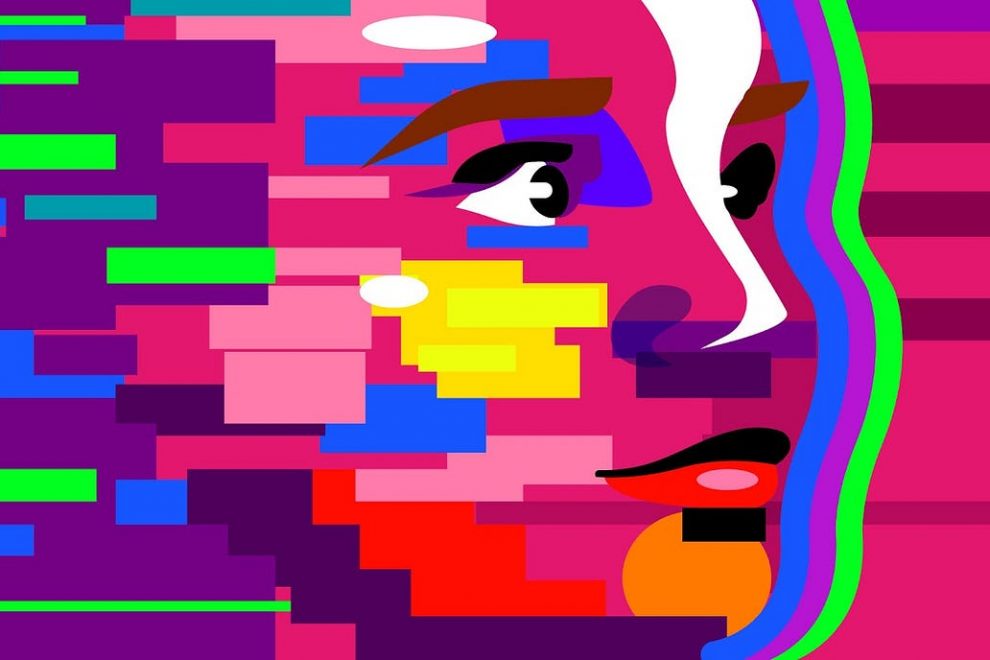
Can AI image generators producing biased results be rectified?

Experts are investigating the origins of racial and gender bias in AI-generated images, and striving to address these issues.

In 2022, Pratyusha Ria Kalluri, an AI graduate student at Stanford University in California, made a concerning discovery regarding image-generating AI programs. When she requested “a photo of an American man and his house” from a popular tool, it generated an image of a light-skinned individual in front of a large, colonial-style home. However, when she asked for “a photo of an African man and his fancy house,” it produced an image of a dark-skinned person in front of a simple mud house, despite the descriptor “fancy.”

Further investigation by Kalluri and her team revealed that image outputs from widely-used tools like Stable Diffusion by Stability AI and DALL·E by OpenAI often relied on common stereotypes. For instance, terms like ‘Africa’ were consistently associated with poverty, while descriptors like ‘poor’ were linked to darker skin tones. These tools even exacerbated biases, as seen in generated images depicting certain professions. For example, most housekeepers were portrayed as people of color and all flight attendants as women, in proportions significantly deviating from demographic realities.

Similar biases have been observed by other researchers in text-to-image generative AI models, which frequently incorporate biased and stereotypical characteristics related to gender, skin color, occupations, nationalities, and more.


