


























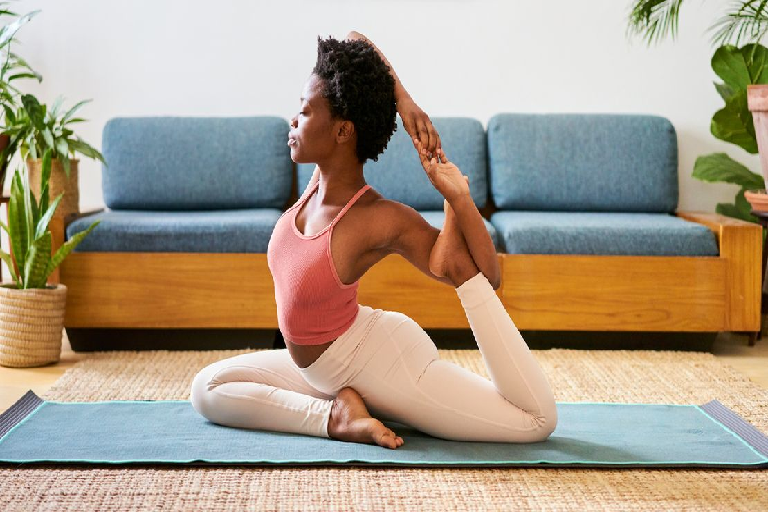
Can Yoga Lower Your Risk of Getting Sick?
Could a few sun salutations, a hot yoga class, or some calming yogic breathing keep you from catching a cold, flu, or even the coronavirus? Claims like this one abound across social media and other digital spheres. But they do have some merit, according to published research and to healthcare professionals who practice, teach, and study this ancient mind-body practice. Practicing yoga can help protect against the threat of infection and support recovery by bolstering overall good health. But you’re going to have to take other measures, too.
“Yoga is an exciting and beautiful part of an overall approach to lowering risk for infections, but you cannot just do breathing exercises or a yoga routine and say, ‘Okay, this will prevent them,’” says cell biologist and yoga therapist Sundar Balasubramanian, PhD, an assistant professor at the Medical University of South Carolina who studies cancer therapeutics and yoga. “You still have to stay healthy, wash your hands, and — for coronavirus — protect yourself and others by wearing a mask, maintaining social distance, and quarantining if you’ve been exposed.”
There’s no proof behind overblown claims that yoga “filters out” specific pathogens or provides “unique protection” against viral threats like the coronavirus, adds Holger Cramer, PhD, research director in the department of internal and integrative medicine at the University of Duisburg-Essen in Germany, where he studies the safety and effectiveness of yoga in medicine. “And there of course is no evidence that yoga can reduce infection rates or help recovery from COVID-19,” he says. The virus and the disease are too new to have any sound research investigating that question.
9 Ways Practicing Yoga Benefits Your Health and Well-Being
What the evidence does show, he explains, is that yoga supports the healthy functioning of the immune system and helps people manage chronic conditions, like obesity and high blood pressure. Research also shows that these chronic conditions may worsen COVID-19, according to the Centers for Disease Control and Prevention (CDC).
What the Research Says About Yoga and Immune Function
In two studies, Balasubramanian and his colleagues from the Medical University of South Carolina found that after volunteers did yogic breathing exercises for 20 minutes levels of specific molecules associated with healthy immune function actually increased.
In a 2015 study in the journal Evidence-Based Complementary and Alternative Medicine, this benefit was seen in eight proteins critical for immune function (measured via saliva samples), Balasubramanian explains. Levels of those proteins rose as much as 7- to 11-fold in seven of the ten volunteers.
“These [proteins] act as a first line of defense in mucosal tissue, which is inside the nose,” he says. Those proteins don’t necessarily protect against any specific virus or bacteria, he adds — it means overall the yogic breathing appeared to help that part of the immune response work the way it should.
And an August 2016 study in the journal BMC Complementary and Alternative Medicine shows that markers of inflammation decreased in individuals after a 20-minute yoga class. “Inflammation is part of the body’s immune response but can be harmful if it is not regulated,” Balasubramanian says about that second study from his group.
Uncontrolled inflammation is associated with problems like heart disease, diabetes, and autoimmune conditions (like multiple sclerosis). The research suggests therefore that yoga is something that can help protect against those risks.
Why Does Yoga Benefit the Immune System?
All of our behavior affects the body’s stress response — either activating the nervous system’s fight-or-flight mode or calming it down (think “rest and restore” mode), explains Amy Sedgwick, MD, an emergency medicine physician and yoga therapist based in Portland, Maine.
When that response is ramped up in fight-or-flight (particularly when it is chronic), the immune response can be suppressed or overly taxed: Rather than focusing on warding off pathogens, the body is focused on fighting or fleeing from whatever is stressing you out. However in “rest and restore” mode (the opposite of the stress response and what’s known as the parasympathetic nervous system), conditions are optimized for cell repair and healthy immune functioning.
Yoga helps shift the nervous system to that “rest and restore” mode, while dialing down that fight-or-flight response, Dr. Sedgwick says.
How? Slow breathing (with a longer exhalation than inhalation) activates the vagus nerve — a long nerve that runs from the base of the brain to the abdomen and helps regulate heart rate, mood, digestion, and immune response, explains Marsha Billes, DO, a family physician and yoga therapist in southeastern Michigan who specializes in integrative medicine.
Activating this nerve helps shift the body into its “rest and restore” mode, according to a March 2018 review in the journal Frontiers in Psychiatry.
Yoga can therefore help reduce the toll stress takes on the body, says Dr. Billes. “How we react to stress may ultimately determine our vulnerability to chronic disease.”
The bottom line: There are a lot of factors that determine whether you get sick from bacterial and viral infections (including COVID-19), as well as from chronic illnesses. Practicing yoga is just one of the ways you could potentially bolster your body’s defenses to stay well.
Tips for Starting a Yoga Practice During a Pandemic
During the COVID-19 pandemic, practicing yoga at home or in a socially distanced outdoor class is a good idea, Billes and Sedgwick say. If you’re new to yoga, consider a Zoom-type class where the instructor can watch you and offer suggestions and corrections.
Here are a few other tips:
Pick a style that’s right for you. (They’re all good for your health.) You can tap into yoga’s stress-soothing benefits with any of the various types of yoga practices — from a gentle hatha routine to a vigorous vinyasa or ashtanga class. A few sun salutations — a traditional series of flowing yoga poses — counts as light- to moderate-intensity activity, according to a 2016 review in the journal Medicine and Science in Sports and Exercise, which means it can count toward your weekly physical activity, too. (Remember, regular physical activity is good for immune functioning as well). In another 2016 review published in Complementary Therapies in Medicine, Cramer and a team compared the overall health effects of 52 styles of yoga in 306 studies and found all had benefits. If you’re new to yoga, a gentle class is a good way to try it out.
When recovering after a respiratory infection, try gentle or restorative yoga. Talk to your doctor first, especially if you’ve had a moderate to severe infection. “A gentle yoga practice could [along with your physician’s treatment plan] certainly be of benefit to help with recovery and enhance the immune system and the respiratory system as well as for reducing stress and anxiety,” Billes says. A simple practice in a chair could be a good place to start, she notes. Avoid “power yoga,” any type of heated class, or any other type of class that is taxing to the body when you are ill or just recovering from illness, Sedgwick says.
To reduce stress and anxiety or if you cannot do yoga poses, try a yogic breathing exercise
You can try an exercise similar to the one used in Balasubramanian’s research in this video from the Medical University of South Carolina. Or try Sedgwick’s Prone Savasana, a breathing exercise done while laying on your stomach. If, however, you have any respiratory conditions, like COPD or asthma, it’s best to seek guidance from an informed physician before starting a breathing practice — especially if you feel it is challenging.


