





















































Children with autism have structural and functional abnormalities in the brain circuit that normally makes social interaction feel rewarding, according to a new study from the Stanford University School of Medicine.
The study, published July 17 in Brain, documented deficits in children with autism in a crucial reward circuit, called the mesolimbic reward pathway, that’s buried deep within the
brain. The degree of abnormality in this pathway predicted the degree of social difficulty in individual children with autism, the study found.
The findings help clarify which of several competing theories best explains the social impairments seen in children with autism. The discoveries, made via MRI brain scans, support the social motivation theory of autism, which proposes that social interaction is inherently less appealing to people who have the disorder.
“It’s the first time we have had concrete brain evidence to support this theory,” said the study’s lead author, Kaustubh Supekar, PhD, a research scientist at Stanford’s Translational Neurosciences Incubator. Disrupting the mesolimbic reward pathway in mice reduces their social behavior, prior research has shown, but no one knew how closely the pathway was tied to social skills in people. “This is the first neurobiological evidence in children that this mechanism might explain their social impairments,” Supekar said.
“Human social cognition is complex,” said the study’s senior author, Vinod Menon, PhD, professor of psychiatry and behavioral sciences. “We were surprised we could trace deficits in social skills to a very simple, almost primordial circuit.”
A vicious cycle
The brain difference could launch a vicious cycle that makes it hard for children with autism to acquire complex social skills, according to the researchers.
“Social interaction is usually inherently rewarding. If it’s not rewarding enough to a child with autism, that could have cascading effects on other brain systems,” said Menon, who is the Rachael L. and Walter F. Nichols, MD, Professor. In order to develop social-communication skills and the ability to infer others’ thoughts and feelings, children must interact with other people. If they don’t find those interactions rewarding, they seek fewer opportunities to develop complex social skills, he said. “Our findings suggest that this is a brain system that should be targeted early in clinical treatments,” he added.
Children with autism have difficulty with social interaction and communication, and show repetitive behaviors and restricted interests. The Centers for Disease Control and Prevention estimates the developmental disorder affects 1 in 59 children.
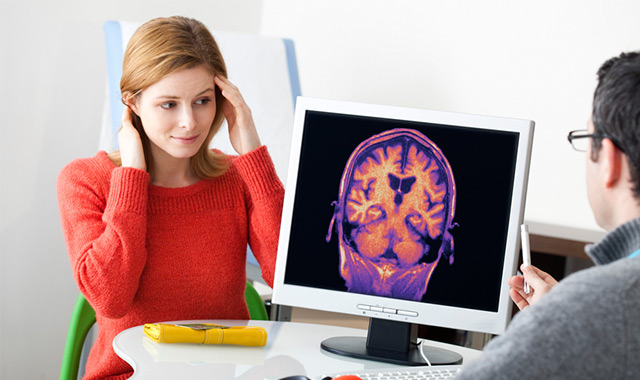
To conduct the study, the researchers collected MRI brain scans of 40 children with autism and 44 children without autism. They examined brain wiring in 24 children with autism and 24 children who didn’t have it, and functional connections in the brain in 16 children with autism and 20 children without the disorder as they looked at social or nonsocial images — pictures of faces or of scenery — while having their brains scanned.
The team also conducted MRI scans of brain wiring on an additional 17 children with the disorder and 17 children without it to see if the results from the first groups could be replicated in a second, independent cohort. All of the children studied were 8-13 years old. Children with autism had their diagnosis confirmed by standard clinical testing for the disorder, and all children had their IQ tested.
The density of nerve-fiber tracts in the mesolimbic reward pathway was lower in children with autism than in those without; there were no differences between the children with and without autism when researchers examined an emotion-related brain pathway as a control. Among the children who had autism, lower density of nerve-fiber tracts was linked to greater social impairment on a standard clinical evaluation of their social skills. The results were the same in the second, independent cohort of children the team studied. Children with autism also had weaker functional connections in the mesolimbic reward pathway than did typically developing children. The degree of functional deficit was also correlated to social impairment.
Findings could aid search for treatments
The research provides a useful link between prior work in animal models of autism and human data, the researchers said, and is especially strong because the findings were replicated in two groups of research participants. Next, the researchers want to determine whether the same brain deficits can be detected in younger children with autism.
The discovery also provides a good starting point for future studies of autism treatments. Some existing, effective autism therapies use various rewards to help children engage in social interaction, but it is not known if those treatments strengthen the brain’s social reward circuits.
“It would be exciting to conduct a clinical intervention study to determine whether the structural and functional integrity of this pathway can be altered through a reward-based learning paradigm,” Menon said.
The study’s other Stanford authors are graduate student John Kochalka; former visiting scholar Marie Schaer, MD, PhD; former research assistant Holly Wakeman; Shaozheng Qin, PhD, former instructor; and Aarthi Padmanabhan, PhD, academic program professional. Menon is a member of Stanford’s Child Health Research Institute, the Stanford Neurosciences Institute and Stanford Bio-X.
The research was supported by the Brain & Behavior Research Foundation, the National Institutes of Health (grants K99MH105601 and MH084164), the Stanford Child Health Research Institute (grant CTSA UL1TR001085), the Autism Science Foundation, the Swiss National Foundation and the Simons Foundation for Autism Research.
Stanford’s Department of Psychiatry and Behavioral Sciences also supported the work.


