



































Events Calendar

Mon
Tue
Wed
Thu
Fri
Sat
Sun
M
T
W
T
F
S
S
28
29
30
31
1
2
3
4
5
6
9
10
12
16
17
19
22
23
27
29
30
1
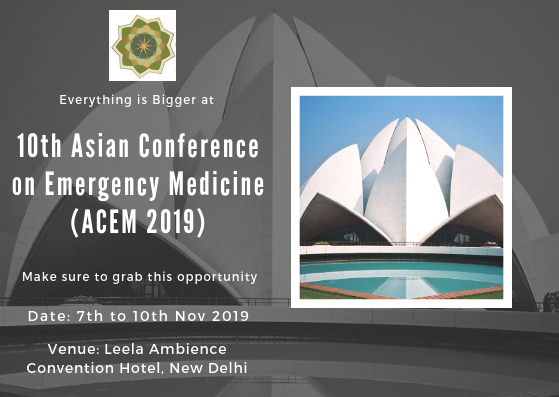
10th Asian Conference on Emergency Medicine (ACEM 2019)
ABOUT 10TH ASIAN CONFERENCE ON EMERGENCY MEDICINE (ACEM 2019) It is a great pleasure and an honor to extend to you a warm invitation to [...]
APAPU SPUNZA Conference 2019
2019-11-08 - 2019-11-10    
All Day
ABOUT APAPU/ SPUNZA CONFERENCE 2019 We look forward to welcoming you to the combined APAPU/ SPUNZA meeting in Perth – the first time the event [...]
2nd World Cosmetic and Dermatology Congress
2019-11-11 - 2019-11-12    
All Day
ABOUT 2ND WORLD COSMETIC AND DERMATOLOGY CONGRESS 2nd World Cosmetic and Dermatology Congress is going to be held at Helsinki, Finland during November 11-12, 2019. International Congress on Cosmetic [...]
Global Experts Meet on Advanced Technologies in Diabetes Research and Therapy
2019-11-11 - 2019-11-12    
All Day
ABOUT GLOBAL EXPERTS MEET ON ADVANCED TECHNOLOGIES IN DIABETES RESEARCH AND THERAPY It is an incredible delight and a respect to stretch out our warm [...]
Global Congress on Cancer Immunology and Epigenetics
2019-11-13 - 2019-11-14    
All Day
ABOUT GLOBAL CONGRESS ON CANCER IMMUNOLOGY AND EPIGENETICS Epigenetics Conference, The world’s largest Epigenetics Conference and Gathering for the Research Community. Join the Global Congress [...]
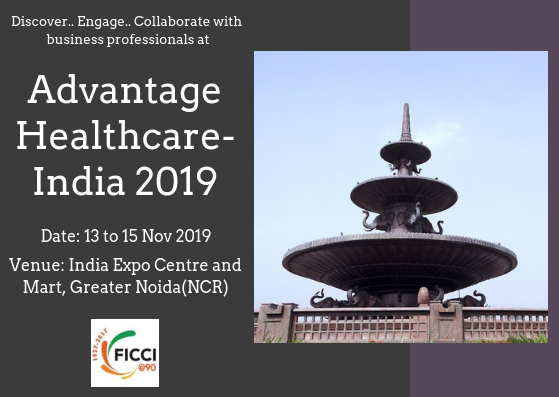
Advantage Healthcare-India 2019
ABOUT ADVANTAGE HEALTHCARE-INDIA 2019 ADVANTAGES OF HEALTHCARE AND WELLNESS INDUSTRY IN INDIA: State of the art Hospitals with Excellent Infrastructure Largest pool of Highly qualified [...]
4th International Conference on Obstetrics and Gynecology
2019-11-14 - 2019-11-15    
All Day
ABOUT 4TH INTERNATIONAL CONFERENCE ON OBSTETRICS AND GYNECOLOGY Theme: Current Breakthroughs and Innovative Approaches towards Improving Women’s Reproductive HealthIt’s our pleasure to invite all the [...]
Encompass Health at AAPM&R 2019 in San Antonio
2019-11-15 - 2019-11-17    
All Day
Encompass Health at AAPM&R 2019 in San Antonio San Antonio, Texas Nov 14, 2019 11:00 a.m. CST Headed to AAPM&R’s 2019 Annual Assembly? Swing by [...]
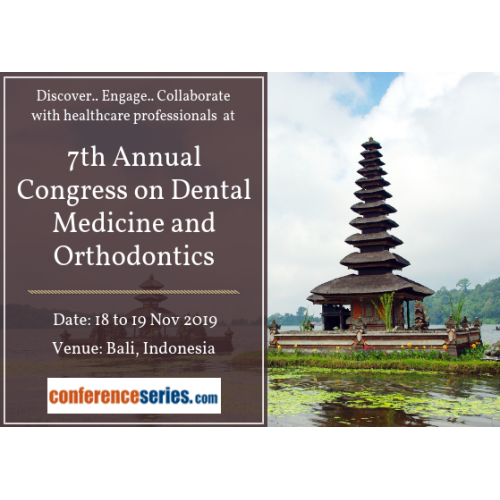
7th Annual Congress on Dental Medicine and Orthodontics
ABOUT 7TH ANNUAL CONGRESS ON DENTAL MEDICINE AND ORTHODONTICS Dentistry Medicine 2019 is a perfect opportunity intended for International well-being Dental and Oral experts too. [...]
ABOUT MEDICA 2019
2019-11-18 - 2019-11-21    
All Day
ABOUT MEDICA 2019   MEDICA is the world’s largest event for the medical sector. For more than 40 years it has been firmly established on [...]
7th Annual Congress on Dental Medicine and Orthodontics
2019-11-18 - 2019-11-19    
All Day
ABOUT 7TH ANNUAL CONGRESS ON DENTAL MEDICINE AND ORTHODONTICS Dentistry Medicine 2019 is a perfect opportunity intended for International well-being Dental and Oral experts too. [...]
20 Nov
2019-11-20 - 2019-11-21    
All Day
  Connected Insurance: The USA’s Premier Gathering Defining the Future of Insurance Since the year 2000, 50 percent of the Fortune 500 companies have disappeared [...]
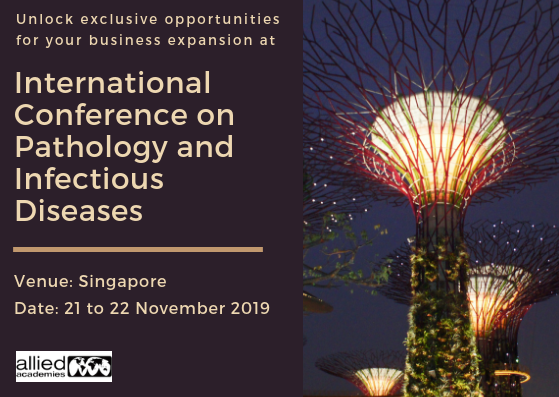
International Conference on Pathology and Infectious Diseases
2019-11-21 - 2019-11-22    
All Day
ABOUT INTERNATIONAL CONFERENCE ON PATHOLOGY AND INFECTIOUS DISEASES Infectious disease 2019 gathers the world’s leading scientists, researchers and scholars to exchange and share their professional [...]
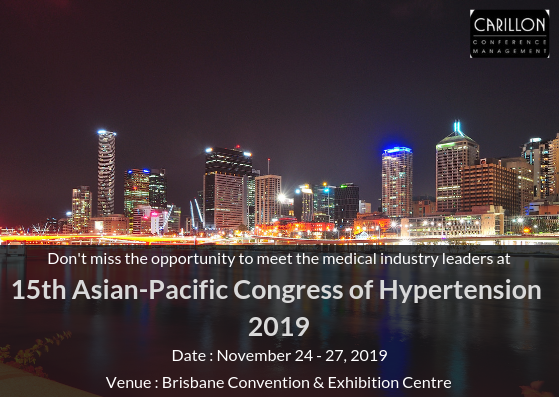
15th Asian-Pacific Congress of Hypertension 2019
2019-11-24 - 2019-11-27    
All Day
ABOUT 15TH ASIAN-PACIFIC CONGRESS OF HYPERTENSION 2019 The Asian-Pacific Society of Hypertension will hold the 15th Asian Pacific Congress of Hypertension (APCH2019) in Brisbane, Australia, [...]
18th Annual Conference on Urology and Nephrological Disorders
2019-11-25 - 2019-11-26    
All Day
ABOUT 18TH ANNUAL CONFERENCE ON UROLOGY AND NEPHROLOGICAL DISORDERS Urology 2019 is an integration of the science, theory and clinical knowledge for the purpose of [...]
2nd World Heart Rhythm Conference
2019-11-25 - 2019-11-26    
All Day
ABOUT 2ND WORLD HEART RHYTHM CONFERENCE 2nd World Heart Rhythm Conference is among the World’s driving Scientific Conference to unite worldwide recognized scholastics in the [...]
Digital Health Forum 2019
ABOUT DIGITAL HEALTH FORUM 2019 Join us on 26-27 November in Berlin to discuss the power of AI and ML for healthcare, healthcare transformation by [...]
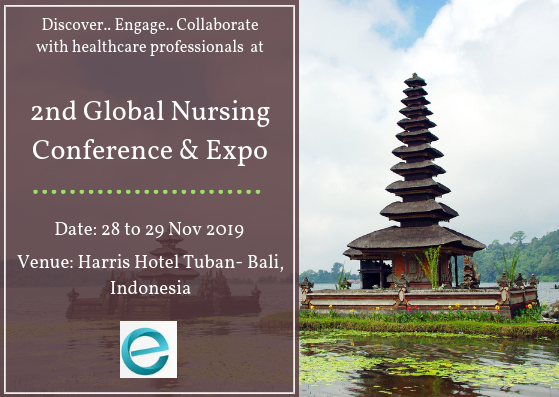
2nd Global Nursing Conference & Expo
ABOUT 2ND GLOBAL NURSING CONFERENCE & EXPO Events Ocean extends an enthusiastic and sincere welcome to the 2nd GLOBAL NURSING CONFERENCE & EXPO ’19. The [...]
International Conference on Obesity and Diet Imbalance 2019
2019-11-28 - 2019-11-29    
All Day
ABOUT INTERNATIONAL CONFERENCE ON OBESITY AND DIET IMBALANCE 2019 Obesity Diet 2019 is a worldwide stage to examine and find out concerning Weight Management, Childhood [...]
Events on 2019-11-07
Events on 2019-11-08
Events on 2019-11-13
Events on 2019-11-14
Events on 2019-11-15
Events on 2019-11-20
20 Nov
20 Nov 19
Chicago
Events on 2019-11-21
Events on 2019-11-24
15th Asian-Pacific Congress of Hypertension 2019
24 Nov 19
Merivale St & Glenelg Street
Events on 2019-11-26
Digital Health Forum 2019
26 Nov 19
Marinelli Rd Rockville
Events on 2019-11-28
Latest News

Common skin cancer can signal increased risk of other cancers

People who develop abnormally frequent cases of a skin cancer known as basal cell carcinoma appear to be at significantly increased risk for the development of other cancers, including blood, breast, colon and prostate cancers, according to a preliminary study by researchers at the Stanford University School of Medicine.

The increased susceptibility is likely caused by mutations in a panel of proteins responsible for repairing DNA damage, the researchers found.

“We discovered that people who develop six or more basal cell carcinomas during a 10-year period are about three times more likely than the general population to develop other, unrelated cancers,” said Kavita Sarin, MD, PhD, assistant professor of dermatology. “We’re hopeful that this finding could be a way to identify people at an increased risk for a life-threatening malignancy before those cancers develop.”

Sarin is the senior author of the study, which was published online Aug. 9 in JCI Insight. Medical student Hyunje Cho is the lead author.

Largest organ

The skin is the largest organ of the body and the most vulnerable to DNA damage caused by the sun’s ultraviolet rays. Try as one might, it’s just not possible to completely avoid sun exposure, which is why proteins that repair DNA damage are important to prevent skin cancers like basal cell carcinoma.

Most of the time this system works well. But sometimes the repair team can’t keep up. Basal cell carcinomas are common — more than 3 million cases a year are diagnosed in the United States alone — and usually highly treatable.

Sarin and Cho wondered whether the skin could serve as a kind of canary in the coal mine to reveal an individual’s overall cancer susceptibility. “The skin is basically a walking mutagenesis experiment,” Sarin said. “It’s the best organ to detect genetic problems that could lead to cancers.”

Sarin and Cho studied 61 people treated at Stanford Health Care for unusually frequent basal cell carcinomas — an average of 11 per patient over a 10-year period. They investigated whether these people may have mutations in 29 genes that code for DNA-damage-repair proteins.

“We found that about 20 percent of the people with frequent basal cell carcinomas have a mutation in one of the genes responsible for repairing DNA damage, versus about 3 percent of the general population. That’s shockingly high,” Sarin said.

Furthermore, 21 of the 61 people reported a history of additional cancers, including blood cancer, melanoma, prostate cancer, breast cancer and colon cancer — a prevalence that suggests the frequent basal cell carcinoma patients are three times more likely than the general population to develop cancers.

‘A strong correlation’

To confirm the findings, the researchers applied a similar analysis to a large medical insurance claims database. Over 13,000 people in the database had six or more basal cell carcinomas; these people also were over three times more likely to have developed other cancers, including colon, melanoma and blood cancers. Finally, the researchers identified an upward trend: the more basal cell carcinomas an individual reported, the more likely that person was to have had other cancers as well.

“I was surprised to see such a strong correlation,” Sarin said. “But it’s also very gratifying. Now we can ask patients with repeated basal cell carcinomas whether they have family members with other types of cancers, and perhaps suggest that they consider genetic testing and increased screening.”

The researchers are continuing to enroll Stanford patients in the study, which is ongoing, to learn whether particular mutations in genes responsible for repairing DNA damage are linked to the development of specific malignancies. They’d also like to conduct a similar study in patients with frequent melanomas. But they emphasized that there’s no reason for people with occasional basal cell carcinomas to worry.

“About 1 in 3 Caucasians will develop basal cell carcinoma at some point in their lifetime,” Sarin said. “That doesn’t mean that you have an increased risk of other cancers. If, however, you’ve been diagnosed with several basal cell carcinomas within a few years, you may want to speak with your doctor about whether you should undergo increased or more intensive cancer screening.”

Other Stanford authors of the study are former dermatology resident Karen Kuo, MD; statistical programmer Shufeng Li; clinical research coordinator Irene Bailey; clinical professor of dermatology Sumaira Aasi, MD; associate professor of dermatology Anne Chang, MD; professor of dermatology Anthony Oro, MD, PhD; and professor of dermatology Jean Tang, MD, PhD.

The study was supported by the Dermatology Foundation, the National Institutes of Health (grants ARO54780 and ARO46786), the Stanford Society of Physician Scholars, the American Skin Association and Pellepharm Inc.

Tang and Epstein are co-founders, directors and officers of Pellepharm, a biotechnology company focused on rare dermatological conditions.

Stanford’s Department of Dermatology also supported the work.

Source

