



























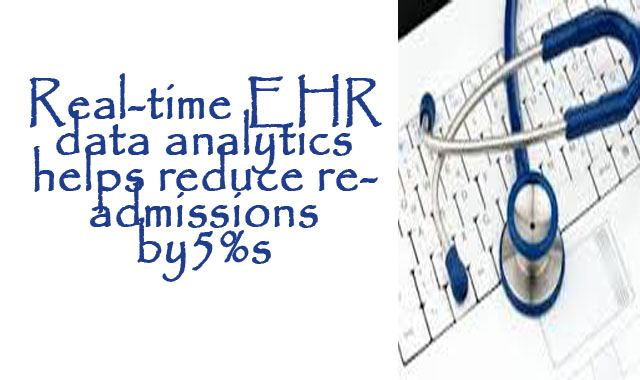
Using EHR data to categorize high-risk and low-risk heart failure patients can help save lives, reduce preventable readmissions, and make better use of scarce healthcare resources, says a study in the British Medical Journal Quality and Safety. When an EHR-based software package categorized incoming cardiac patients by their 30-day readmission risks at a large Texas hospital, those readmissions dropped from 26.2% to 21.2% while directing hospital resources towards the patients with the highest risks who needed the most care.
“This is one of the first prospective studies to demonstrate how detailed data in EMRs can be used in real-time to automatically identify and target patients at the highest risk of readmission early in their initial hospitalization when there is a lot that can be done to improve and coordinate their care, so they will do well when they leave the hospital,” said Ethan Halm, MD, MPH, senior author on the paper and Professor of Internal Medicine and Clinical Sciences and Chief of the Division of General Internal Medicine at UT Southwestern.
The EHR analytics model used in the study draws on 29 clinical, social, and behavioral factors within 24 hours of a patient’s admission for heart failure, making it possible to match the intensity of the readmission intervention to the patient’s risk of readmission on any given day. This real-time program allows physicians to focus on the patients with the highest risk of readmission, and has been successful in reducing the number of hospital returns.
“This project was able to achieve the ‘holy grail’ of readmission reduction strategies. It reduced the population-based rate of readmission and saved the hospital thousands by redeploying limited, existing resources to the 25% of the patients at highest risk. It was so successful that what started as a research project is now part of the way the hospital does business,” said Dr. Halm.
“These findings have important implications for the management of acute heart failure across large inpatient populations and health systems,” added Parag C. Patel, MD, one of the study authors and an Assistant Professor of Medicine, Advanced Heart Failure/Mechanical Support, Department of Transplantation at the Mayo Clinic. “Patients with heart failure present to the hospital with different levels of readmission risk due to both physiologic and non-physiologic factors. Real-time electronic systems that capture this risk could significantly advance the way we manage these patients at a system level with greater efficiency and precision.” Source


