

























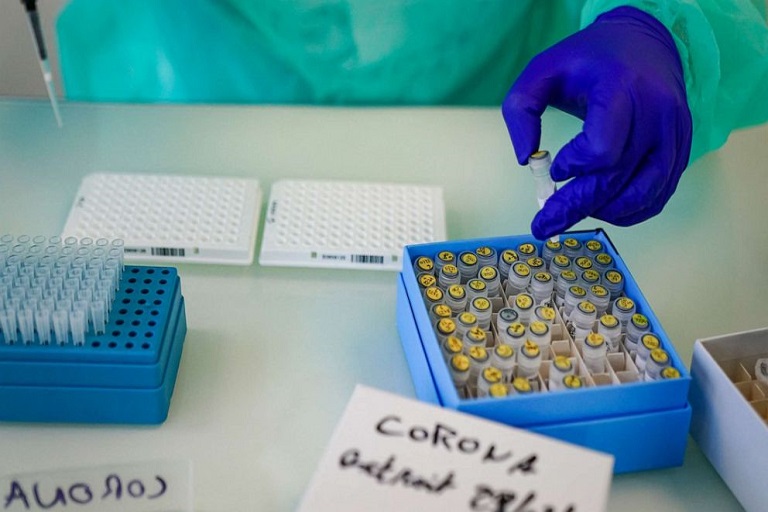
As cases of the novel coronavirus continue to rise in Canada, many wonder (and are often confused) about how long the virus can last on surfaces and in the air. In a recent report from the National Institute of Allergy and Infectious Diseases published on Tuesday, scientists tried to pinpoint exactly how long the virus could remain on a variety of surfaces, including household items and hospital settings, through coughing or touching coronavirus
READ MORE: Coronavirus can persist on surfaces for days, in air for hours: study
To perform the experiment, researchers used an aerosol device to mimic the microscopic droplets that would be caused by a cough or a sneeze. Next, they waited to see how long the virus would remain on surfaces. The report found when the virus was in droplet form (mimicking someone coughing or sneezing via the aerosol device) it could be transferred to others and infect people for at least three hours. On surfaces in particular, the virus was viable after three days on plastic and stainless steel, and less than a day on cardboard.
Study offers valuable insight on the virus
Jozef Nissimov, an assistant professor at the department of biology at the University of Waterloo in Waterloo, Ont., told Global News this study gives researchers “valuable experimental data.” “The findings add to previous reports on other coronaviruses, such as those responsible for the Severe Acute Respiratory Syndrome (SARS) [and] the Middle Eastern Respiratory Syndrome (MERS),” he said.
READ MORE: Here’s why frequent handwashing is recommended in preventing spread of COVID-19
He says the study further supports current advice given by the World Health Organisation (WHO), government agencies and infectious disease experts on the importance of disinfecting your hands and frequently used surfaces.
“The study, however, is not exhaustive. As the authors point out, there are a range of other factors (other than surface type) that may also impact the rate at which these viruses decay in the environment over time and more work will be needed to characterize their effect in the future.” This could include factors like humidity, temperature, and the medium in which the virus is released (for example in phlegm or mucus), he said.
Dr. Alon Vaisman, an infection control and infectious diseases physician at Toronto’s University Health Network, told Global News while reports like these are important for the medical community, the average Canadian needs to remember that all of this is done in a lab.
READ MORE: Coronavirus can spread on public transit. Here’s what commuters need to know
“The things that people should realize is that when you use these machines to aerosolize, you are aerosolizing at a very high rate, like a very intense level … and they’re also using a very high dose of the virus.” He said, however, this doesn’t take away from the environmental piece and it’s important for Canadians to know how long the virus can last on surfaces. Vaisman adds when it comes to these types of studies, read the actual study and don’t delve into what you see only in headlines — this could cause fear and anxiety.
Source: https://globalnews.ca/news/6695508/coronavirus-surfaces-air/


