























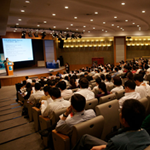


The ‘Making the Most of Digital Health to Tackle the Outbreak in Saudi Arabia’ webinar, hosted by HIMSS, explored how the country’s early commitment to digitising healthcare has positively influenced their response to the coronavirus pandemic, resulting in relative containment and a low mortality rate.
The webinar was chaired by HIMSS chief clinical officer Charles Alessi and included Dr Ahmed Balkhair and Dr Mona Almehaid from the Ministry of Health, Dr Amr Jamal, Saudi Commission for Health Specialities and Dr Osama Alswailem from King Faisal Specialist Hospital and Research Centre.
WHY IT MATTERS
In normal times, Saudi Arabia is known for its enthusiastic outlook on digital healthcare. This forward-thinking approach, say the country’s leading healthcare experts, was central to their response to the COVID-19 outbreak and facilitated their quick transition to remote working and the implementation of digital support systems.
There was a strong emphasis on preparedness. With recent experiences tackling MERS informing the speed of their response, Dr Balkhair, advisor to the vice minister for digital transformation, MoH, explains that the Kingdom started taking measures against the virus shortly after the disease was detected in China. This included an early request to factories for increased production of PPE and medical supplies. Dr Alswailem commended how the Kingdom’s Business Continuity Plan factored in a pandemic option to aid a data-driven, centralised solution to appropriately and thoroughly protect civilians and healthcare workers.
The implementation of a cohesive digital response, pioneered by a specific ‘technology application’ team dedicated to tackling the crisis was described by Dr Almehaid, deputy minister for eHealth and digital transformation from the Ministry of Health. Through this, they created monitoring dashboards and awareness platforms, which utilise preexisting telecommunications strategies to educate and reassure citizens, and digital applications compliant with established Infection and Control Prevention platforms in HIS.
It was clear that the transition to remote working was not easy, with the loss of clinical connection to patients, the need for digital training for healthcare providers and the change in information governance, but Dr Jamal highlighted that this transformation had taken only 50 days. The chairman and associate professor of family medicine and clinical informatics at King Saud University, said: “What we tried to achieve in the last 4 or 5 years, we have achieved in the last few weeks.”
Support of the workforce was another key part of their response. Dr Almehaid noted that steps had been taken to reduce physicians’ exposure to the virus, including through the use of robots, telerounds and drive-through testing bays. A series of webinars were organised to provide training to healthcare professionals on how to deal with the crisis and how to care for patients remotely, as described by Dr Jamal. He emphasised how the quick uptake of telemedicine allowed both clinicians and patients to stay at home whilst still maintaining a high level of care, protecting both patients and healthcare providers. He also noted that staff could access daily tele-psychiatric and psychological support during the crisis.
Collaboration has been a key factor throughout dealing with COVID-19 in the Kingdom of Saudi Arabia. Dr Alswailem, a CIO, underlined how “no single entity can control this crisis,” but that teamwork between countries, government departments, healthcare workers and the general public was needed to forge a successful effort against COVID-19. Dr Jamal noted that a successful digital transformation needed to address all aspects of the healthcare system –the workforce, supplies and infrastructure – while Dr Alswailem asserted that digital health must address “the whole healthcare paradigm,” including CME and other non-clinical demands.
THE LARGER CONTEXT
So far, Saudi’s protective measures against coronavirus have managed to keep the outbreak under control. At the time of writing, the Kingdom had 12,772 cases and 114 deaths, a mortality rate significantly below the world average.
In early March, the Kingdom pledged $10million to the WHO to support their effort against the pandemic.
ON THE RECORD
Dr Alswailem closed with this lesson: “The strategic investment in health IT became evident during this crisis. The amount of analytics, the abrupt changes in the environment, getting new ICU beds, building new wards: [it] was easily done with the available technology and – more importantly – the resources that we have. So the investment in health IT […] we can see the value in it.”
“IT in healthcare should not just be doing support and operation,” he continued. “They need to be a strategic partner that carry the value and outcome. There is a huge demand for technology – and that is evident with the fourth industrial revolution – that’s why the investment in health IT in general has to be taken more seriously, as the digital health strategies will really disrupt and transform the way that care is taken care of.”


