


















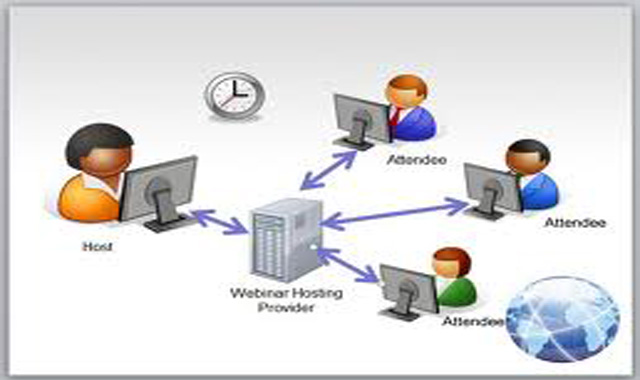










At the beginning of April, I had the pleasure of talking about the state of eHealth in Estonia with Priit Tohver, adviser for digital services innovation at the Estonian Ministry of Social Affairs during a live webinar.
Estonia started implementing the first eHealth services such as the electronic patient record in the mid-2000s. This meant that patients could see everything the doctor had written down during a visit and doctors could get a comprehensive overview of ongoing treatments and the patient’s current state of health. This system then quickly developed into a more sophisticated tool. One of the most useful tools is the digital prescription that is tied to the personal code and useable with an Estonian ID-card. According to Tohver, the ePrescription “is a no-brainer”, particularly because it does not require the patient to be digitally literate. All they have to do is go to their preferred pharmacy and present their ID-card. Doctors also benefit from this system, as a prescription can be renewed remotely within 10-15 seconds. Furthermore, the system automatically makes doctors aware of drug interaction issues that could render the prescribed drug ineffective or even counter-productive.
The COVID-19 impact
Then came COVID-19. Truth be told, Estonian doctors are working just as hard as doctors anywhere else around the world to contain and ultimately push back the pandemic. As part of this battle, however, it quickly became clear that technology could and should play a significant role. In Estonia, the information about new infections travels straight from the laboratories to the eHealth system, so that patients can access their data quickly and policymakers have the most up-to-date information at their disposal. But there are also more spontaneous developments in response to the crisis.
The government quickly enabled citizens to proactively register and apply for sick or care leave online, a process that was digital before as well but had to be initiated by the doctor. This was made possible in response to the announcement on March 12 that all schools in Estonia would be closed on March 16, meaning that many parents quickly had to take time off to take care of their children. Within the first 24 hours, more than 5,000 applications were filed, removing much of the administrative burden from the doctors.
Meanwhile, the private sector launched a hackathon called ‘Hack the Crisis’ which was supported by the government. The Ministry of Social Affairs also provided some of the challenges which had to be solved. As a result, a self-assessment and self-reporting tool for COVID-19 was developed, a chatbot called Suve now provides answers to citizens with questions about the pandemic, big hospitals started using a volunteer management tool for support roles and there is work on using aggregated GPS data to provide more accurate contact tracing.
International cooperation is key
Of course, Estonia is not the only country concerning itself with COVID-19 – Singapore has created a contact tracing application utilising Bluetooth and Irish programmers are doing similar work. Moreover, international cooperation in these developments will prove to be crucial not just for the current situation, but also future challenges. Indeed, Tohver agrees that the current state of eHealth is only a prelude for the next few years in Estonia.
Whereas the Estonian eHealth platforms rely on a clinical document architecture (CDA), the plan is to switch to a system based on fast healthcare interoperability resources (FHIR). The latter would mean that data exchange regarding a current event can happen spontaneously, whereas CDA is known to be more slow and rigid in its structures. This is currently only possible in specific situations within the Estonian system. As an example, the eAmbulance system enables paramedics to get a quick overview of various types of medical records important for an emergency.
Additionally, questions about data protection, trust and transparency are crucial in discussions surround eHealth. For the last few years, patients in Estonia have been able to view every time a doctor has looked at their data entries, giving patients a tool against practitioners who consider abusing their access rights. Additionally, the Estonian government is working on a consent platform that would enable patients to release parts of their data for specific purposes to third-party providers as well, if they so wish.
Another crucial cornerstone of the Estonian eHealth strategy is genotyping. As of now, around 20% of Estonians have given their DNA samples voluntarily to help the healthcare system anticipate future challenges and shortcomings, while personalising treatment even further. One part of this would be the creation of polygenic risk scores because some people are affected by the combination of many small genetic aberrations that could amount to a larger problem in the long-term. This also opens the door to more far-reaching work on pharmacogenomics, meaning the study of drug interaction with specific genes.
As you can see, there is a lot of work that has already been done, and an awful lot more ahead of all of us. Digitisation is truly a never-ending journey. If you want to find out more about digitisation in Estonia, feel free to get in touch with us at the e-Estonia Briefing Centre.


