



























Contactless monitoring systems and smartphone health applications are playing a vital role in the war against COVID-19, a report has found. According to the analysis by Frost & Sullivan, non-contact patient monitoring technologies are gravitating toward the use of video, sound analysis and mobile-based platforms incorporating advanced technologies such as machine learning and artificial intelligence (AI) algorithms.
It predicts a shift away from wearable technology, which it says can be uncomfortable, expensive and have limited usage, in favour of non-contact technology which have the advantages of being multi-use and affordable.
The report, Advanced Non-contact Patient Monitoring Technologies: A New Paradigm in Healthcare Monitoring, is available as part of Frost & Sullivan’s global Growth Partnership Service programme.
It suggests that for further revenue opportunities, market participants should explore:
- Sound analysis technology for remote monitoring of influenza-like illness (ILI) patients based on their cough;
- video-based, non-contact monitoring technology that can diagnose mental stress by detecting physiological and emotional signs such as depression, anger, and restlessness;
- radar sensor technology that can track respiration and heart rate for symptoms of respiratory diseases such as asthma, COPD, and COVID-19;
- non-contact, sensor-based technology that can track heart rate, respiration rate, and blood pressure for individuals interested in health and fitness; and
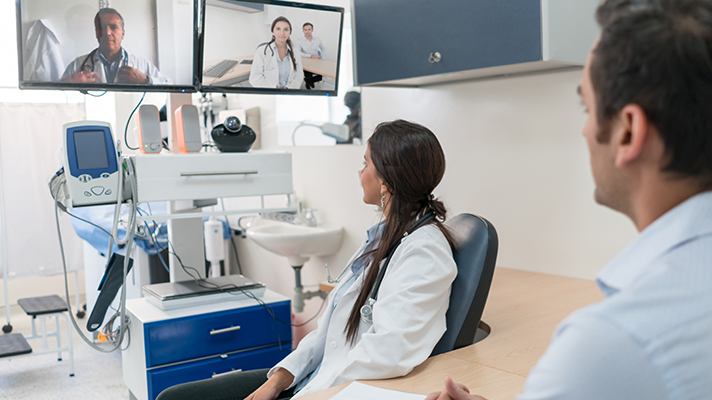
- telehealth market, which will experience a significant increase due to mobile platform technology.
WHY IT MATTERS
The COVID-19 pandemic has presented an opportunity for non-contact patient monitoring technologies, which can facilitate the early detection of respiratory complications in suspected patients, while reducing the chances of infection among physicians and healthcare workers.
“These technologies can also be leveraged by pharmaceutical companies to monitor the results of the drugs developed by them,” said Ashish Kaul, technical insights senior research analyst at Frost & Sullivan.
THE LARGER CONTEXT
Telemedicine has experienced a huge surge in adoption over the past few months, during the coronavirus pandemic, according to, founder of Digital Health Connector. She cites examples such as which uses AI and signal processing to measure patients’ vitals via a smartphone’s camera, and which has developed a device that patients can use at home during a teleconsultation to measure vital signs.


