





































The NHS is under a lot of time pressure these days, which increases the possibility of brief appointments and raises worries about delayed or incorrect diagnoses. These difficulties are made worse by a lack of resources and overworked staff, which leads to lengthy wait times for patients and standardized treatment plans.
Employees can function using a cursory understanding of patient information, depending on recent test findings and basic medical histories. Their capacity to completely comprehend patient demands is hampered by the lack of thorough data, which also jeopardizes the precision and personalization of diagnoses and treatments. This kind of medicine, with its restrictions and involvements, is best described as “shallow medicine.”
The term “deep medicine” was first used by American cardiologist and scientist Eric Topol in his 2019 book Deep Medicine: How Artificial Intelligence Can Make Health Care Human Again. He provides insights from his clinical and personal experiences to attack the shallow medical model practiced in the US.
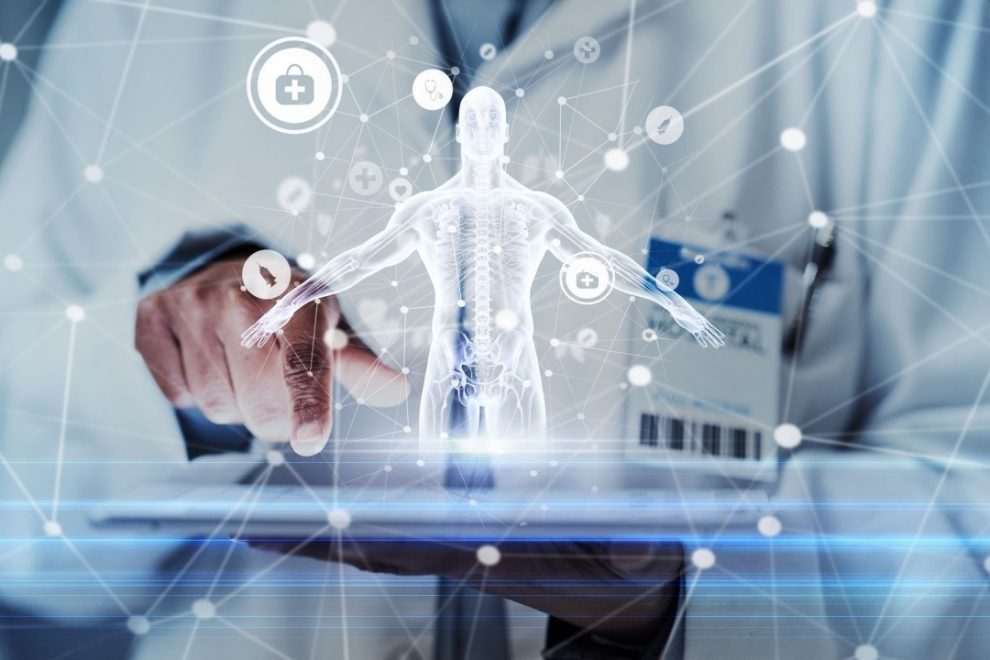
Deep medicine has the ability to transform operational considerations, therapeutic efficacy, and medical diagnostics. Topol offers artificial intelligence (AI) as the game-changing fix for these deeply ingrained, superficial systemic problems. He presents a thorough plan for integrating AI into various facets of healthcare that he refers to as the “deep medicine framework.”
Three fundamental pillars support the deep medicine framework: deep phenotyping, deep learning, and deep empathy. Adopting this paradigm could improve patient care, help medical professionals, and fortify the NHS system as a whole because these pillars are interrelated.
In-depth phenotyping
A complete picture of a person’s health data collected over the course of their entire life is referred to as “deep phenotyping.” A deep phenotype encompasses far more than the scant information gathered at a typical doctor’s visit or health event. It contains information about the body’s bacteria, or microbiome, as well as a person’s full DNA sequence and genetic code.
It includes everything that’s referred to as the “exposome,” or the environmental factors that people are exposed to throughout their lives, like air pollution. Together with other biological measurements and metrics, it contains indicators that provide information about the specific metabolic processes occurring in an individual’s body and the proteins their body is expressing. It consists of an individual’s electronic health records, which include their diagnosis, course of treatment, and medical history.
profound understanding
Deep phenotyping is based on the idea that combining this heterogeneous data would lead to more precise and better therapies, faster and more accurate diagnostics, and the advancement of preventative and predictive medicine techniques. However, interpreting all of the data presents major hurdles due to its sheer amount and complexity. This is the reason deep learning, a branch of artificial intelligence that aims to mimic human decision-making ability, is so important. A neural network algorithm, which is used in deep learning, makes use of tiny mathematical computers, or “neurons,” that are networked together to share and learn information.
Neural networks perform astonishingly well thanks to developments in technology, algorithms, and digital data availability. For example, they have made it possible to quickly and accurately analyze medical pictures, such MRIs and X-rays. They can produce reports and forecast the course of the patient’s illness and its results.
AI is showing promise in the development of new drugs and in identifying chemical markers found in the body, such as those that indicate the existence of cancer. They have the ability to operate robotic surgery devices. Furthermore, ChatGPT’s AI technology is capable of analyzing patient records and medical literature to assist in the difficult diagnosis-making process. Writing-related jobs like data input and note-taking can be automated.
profound empathy
Health services like the NHS may find that operational activities are streamlined with the integration of AI technologies. Hospital processes and bed management are two examples of this. But rather than being developed randomly, AI technology development should be focused on actual clinical needs and aimed at improving patient-staff relationships. This is the cornerstone of deep empathy that underpins profound medicine.
The personal touch, which was once the cornerstone of the health care profession, is progressively being eclipsed by an unwavering drive for efficiency. Administrative work is a greater strain for healthcare personnel. This may result in them spending less time with each patient, undermining the significance and possible advantages of providing empathetic care.
In order to meet the emotional and psychological requirements of patients and their families, staff members must be sensitive and have enough time. In addition to strengthening the human connection at the core of health care, this fosters a supportive and compassionate care environment.
Artificial intelligence (AI) technologies have the potential to lessen staff administrative workloads, allowing for more possibilities for meaningful patient connection. By taking down these obstacles, we can concentrate more on providing direct patient care, which should enhance the standard of care and, ideally, increase patient happiness.
Additionally, there is a revolutionary chance to reconsider efficiency and prioritize the bonds that exist between personnel and patients. It imagines a time when medical professionals are highly proficient in both technical and emotional intelligence, allowing them to treat patients’ psychological requirements with sincere empathy and understanding.


