










































Events Calendar

Mon
Tue
Wed
Thu
Fri
Sat
Sun
M
T
W
T
F
S
S
30
31
2
4
5
10
11
12
13
14
15
20
21
22
23
24
25
26
27
12:00 AM - Arab Health 2020
29
1
2
5th International Conference On Recent Advances In Medical Science ICRAMS
2020-01-01 - 2020-01-02    
All Day
2020 IIER 775th International Conference on Recent Advances in Medical Science ICRAMS will be held in Dublin, Ireland during 1st - 2nd January, 2020 as [...]
01 Jan
2020-01-01 - 2020-01-02    
All Day
The Academics World 744th International Conference on Recent Advances in Medical and Health Sciences ICRAMHS aims to bring together leading academic scientists, researchers and research [...]
03 Jan
2020-01-03 - 2020-01-04    
All Day
Academicsera – 599th International Conference On Pharma and FoodICPAF will be held on 3rd-4th January, 2020 at Malacca , Malaysia. ICPAF is to bring together [...]
The IRES - 642nd International Conference On Food Microbiology And Food SafetyICFMFS
2020-01-03 - 2020-01-04    
All Day
The IRES - 642nd International Conference on Food Microbiology and Food SafetyICFMFS aimed at presenting current research being carried out in that area and scheduled [...]
World Congress On Medical Imaging And Clinical Research WCMICR-2020
2020-01-03 - 2020-01-04    
All Day
The WCMICR conference is an international forum for the presentation of technological advances and research results in the fields of Medical Imaging and Clinical Research. [...]
International Conference On Agro-Ecology And Food Science ICAEFS
2020-01-06    
All Day
The key intention of ICAEFS is to provide opportunity for the global participants to share their ideas and experience in person with their peers expected [...]
RW- 743rd International Conference On Medical And Biosciences ICMBS
2020-01-07 - 2020-01-08    
All Day
RW- 743rd International Conference on Medical and Biosciences ICMBS is a prestigious event organized with a motivation to provide an excellent international platform for the [...]
International Conference On Nursing Ethics And Medical Ethics ICNEME
2020-01-08 - 2020-01-09    
All Day
An elegant and rich premier global platform for the International Conference on Nursing Ethics and Medical Ethics ICNEME that uniquely describes the Academic research and [...]
International Conference On Medical And Health SciencesICMHS-2020
2020-01-09 - 2020-01-10    
All Day
The ICMHS conference is an international forum for the presentation of technological advances and research results in the fields of Medical and Health Sciences. The [...]
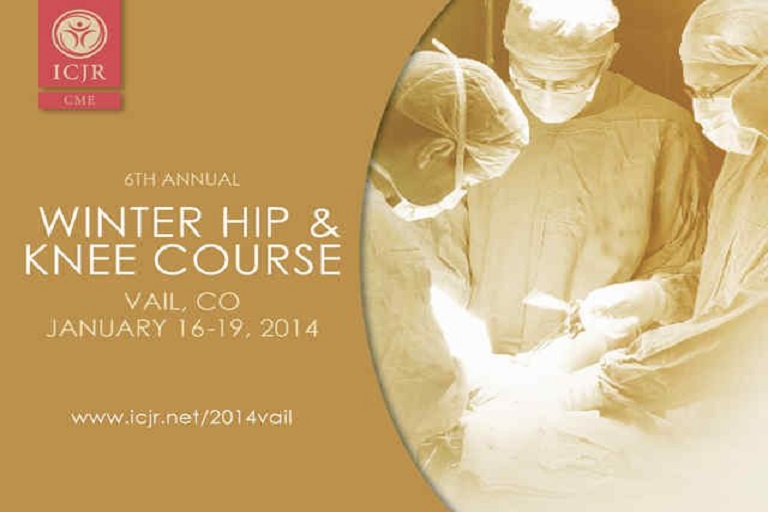
12th Annual ICJR Winter Hip And Knee Course
2020-01-16 - 2020-01-19    
All Day
Make plans to join us in Vail, Colorado, for the 12th Annual Winter Hip And Knee Course, the premier winter meeting focused on primary and [...]
3rd Big Sky Cardiology Update 2020
2020-01-17 - 2020-01-18    
All Day
ABOUT 3RD BIG SKY CARDIOLOGY UPDATE 2020 Following the success of the 2nd edition, I am pleased to invite you to the “3rd Big Sky [...]
A4M India Conference
2020-01-18 - 2020-01-20    
All Day
ABOUT A4M INDIA CONFERENCE Taking place for the first time in New Delhi, India, this two-day event will serve as a foundational course in the [...]
International Conference On Oncology & Cancer Research ICOCR-2020
2020-01-19 - 2020-01-20    
All Day
The ICOCR conference is an international forum for the presentation of technological advances and research results in the fields of Oncology & Cancer Research. The [...]
Arab Health 2020
2020-01-27 - 2020-01-30    
All Day
ABOUT ARAB HEALTH 2020 Arab Health is an industry-defining platform where the healthcare industry meets to do business with new customers and develop relationships with [...]
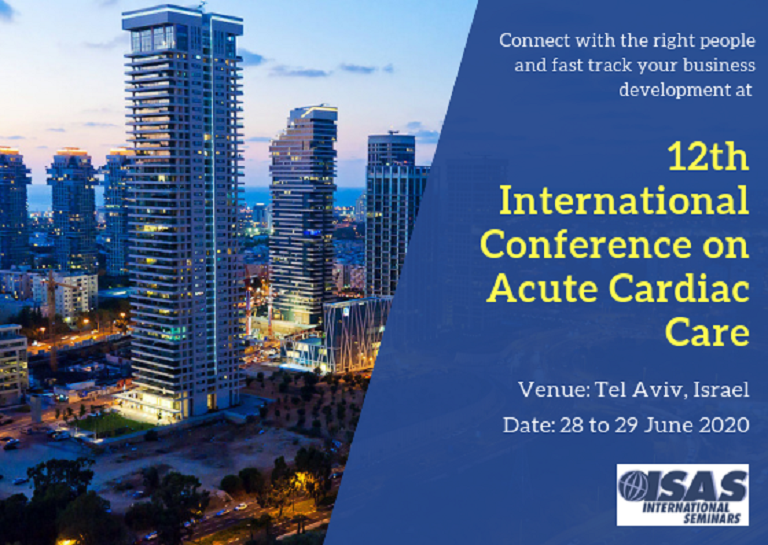
12th International Conference on Acute Cardiac Care
2020-01-28 - 2020-01-29    
All Day
ABOUT 12TH INTERNATIONAL CONFERENCE ON ACUTE CARDIAC CARE Acute Cardiac Care has been undergoing a substantial transformation in recent years as the population ages and [...]
30 Jan
2020-01-30 - 2020-01-31    
All Day
The ICMHS conference is an international forum for the presentation of technological advances and research results in the fields of Medical and Health Sciences. The [...]
Annual Lower and Upper Canada Anesthesia Symposium 2020 (LUCAS)
2020-01-31 - 2020-02-02    
All Day
ABOUT ANNUAL LOWER & UPPER CANADA ANESTHESIA SYMPOSIUM 2020 (LUCAS) On behalf of the Departments of Anesthesia of McGill University, Queen’s University, and the University [...]
RF - 577th International Conference On Medical & Health Science - ICMHS 2020
2020-02-02 - 2020-02-03    
All Day
577th International Conference on Medical & Health Science - ICMHS 2020. It will be held during 2nd-3rd February, 2020 at Berlin , Germany. ICMHS 2020 [...]
ISER- 747th International Conference On Science, Health And Medicine ICSHM
2020-02-02 - 2020-02-03    
All Day
ISER- 747th International Conference on Science, Health and Medicine ICSHM is a prestigious event organized with a motivation to provide an excellent international platform for [...]
Events on 2020-01-08
Events on 2020-01-09
Events on 2020-01-16
Events on 2020-01-17
Events on 2020-01-18
A4M India Conference
18 Jan 20
Haridwar
Events on 2020-01-27
Arab Health 2020
27 Jan 20
Dubai
Events on 2020-01-28
Events on 2020-01-30
Events on 2020-01-31
Articles

Doctors Quickly Embrace AI in Healthcare as Benefits and Risks Emerge

doctor-ai - EMR industry

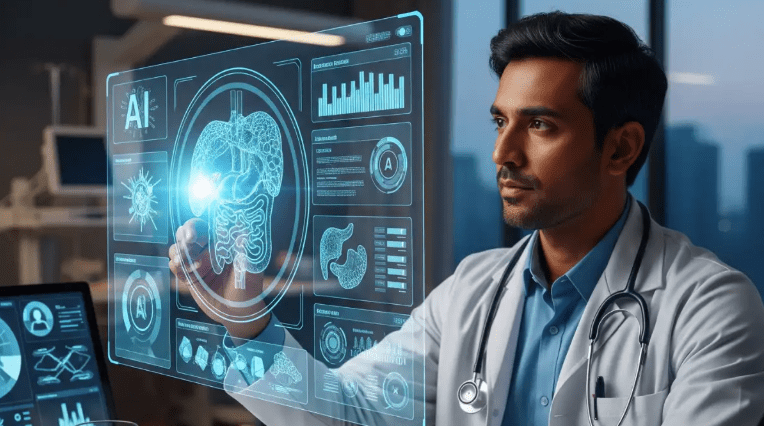
While physicians have traditionally been cautious about adopting new technologies—often due to challenges with systems like electronic health records—AI is seeing rapid uptake, driven by its diagnostic precision and ability to ease administrative workloads. Today, two-thirds of doctors report using AI tools. Still, concerns such as skill degradation and algorithmic bias highlight the need for strong oversight. With careful management, AI has the potential to transform healthcare.

Moving Past Historical Hesitation
Physicians have traditionally been cautious about adopting new technologies, often seeing them as disruptions rather than improvements to clinical workflows. This skepticism is largely rooted in past experiences—such as with electronic health records—which, despite promises of greater efficiency, often introduced clunky interfaces and added administrative burdens. As noted in a recent American Medical Association (AMA) article, these missteps left many doctors wary, contributing to burnout and resistance to future tech solutions.

However, artificial intelligence is beginning to break that pattern. Unlike earlier tools, AI is delivering immediate value through real-time diagnostic support and reduced administrative workload, leading to a notable shift in physician perception. According to the AMA, health AI usage among doctors has jumped 78% since 2023, with two-thirds of physicians now incorporating it into their practice. This surge in adoption suggests AI is addressing long-standing pain points without requiring the disruptive system overhauls of the past.

The Distinct Advantages of AI in Clinical Practice
What Makes AI Stand Out in Clinical Practice
AI’s key advantage lies in its ability to complement—not replace—human expertise. By handling routine or time-consuming tasks, AI enables physicians to focus on complex decision-making and patient care. Tools such as AI-powered imaging analysis and clinical decision support systems are already improving diagnostic accuracy and speeding up workflows. According to reports from the World Economic Forum, AI is being used to detect issues like bone fractures and assess emergency care needs more efficiently. Medical experts on X have also cited studies showing AI outperforms humans in certain reasoning tasks, achieving correct diagnoses in up to 80% of cases—compared to 30% by physicians alone.

Yet, this rapid adoption comes with caution. A study from Poland, highlighted by NPR’s Shots – Health News, found evidence of a “de-skilling” effect: doctors who used AI during colonoscopies later showed reduced detection rates when operating independently. This raises concerns about long-term reliance, especially in highly specialized procedures. The Economic Times and The Lancet have similarly warned that excessive dependence on AI could gradually erode essential clinical skills.

Navigating Risks and Ethical Considerations
Despite the challenges, many health systems are already seeing tangible benefits from AI—ranging from cost savings to earlier clinical interventions, according to Becker’s Hospital Review. A recent Healthcare IT News survey found that 58% of providers are using AI for administrative functions and 44% for clinical support. However, integration with existing data systems remains a persistent hurdle. On X, voices like Dr. Derya Unutmaz have raised concerns that AI could reduce the need for human physicians in routine care, while others highlight its superior diagnostic performance in large-scale studies.

Ethical issues further complicate the landscape. Biases embedded in AI algorithms risk worsening health disparities, particularly for women and minority groups—a concern amplified in posts on X referencing research showing AI’s tendency to downplay symptoms in these populations. Publications like PMC explore both the promise and pitfalls of AI in healthcare, emphasizing that while the technology has the potential to transform patient care, strong governance and oversight are essential to prevent errors and ensure equity.

Accelerating Adoption Amid Healthcare Transformation
The AI healthcare market is rapidly expanding, with projections reaching $187 billion by 2030, according to IT Brief, fueled by advances in precision medicine. Leaders at institutions like Dartmouth-Hitchcock highlight AI’s impact on streamlining workflows and allowing doctors to spend more time with patients, as noted in their recent news updates. Discussions on X by the AI for Health Hub point to ongoing challenges such as outdated IT infrastructure and staff skepticism, but overall optimism remains strong thanks to AI tools that automate note-taking and data management.

To maintain this momentum, experts stress the importance of training programs that help clinicians retain their skills while effectively integrating AI. BMC Medical Education emphasizes that educating healthcare providers on AI is essential for its ethical and successful adoption. Although some historical resistance persists, AI’s demonstrated benefits and continuous improvements position it as a transformative force that could significantly enhance healthcare delivery—if implemented with careful oversight.


