

























Events Calendar

Mon
Tue
Wed
Thu
Fri
Sat
Sun
M
T
W
T
F
S
S
1
2
3
4
5
6
7
8
10
11
12
13
14
15
16
19
11:00 AM - Charmalot 2025
20
21
22
23
24
25
26
27
29
1
2
3
4
5
Oracle Health and Life Sciences Summit 2025
2025-09-09 - 2025-09-11    
12:00 am
The largest gathering of Oracle Health (Formerly Cerner) users. It seems like Oracle Health has learned that it’s not enough for healthcare users to be [...]
MEDITECH Live 2025
2025-09-17 - 2025-09-19    
8:00 am - 4:30 pm
This is the MEDITECH user conference hosted at the amazing MEDITECH conference venue in Foxborough (just outside Boston). We’ll be covering all of the latest [...]
AI Leadership Strategy Summit
2025-09-18 - 2025-09-19    
12:00 am
AI is reshaping healthcare, but for executive leaders, adoption is only part of the equation. Success also requires making informed investments, establishing strong governance, and [...]
OMD Educates: Digital Health Conference 2025
2025-09-18 - 2025-09-19    
7:00 am - 5:00 pm
Why Attend? This is a one-of-a-kind opportunity to get tips from experts and colleagues on how to use your EMR and other innovative health technology [...]
Charmalot 2025
2025-09-19 - 2025-09-21    
11:00 am - 9:00 pm
This is the CharmHealth annual user conference which also includes the CharmHealth Innovation Challenge. We enjoyed the event last year and we’re excited to be [...]
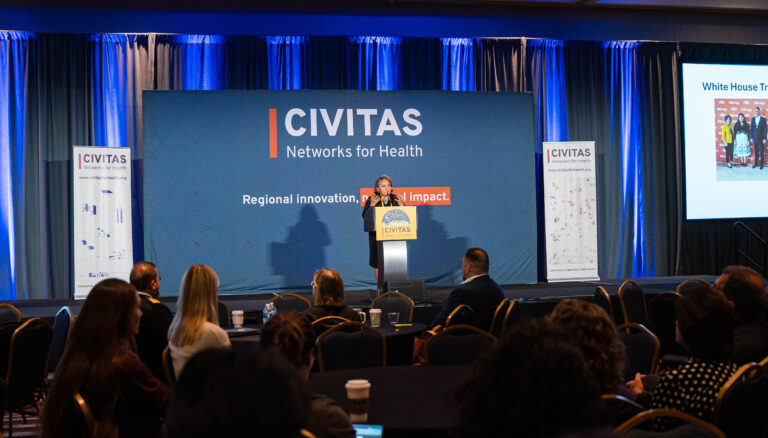
Civitas 2025 Annual Conference
2025-09-28 - 2025-09-30    
8:00 am
Civitas Networks for Health 2025 Annual Conference: From Data to Doing Civitas’ Annual Conference convenes hundreds of industry leaders, decision-makers, and innovators to explore interoperability, [...]
TigerConnect + eVideon Unite Healthcare Communications
2025-09-30    
10:00 am
TigerConnect’s acquisition of eVideon represents a significant step forward in our mission to unify healthcare communications. By combining smart room technology with advanced clinical collaboration [...]
Pathology Visions 2025
2025-10-05 - 2025-10-07    
8:00 am - 5:00 pm
Elevate Patient Care: Discover the Power of DP & AI Pathology Visions unites 800+ digital pathology experts and peers tackling today's challenges and shaping tomorrow's [...]
Events on 2025-09-09
Events on 2025-09-17
MEDITECH Live 2025
17 Sep 25
MA
Events on 2025-09-18
OMD Educates: Digital Health Conference 2025
18 Sep 25
Toronto Congress Centre
Events on 2025-09-19
Charmalot 2025
19 Sep 25
CA
Events on 2025-09-28
Civitas 2025 Annual Conference
28 Sep 25
California
Events on 2025-10-05
Articles

EHRs should develop as large Information use develops

ehrs

As big data use continues to increase in healthcare, electronic health records will need to evolve simultaneously, researchers from Northwestern University, Geisinger Health System and Mount Sinai School of Medicine write in a viewpoint recently published in the Journal of the American Medical Association. Current EHRs, the authors say, are not built to handle the capacity of data created by current electronic medical tools, a problem that will only continue to grow as data access becomes easier.

“EHRs are designed to facilitate day-to-day patient care,” co-study author Justin Starren, chief of the division of health and biomedical informatics in the department of preventive medicine at Northwestern’s Feinberg School of Medicine, says in an announcement. “EHRs are not designed to store large blocks of data that do not require rapid access, nor are they currently capable of integrating genomics clinical decision support.”

As a temporary solution until more advanced EHRs are developed, Starren and his colleagues suggest using auxiliary systems for the storage of data culled from what they call increasing ‘omics’ research efforts–studies focusing on genomics, epigenomics, proteomics and metabolomics. Groups like the Electronic Medical Records and Genomics (eMERGE) consortium, they say, already are “bridging the chasm” by creating interoperable systems with the ability to integrate large-scale genomic data with clinical workflow.


es to increase in healthcare, electronic health records will need to evolve simultaneously, researchers from Northwestern University, Geisinger Health System and Mount Sinai School of Medicine write in a viewpoint recently published in the Journal of the American Medical Association. Current EHRs, the authors say, are not built to handle the capacity of data created by current electronic medical tools, a problem that will only continue to grow as data access becomes easier.

“EHRs are designed to facilitate day-to-day patient care,” co-study author Justin Starren, chief of the division of health and biomedical informatics in the department of preventive medicine at Northwestern’s Feinberg School of Medicine, says in an announcement. “EHRs are not designed to store large blocks of data that do not require rapid access, nor are they currently capable of integrating genomics clinical decision support.”

As a temporary solution until more advanced EHRs are developed, Starren and his colleagues suggest using auxiliary systems for the storage of data culled from what they call increasing ‘omics’ research efforts–studies focusing on genomics, epigenomics, proteomics and metabolomics. Groups like the Electronic Medical Records and Genomics (eMERGE) consortium, they say, already are “bridging the chasm” by creating interoperable systems with the ability to integrate large-scale genomic data with clinical workflow.

“Omic data are different,” the authors write. “An individual’s germline genetic sequence changes little over a lifetime, but understanding of that sequence is changing rapidly. The 1000 Genomes project has identified tens of millions of different genomic variants; the clinical significance of these variants is mostly unknown, but current understanding is rapidly changing. … This necessitates systems that dynamically reanalyze and reinterpret stored static genomic results in the context of evolving knowledge.”

(source)