








































Events Calendar

Mon
Tue
Wed
Thu
Fri
Sat
Sun
M
T
W
T
F
S
S
25
27
28
29
1
3
5
6
7
8
11
13
15
17
18
19
20
21
22
24
25
27
28
29
31
1
2
3
4
5
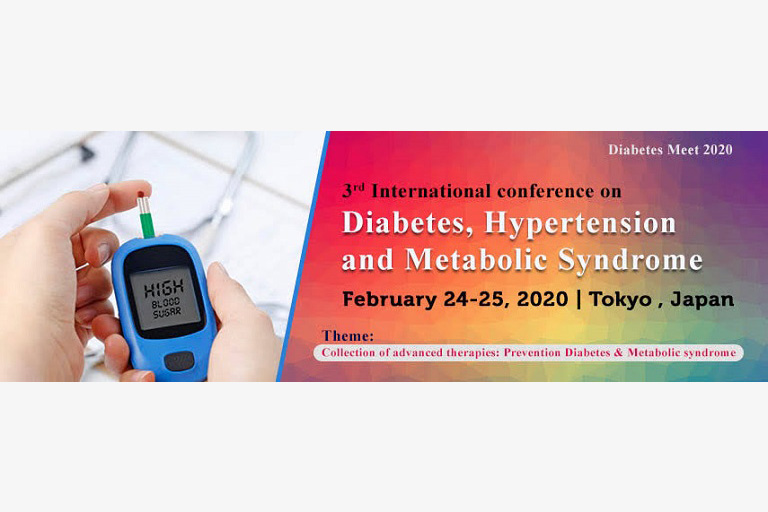
3rd International conference on  Diabetes, Hypertension and Metabolic Syndrome
2020-02-24 - 2020-02-25    
All Day
About Diabetes Meet 2020 Conference Series takes the immense Pleasure to invite participants from all over the world to attend the 3rdInternational conference on Diabetes, Hypertension and [...]
3rd International Conference on Cardiology and Heart Diseases
2020-02-24 - 2020-02-25    
All Day
ABOUT 3RD INTERNATIONAL CONFERENCE ON CARDIOLOGY AND HEART DISEASES The standard goal of Cardiology 2020 is to move the cardiology results and improvements and to [...]
Medical Device Development Expo OSAKA
2020-02-26 - 2020-02-28    
All Day
ABOUT MEDICAL DEVICE DEVELOPMENT EXPO OSAKA What is Medical Device Development Expo OSAKA (MEDIX OSAKA)? Gathers All Kinds of Technologies for Medical Device Development! This [...]
Beauty Care Asia Pacific Summit 2020 (BCAP)
2020-03-02 - 2020-03-04    
All Day
Groundbreaking Event to Address Asia-Pacific’s Growing Beauty Sector—Your Window to the World’s Fastest Growing Beauty Market The international cosmetics industry has experienced a rapid rise [...]
IASTEM - 789th International Conference On Medical, Biological And Pharmaceutical Sciences ICMBPS
2020-03-04 - 2020-03-05    
All Day
IASTEM - 789th International Conference on Medical, Biological and Pharmaceutical Sciences ICMBPS will be held on 4th - 5th March, 2020 at Hamburg, Germany . [...]
Global Drug Delivery And Formulation Summit 2020
2020-03-09 - 2020-03-11    
All Day
Innovative solutions to the greatest challenges in pharmaceutical development. Price: Full price delegate ticket: GBP 1495.0. Time: 9:00 am to 6:00 pm About Conference KC [...]
Inborn Errors Of Metabolism Drug Development Summit 2020
2020-03-10 - 2020-03-12    
All Day
Confidently Translate, Develop and Commercialize Gene, mRNA, Replacement Therapies, Small Molecule and Substrate Reduction Therapies to More Efficaciously Treat Inherited Metabolic Diseases. Time: 8:00 am [...]
Texting And E-Mail With Patients: Patient Requests And Complying With HIPAA
2020-03-12    
All Day
Overview:  This session will focus on the rights of individuals to communicate in the manner they desire, and how a medical office can decide what [...]
14 Mar
2020-03-14 - 2020-03-21    
All Day
Topics in Family Medicine, Hematology, and Oncology CME Cruise. Prices: USD 495.0 to USD 895.0. Speakers: David Parrish, MS, MD, FAAFP, Alexander E. Denes, MD, [...]
International Conference On Healthcare And Clinical Gerontology ICHCG
2020-03-14 - 2020-03-15    
All Day
An elegant and rich premier global platform for the International Conference on Healthcare and Clinical Gerontology ICHCG that uniquely describes the Academic research and development [...]
World Congress And Expo On Cell And Stem Cell Research
2020-03-16 - 2020-03-17    
All Day
"The world best platform for all the researchers to showcase their research work through OralPoster presentations in front of the international audience, provided with additional [...]
25th International Conference on  Diabetes, Endocrinology and Healthcare
2020-03-23 - 2020-03-24    
All Day
About Conference: Conference Series LLC Ltd is overwhelmed to announce the commencement of “25th International Conference on Diabetes, Endocrinology and Healthcare” to be held during [...]
ISN World Congress of Nephrology 2020
2020-03-26 - 2020-03-29    
All Day
ABOUT ISN WORLD CONGRESS OF NEPHROLOGY 2020 ISN World Congress of Nephrology (WCN) takes place annually to enable this premier educational event more available to [...]
30 Mar
2020-03-30 - 2020-03-31    
All Day
This Cardio Diabetes 2020 includes Speaker talks, Keynote & Poster presentations, Exhibition, Symposia, and Workshops. This International Conference will help in interacting and meeting with diabetes and [...]
Trending Topics In Internal Medicine 2020
2020-04-02 - 2020-04-04    
All Day
Trending Topics in Internal Medicine is a CME course that will tackle the latest information trending in healthcare today.   This course will help you discuss options [...]
2020 Summit On National & Global Cancer Health Disparities
2020-04-03 - 2020-04-04    
All Day
The 2020 Summit on National & Global Cancer Health Disparities is planned with the goal of creating a momentum to minimize the disparities in cancer [...]
Events on 2020-02-26
Events on 2020-03-02
Events on 2020-03-09
Events on 2020-03-10
Events on 2020-03-16
Events on 2020-03-26
Events on 2020-03-30
Events on 2020-04-02
Events on 2020-04-03
Latest News

Factors Predicting Poor Locoregional Control in Tongue Cancer

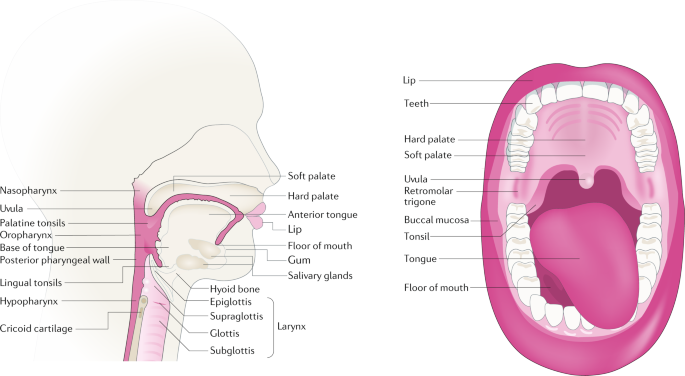
In patients with pT1-2N0 oral tongue squamous cell carcinoma undergoing partial glossectomy and elective neck dissection, inferior locoregional control (LRC) was associated with depth of invasion, lymphovascular space invasion, and positive glossectomy specimen margins. These retrospective findings, presented at the 2024 ASTRO Multidisciplinary Head and Neck Cancers Symposium, remained significant even in cases with final negative tumor bed margins.At a median follow-up of 45.6 months, the all-comer patient population exhibited 3-year locoregional control (LRC) and overall survival (OS) rates of 88.0% and 92.5%, respectively. Among patients with pT1 disease, these rates were 92.0% and 95.2%, while in those with pT2 disease, the rates were 85.0% and 90.5%.

However, during the multivariate analysis, individuals with positive glossectomy margins exhibited poorer locoregional control (HR, 6.66; 95% CI, 1.60-27.78; P = .009). Lymphovascular space invasion (HR, 6.90; 95% CI, 1.42-33.65; P = .02) and depth of invasion (HR, 1.31; 95% CI, 1.06-1.63; P = .01) were also correlated with diminished locoregional control.

The lead study author, Michael Modzelewski, MD, along with the co-investigators, stated in a poster presented at the meeting, “Patients with these risk factors may be considered for adjuvant radiotherapy to optimize disease control.”

Individuals with early-stage tongue squamous cell carcinoma typically do not undergo adjuvant radiation due to their low recurrence risk. After surgery, the status of the primary glossectomy specimen margin has been observed to have a stronger correlation with local recurrence than the status of additional tumor bed margins, as stated by the authors.

The investigators aimed to identify the pathological factors associated with locoregional recurrence in patients with early-stage tongue squamous cell carcinoma who underwent surgery alone. Additionally, they explored the impact of a positive glossectomy specimen margin on disease control concerning final negative tumor bed margins.

The research included 110 patients diagnosed with pT1-2N0 oral tongue squamous cancer, adhering to the American Joint Committee on Cancer (AJCC) 8th edition criteria. These individuals underwent partial glossectomy and elective dissection from 2015 to 2021, excluding adjuvant radiation. Pathology reports were examined for factors such as tumor size, depth of invasion, glossectomy specimen margin, final tumor bed margin status, and perineural or lymphovascular space invasion. Individuals with positive final margins or a history of head and neck radiation were excluded.

The Kaplan-Meier method was employed to estimate locoregional control (LRC) and overall survival (OS), with a Cox proportional hazards model identifying prognostic factors for LRC in multivariate analysis.

Concerning baseline characteristics, the median age was 52 years, with the majority being male (54.5%) and having pT2 stage disease (58.2%). There were 33 lymph nodes dissected on average, and the median tumor size measured 16 mm, with a depth of invasion reaching 5 mm.

The majority of patients did not exhibit perineural invasion (84.7%), while 3.6% had lymphovascular space invasion. Positive glossectomy specimen margins were observed in 8.2% of cases.

Further findings revealed that among patients with positive glossectomy specimen margins and those without, the 3-year locoregional control (LRC) rates were 66.7% and 89.5%, respectively. Similarly, the rates were 0.0% for individuals with lymphovascular space invasion and 89.4% for those without. Among the 8 patients experiencing regional failure, 5 had recurrence in the ipsilateral neck alone (62.5%), 2 in the bilateral neck (25.0%), and 1 with isolated contralateral neck recurrence (12.5%).


