




FCC awards Massachusetts FQHC Telehealth Consortium $3.1M
The grant was given to the state group to increase telemedicine quality and access, with the goal of combating healthcare disparities for lower-income people and communities of color.
The Massachusetts FQHC Telehealth Consortium has been awarded a grant from the Federal Communications Commission to increase telemedicine capacity in community health centers statewide. The consortium is made up of 35 federally qualified health centers.
The $3.1 million grant stems from the FCC’s Connect Care Pilot Program, which is designed to help eligible provider organizations defray the costs of offering virtual care and study how the FCC’s Universal Service Fund can help support the trend toward connected-care services.
The consortium plans to apply its grant funding toward increasing bandwidth at member health center sites and providing mobile hotspots for use by patients. These technology enhancements should allow for the provision of mental health services and substance use disorder treatment to more than 75,000 Massachusetts health center patients through the use of remote patient monitoring, video visits and other connected services.
In the early days of the COVID-19 public health emergency, C3 and the Massachusetts League of Community Health Centers launched the FQHC Telehealth Consortium to help ensure continuity of care for health center patients in communities that bear some of the highest rates of positive cases and greatest health disparities.
This is the second grant the FCC has awarded the consortium in the past six month to help support sustainable telehealth capacity across Massachusetts’ health centers.
Health center patients have so far liked telehealth services – 93% rating their experience as good or excellent. Behavioral health showed the highest rates of adoption and satisfaction among telemedicine offerings.
The consortium notes that 50% of Asians, 49% of Latinx and 42% of Black Americans have high interest in continuing with telemedicine for check-ups and urgent care after the pandemic. But availability of connected-care devices and access to broadband remain significant challenges.
Health equity is a burning issue in healthcare today. Recently, for example, Dr. Patrice A. Harris, 174th president of the American Medical Association and the first African-American woman to hold that title, spoke as part of the virtual “CHeT Talks” series hosted by the University of Rochester’s Center for Health + Technology.
COVID-19 “has elevated so many issues that many of us already knew,” Harris said. “Many of us already knew about the health inequities. But what this pandemic has forced us to do is have a conversation about structural racism – and more conversations about the interconnection between the social determinants of health.”
On another front, even before St. John’s Well Child and Family Center in Los Angeles had the resources to provide large-scale COVID-19 testing, it was clear that its service area of South L.A. and Compton would be at significantly higher risk for COVID-19 infection and complications than other areas of L.A. County.
This region is densely populated. It has high levels of poverty, a large immigrant population, is primarily Latino and Black, and is overrepresented in essential jobs that cannot be performed remotely. These populations experience high comorbidities, including hypertension, diabetes, heart conditions, asthma and behavioral health issues.
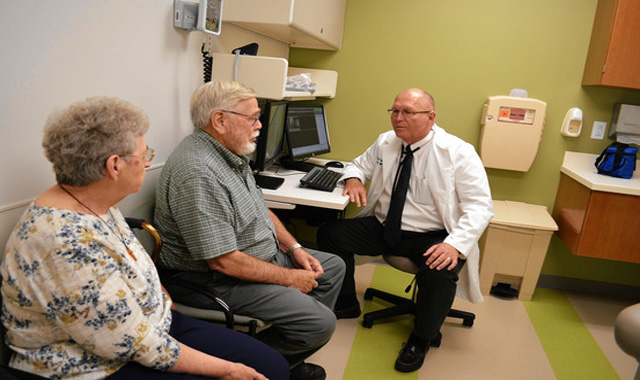
It turned to a robust telemedicine solution as the answer. As a temporary solution while it upgraded its technology, it started using Doxy.me for telehealth, due to the simple user interface. Patients do not have to download an app and can just use a phone. Patients can already access some primary care services – medical, dental and behavioral – without physically entering clinics.
This is especially significant, given that the majority of patients are hourly workers who have difficulty taking time off for in-person visits. And it eliminates the need for those without cars to use public transportation during a pandemic.
“We are thrilled that the FCC has recognized us with this funding,” said Michael Curry, consortium cofounder and CEO of the Massachusetts League of Community Health Centers, in a statement. “These technologies could be a game changer in providing lower-income patients and communities of color access, choice and control over their participation in healthcare.”
“The COVID-19 pandemic has not only made telehealth a necessity in providing care, it’s also underscored just how essential connected-care services are to lower-income patients and communities of color in accessing healthcare,” added Christina Severin, consortium cofounder and CEO of C3.
“This grant will help us better serve health center communities with telemedicine – now and after the pandemic.”
Source : Healthnews