






















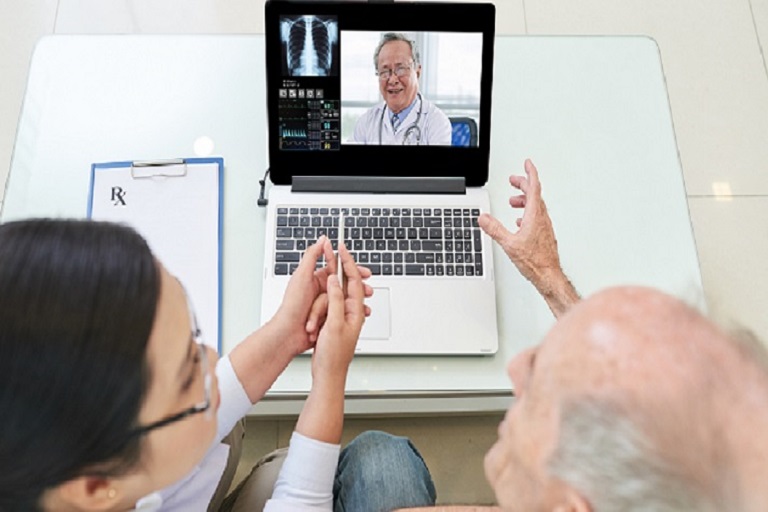
The Federal Communications Commission approved the next five funding applications for the COVID-19 Telehealth Program, which includes health centers from coast to coast.
WHY IT MATTERS
These include NYU Langone Health in New York City; St. John’s Well Child and Family Center in Los Angeles; Health Partners of Western Ohio in Lima; Banyan Community Health Center in Coral Gables, Florida; and the University of Michigan Hospital in Ann Arbor.
Award amounts ranged from $380,000 to just under $1 million. Langone Health, for example, was awarded $983,772 to employ telehealth in operating rooms and conference-room spaces that have been converted into ICUs. The aim of the project is to help doctors and other caregivers carefully monitor ICU patients from separate floors, which could help reduce exposure to the coronavirus and maximize the limited supply of personal protective equipment.
In other projects, telehealth services will be set up to reach low-income and high-risk patients so they can receive medical care at home during the pandemic, and telemedicine carts will be deployed so patients can receive medical care at community locations.
All told, the FCC’s telehealth funding program now has reached 11 healthcare provider organizations in 8 states for a total of $6.94 million. It’s part of the recently enacted CARES Act, in which Congress appropriated $200 million to the FCC to support deployment of telehealth services during the pandemic.
Just days after the application period opened on April 13, some $3.23 million was approved to help health systems deploy telemedicine technology, connected devices and remote patient-monitoring tools.
The FCC also noted it would continue to evaluate applications and distribute additional funding on a rolling basis. The details required for each of the application steps can be found in the FCC’s new public notice.
THE LARGER TREND
Telehealth has emerged as a key care technology for multiple groups during the pandemic, with some practices experiencing an explosion of telehealth use, mostly for acute and chronic-condition-care visits.
The technology also could help the growing number of practices facing closure, with telehealth vendors also recognizing the opportunity to help these members of the healthcare ecosystem brace for uncertain times.
ON THE RECORD
“Telehealth is proving to be an invaluable resource to treat patients during the coronavirus pandemic,” FCC Chairman Ajit Pai said in a statement. “From implementing remote patient monitoring to helping low-income patients receive care in their communities, I am confident that the funding we approved today will help healthcare providers expand their telehealth efforts in New York, Michigan and elsewhere.”


