






























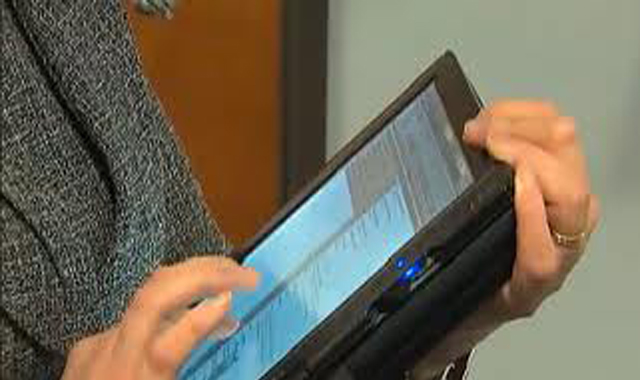
Doctors should hire assistants to fill out electronic health records for them — tagging along on exams if necessary — to avoid job burnout, says ScribeAmerica.
Is the electronic health record falling short of its promise and contributing to physician burnout because it saddles doctors with ever-increasing administrative tasks?
Yes, thinks Dr. Michael Murphy, an ER physician who co founded ScribeAmerica a decade ago.
“Physicians feel taken away from patients and families,” Murphy told InformationWeek in a phone interview. “They’re spending three hours a night filling out [the EHR].”
Physicians today spend, on average, eight to 12 minutes per patient filling out the EHR, according to a number of studies.
But this data-entry duty is increasing with the Affordable Care Act (ACA) and other regulations that require EHRs, as well as the forthcoming update to ICD-1, Murphy said.
“Patient care will suffer as our physicians struggle to keep up with all of these demands,” Murphy contends, adding that physician burnout is a real problem.
[Is there any hope for doctors and health IT to find true love? Read Doctors & EHR: Can This Shotgun Marriage Be Saved?]
A 2012 survey of more than 7,000 doctors found that 45.8% displayed at least one characteristic of burnout, and concluded physicians were at higher risk of burnout than other US workers.
ScribeAmerica currently has 3,700 discipline-specific scribes working in 350 hospitals in 40 states. For every two openings, the company interviews eight people, trains < four, and graduates two, Murphy said, adding that 60% to 70% of them already are working toward degrees in medicine.
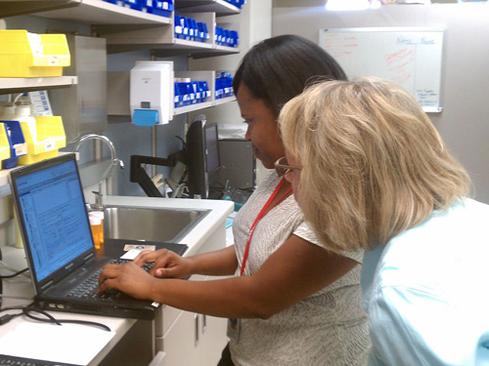
“With a scribe, you have real-time, in-parallel documentation,” Murphy said. Not only does this free a doctor from the administrative task of filling out an EHR, it can capture activities and insights that might be lost if the EHR is filled out after the exam or procedure.
What about doctors who fill out the EHR during an exam, using a computer or tablet computer? Murphy cited a January study by Northwestern Medicine that found when physicians spend too much time looking at the computer screen they might miss nonverbal cues and communicate less well with patients.
Capturing every billable procedure on the chart is another major selling point of medical scribes.
According to Murphy, medical organizations using ScribeAmerica scribes increase their relative value units from 2.1% to 2.4%. RVUs are a measure of value used in the United States Medicare reimbursement formula for physician services.
Nowhere is efficiency more needed than in the emergency department, where patient scheduling isn’t under the control of the business.
Dr. Andy Mulvey, regional medical director at EmCare, a physician services staffing company, began using ScribeAmerica before joining EmCare, when he had his own private practice group.
“In the ED, you get paid on throughput measures,” Mulvey told InformationWeekin a phone interview. Improving the “left without being seen” rate, which can run as high as 10% in some hospital emergency rooms, has “a financial value,” he said. Medical scribes can improve these numbers, while improving documentation, compliance, and billing.
But the numbers don’t always work.
At first blush, Dr. Kenneth Felz, an internist at Meriter Medical Clinic in Middleton, Wis., might seem an ideal candidate for ScribeAmerica’s services.
Meriter deployed the EpicCare EHR software system three years ago, and Felz said he uses every automation tool available, including voice recognition, to streamline data entry into the system.
Even so, “I spend a lot of hours at home doing documentation,” Felz told InformationWeek.
But Felz says he cannot cost-justify scribes for his primary-care operation, except perhaps for a handful of his clinic’s most-expensive specialists.
“My cardiologist makes $10,000 in 10 minutes. I work all day for $1,000,” he said.
Felz also raises a philosophical issue: “When you’re in the exam room with patient, is it okay to have a third person in with you?”
ScribeAmerica’s Murphy, not surprisingly, has a ready answer for this question.
“Patients may ask more questions,” Murphy said, but suggested this is a benefit and can establish a “new flow and dynamic” between doctor and patient.
Healthcare IT priorities have remained remarkably consistent year over year among respondents to our InformationWeek 2013 Healthcare IT Priorities Survey, even as we see rapid change in the industry overall. Our take is that many healthcare IT pros are up to their necks in alligators and have lost sight of their initial objective: Drain the swamp. Download the Healthcare IT Priorities Survey report today. (Free registration required.)
Ellis Booker has held senior editorial posts at a number of A-list IT publications, including UBM’s InternetWeek, Mecklermedia’s Web Week, and IDG’s Computerworld. At Computerworld, he led Internet and electronic commerce coverage in the early days of the web and was … View Full Bio


