


























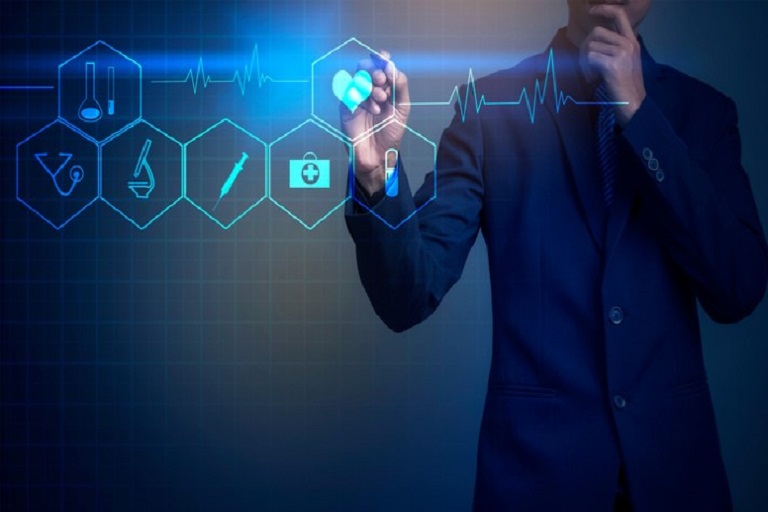
Precision health is the delivery of customer and personalised solutions to people to encourage them to better manage their health, by addressing potential behavioral risk factors, like lack of exercise, and also better managing some predisposing other factors that can cause disease, like genetic predisposition. There are various drivers encouraging change and these are starting to demonstrably exert their influence as well as start to act synergistically.
These changes comprise:
- Ageing and accompanying multi-morbidity, both of which drive increases in activity in existing health and care systems as they strive to manage non-communicable diseases. This increase in activity puts further financial pressures on these systems which are already “over- trading” and further encourage the adoption of value-based solutions where prevention of disease becomes at least as important as treatment of existing conditions.
- The explosion of data availability and the deployment of processes that allow for interoperability. This drives the potential to develop more customised treatment plans for people. This availability of data is likely to be further enhanced once 5G networks are employed and the internet of things enabled.
- The availability of genomic information around individuals which is becoming more commonplace. It enables people to better assess their likelihood of developing disease and thus better target their efforts towards risk mitigation in situations where we understand the pathophysiology of disease and the behaviors we need to adopt to reduce the likelihood of developing these.
- The potential for us to be able to measure the epigenetic biomarkers that act as “switches” amplifying or turning off the effect of our genes and the increasing affordability of access to these biomarkers. At present these are mainly concentrated around the cardiovascular space, but no doubt the range will widen as science advances. Also the fact that the cardiovascular contribution to cardio-metabolic disorders is now understood to have an even more ubiquitous role is an added factor to take into consideration.
- The increased understanding around the role of behavioral sciences in the management of risk reduction of non-communicable disease and the increased ability to access this data on a personalised basis.
By combining all these parameters on each individual, a very accurate picture thus emerges on the likelihood of an individual developing discreet diseases and bespoke solutions can be developed to assist the person in better managing their health and care.
Data consent in the new frontier
The fact that all this is possible does not necessarily mean that these parameters will be collected within a personalised solution as one would need a secure location for all of this data to be nested within and a location where the use of data, particularly its secondary use could be governed safely and securely. No doubt technological solutions exist to make this happen, but that is merely part of the picture. What is potentially even more complex is the issue of consent around the use of this data.
The consent of the person is clearly an essential pre-requisite to deploying the emerging solutions developing the whole area of assisting the person better manage their health and care in the area of health and wellness. It is becoming clearer that the well worn solutions of blanket consent may well not necessarily fulfil the expectations of people in allowing their data to be used and the time has come for us to move to a more dynamic interaction with people which would include not only the use of gamification to assist in sustaining engagement but also a more dynamic approach to obtaining consent. This is likely to be the place where innovative companies will succeed and the less well versed in the interface of their technologies with people will be thwarted in achieving rapid deployment.
The world of technology and its successful utilisation is now one which not only is looking to the use of the scientific and technological breakthrough – of which there are many, but also of the slicker deployments of technology which engage and sustain relationships with people and develop trusting relationships. This is the real new frontier.


