










Events Calendar

Mon
Tue
Wed
Thu
Fri
Sat
Sun
M
T
W
T
F
S
S
29
30
31
1
2
3
4
5
6
7
8
9
11
12
13
16
17
18
19
21
23
24
25
26
27
29
30
31
1
The International Meeting for Simulation in Healthcare
2015-01-10 - 2015-01-14    
All Day
Registration is Open! Please join us on January 10-14, 2015 for our fifteenth annual IMSH at the Ernest N. Morial Convention Center in New Orleans, Louisiana. Over [...]
Finding Time for HIPAA Amid Deafening Administrative Noise
2015-01-14    
1:00 pm - 3:00 pm
January 14, 2015, Web Conference 12pm CST | 1pm EST | 11am MT | 10am PST | 9am AKST | 8am HAST Main points covered: [...]
Meaningful Use  Attestation, Audits and Appeals - A Legal Perspective
2015-01-15    
2:00 pm - 3:30 pm
Join Jim Tate, HITECH Answers  and attorney Matt R. Fisher for our first webinar event in the New Year.   Target audience for this webinar: [...]
iHT2 Health IT Summit
2015-01-20 - 2015-01-21    
All Day
iHT2 [eye-h-tee-squared]: 1. an awe-inspiring summit featuring some of the world.s best and brightest. 2. great food for thought that will leave you begging for more. 3. [...]
Chronic Care Management: How to Get Paid
2015-01-22    
1:00 pm - 2:00 pm
Under a new chronic care management program authorized by CMS and taking effect in 2015, you can bill for care that you are probably already [...]
Proper Management of Medicare/Medicaid Overpayments to Limit Risk of False Claims
2015-01-28    
1:00 pm - 3:00 pm
January 28, 2015 Web Conference 12pm CST | 1pm EST | 11am MT | 10am PST | 9AM AKST | 8AM HAST Topics Covered: Identify [...]
Events on 2015-01-10
Events on 2015-01-20
iHT2 Health IT Summit
20 Jan 15
San Diego
Events on 2015-01-22
Press Releases

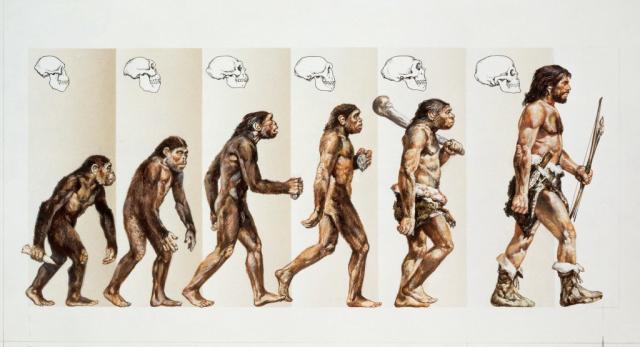
Genetic change: human ancestors lost tails

A genetic change in our ancient ancestors may partly explain the absence of tails in humans compared to monkeys, according to a recent study led by researchers at NYU Grossman School of Medicine.

Researchers at NYU Grossman School of Medicine compared the DNA of tailless apes and humans with that of tailed monkeys, revealing an insertion of DNA, AluY, shared by apes and humans but missing in monkeys. By engineering mice to examine the effects of this AluY insertion in the TBXT gene related to tail development, the study found various tail effects, including some mice born without tails. The research addresses the genetic basis of tail loss in human evolution, highlighting the insertion’s influence on alternative splicing and resulting in diverse tail lengths. The study emphasizes the intricate nature of genetic regulation and its role in species evolution. The research suggests that tail loss in primates, including humans, occurred around 25 million years ago, potentially adapting to ground life. Future experiments will explore potential trade-offs and the impact of tail loss on neural tube birth defects.