




Events Calendar

Mon
Tue
Wed
Thu
Fri
Sat
Sun
M
T
W
T
F
S
S
30
31
1
12:00 AM - TEDMED 2017
2
3
5
6
7
8
10
11
12
13
14
15
16
17
18
19
20
21
22
23
24
25
26
27
28
30
1
2
3
TEDMED 2017
2017-11-01 - 2017-11-03    
All Day
A healthy society is everyone’s business. That’s why TEDMED speakers are thought leaders and accomplished individuals from every sector of society, both inside and outside [...]
AMIA 2017 Annual Symposium
2017-11-04 - 2017-11-08    
All Day
Call for Participation We invite you to contribute your best work for presentation at the AMIA Annual Symposium – the foremost symposium for the science [...]
Beverly Hills Health IT Summit
2017-11-09 - 2017-11-10    
All Day
About Health IT Summits U.S. healthcare is at an inflection point right now, as policy mandates and internal healthcare system reform begin to take hold, [...]
Forbes Healthcare Summit
2017-11-29 - 2017-11-30    
All Day
ForbesLive leverages unique access to the world’s most influential leaders, policy-makers, entrepreneurs, and artists—uniting these global forces to harness their collective knowledge, address today’s critical [...]
Events on 2017-11-01
TEDMED 2017
1 Nov 17
La Quinta
Events on 2017-11-04
AMIA 2017 Annual Symposium
4 Nov 17
WASHINGTON
Events on 2017-11-09
Beverly Hills Health IT Summit
9 Nov 17
Los Angeles
Events on 2017-11-29
Forbes Healthcare Summit
29 Nov 17
New York
Press Releases

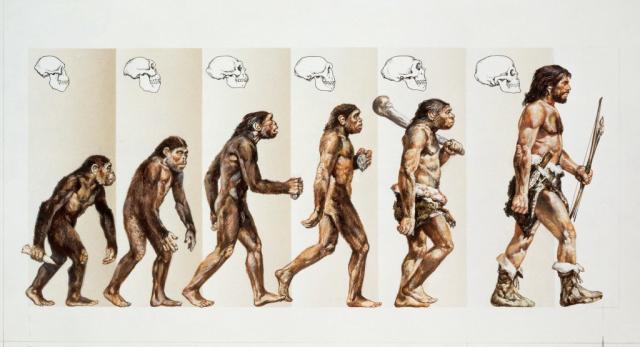
Genetic change: human ancestors lost tails

A genetic change in our ancient ancestors may partly explain the absence of tails in humans compared to monkeys, according to a recent study led by researchers at NYU Grossman School of Medicine.

Researchers at NYU Grossman School of Medicine compared the DNA of tailless apes and humans with that of tailed monkeys, revealing an insertion of DNA, AluY, shared by apes and humans but missing in monkeys. By engineering mice to examine the effects of this AluY insertion in the TBXT gene related to tail development, the study found various tail effects, including some mice born without tails. The research addresses the genetic basis of tail loss in human evolution, highlighting the insertion’s influence on alternative splicing and resulting in diverse tail lengths. The study emphasizes the intricate nature of genetic regulation and its role in species evolution. The research suggests that tail loss in primates, including humans, occurred around 25 million years ago, potentially adapting to ground life. Future experiments will explore potential trade-offs and the impact of tail loss on neural tube birth defects.