










Events Calendar

Mon
Tue
Wed
Thu
Fri
Sat
Sun
M
T
W
T
F
S
S
30
31
1
2
3
4
5
6
7
8
9
10
11
13
14
15
17
18
20
21
22
23
24
26
27
28
29
30
1
2
3
2015 HIMSS Annual Conference & Exhibition
2015-04-12 - 2015-04-16    
All Day
General Conference Information The 2015 HIMSS Annual Conference & Exhibition, April 12-16 in Chicago, brings together 38,000+ healthcare IT professionals, clinicians, executives and vendors from [...]
2015 CONVENTION - THE MEDICAL PROFESSION: TIME FOR A NEW SOCIAL CONTRACT
The 17th QMA's convention will be held April 16-18, 2015. The Québec Medical Association (QMA) invites you to share your opinion on the theme La profession médicale : vers un nouveau [...]
HCCA's 19th Annual Compliance Institute
2015-04-19 - 2015-04-22    
All Day
April 19-22, 2015 Lake Buena Vista, FL Early Bird Rates end January 7th The Annual Compliance Institute is HCCA’s largest event. Over the course of [...]
AAOE Annual Conference 2015
2015-04-25 - 2015-04-28    
All Day
AAOE Annual Conference 2015 The AAOE is the only professional association strictly dedicated to orthopaedic practice management. Currently, our membership has over 1,300 members in [...]
63rd ACOG ANNUAL MEETING - Annual Clinical and Scientific Meeting
2015-05-02 - 2015-05-06    
All Day
The 2015 Annual Meeting: Something for Every Ob-Gyn The New Year is a time for change! ACOG’s 2015 Annual Clinical and Scientific Meeting, May 2–6, [...]
Events on 2015-04-12
Events on 2015-04-19
Events on 2015-04-25
AAOE Annual Conference 2015
25 Apr 15
Chicago, IL 60605
Press Releases

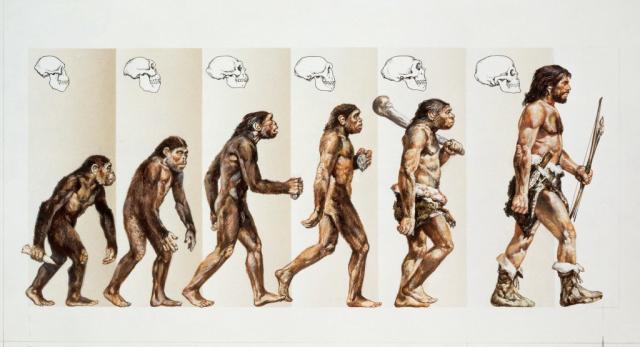
Genetic change: human ancestors lost tails

A genetic change in our ancient ancestors may partly explain the absence of tails in humans compared to monkeys, according to a recent study led by researchers at NYU Grossman School of Medicine.

Researchers at NYU Grossman School of Medicine compared the DNA of tailless apes and humans with that of tailed monkeys, revealing an insertion of DNA, AluY, shared by apes and humans but missing in monkeys. By engineering mice to examine the effects of this AluY insertion in the TBXT gene related to tail development, the study found various tail effects, including some mice born without tails. The research addresses the genetic basis of tail loss in human evolution, highlighting the insertion’s influence on alternative splicing and resulting in diverse tail lengths. The study emphasizes the intricate nature of genetic regulation and its role in species evolution. The research suggests that tail loss in primates, including humans, occurred around 25 million years ago, potentially adapting to ground life. Future experiments will explore potential trade-offs and the impact of tail loss on neural tube birth defects.