





Events Calendar

Mon
Tue
Wed
Thu
Fri
Sat
Sun
M
T
W
T
F
S
S
27
28
29
30
31
1
2
3
4
5
6
7
8
9
10
11
12
14
15
16
17
18
19
20
21
23
24
25
26
28
29
San Jose Health IT Summit
2017-04-13 - 2017-04-14    
All Day
About Health IT Summits U.S. healthcare is at an inflection point right now, as policy mandates and internal healthcare system reform begin to take hold, [...]
Annual IHI Summit
2017-04-20 - 2017-04-22    
All Day
The Office Practice & Community Improvement Conference ​​​​​​The 18th Annual Summit on Improving Patient Care in the Office Practice and the Community taking place April 20–22, 2017, in Orlando, FL, brings together 1,000 health improvers from around the globe, in [...]
Stanford Medicine X | ED
2017-04-22 - 2017-04-23    
All Day
Stanford Medicine X | ED is a conference on the future of medical education at the intersections of people, technology and design. As an Everyone [...]
2017 Health Datapalooza
2017-04-27 - 2017-04-28    
All Day
Health Datapalooza brings together a diverse audience of over 1,600 people from the public and private sectors to learn how health and health care can [...]
The 14th Annual World Health Care Congress
2017-04-30 - 2017-05-03    
All Day
The 14th Annual World Health Care Congress April 30 - May 3, 2017 • Washington, DC • The Marriott Wardman Park Hotel Connecting and Preparing [...]
Events on 2017-04-13
San Jose Health IT Summit
13 Apr 17
San Jose
Events on 2017-04-20
Annual IHI Summit
20 Apr 17
Orlando
Events on 2017-04-22
Events on 2017-04-27
2017 Health Datapalooza
27 Apr 17
Washington, D.C
Events on 2017-04-30
Press Releases

Genetic change: human ancestors lost tails

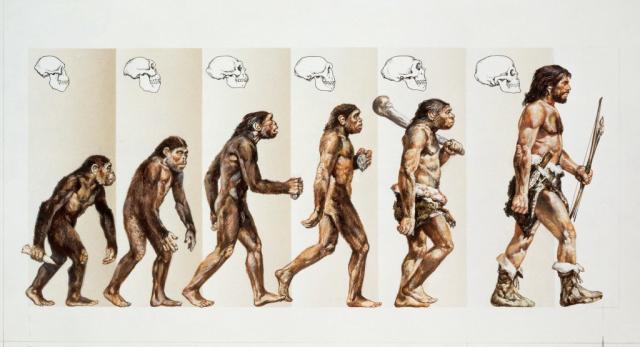
A genetic change in our ancient ancestors may partly explain the absence of tails in humans compared to monkeys, according to a recent study led by researchers at NYU Grossman School of Medicine.

Researchers at NYU Grossman School of Medicine compared the DNA of tailless apes and humans with that of tailed monkeys, revealing an insertion of DNA, AluY, shared by apes and humans but missing in monkeys. By engineering mice to examine the effects of this AluY insertion in the TBXT gene related to tail development, the study found various tail effects, including some mice born without tails. The research addresses the genetic basis of tail loss in human evolution, highlighting the insertion’s influence on alternative splicing and resulting in diverse tail lengths. The study emphasizes the intricate nature of genetic regulation and its role in species evolution. The research suggests that tail loss in primates, including humans, occurred around 25 million years ago, potentially adapting to ground life. Future experiments will explore potential trade-offs and the impact of tail loss on neural tube birth defects.