










Events Calendar

Mon
Tue
Wed
Thu
Fri
Sat
Sun
M
T
W
T
F
S
S
1
2
3
4
5
6
7
8
9
10
11
12
13
12:00 AM - 29th ECCMID
14
16
17
18
19
20
21
22
23
25
26
27
29
30
1
2
3
4
5
29th ECCMID
2019-04-13 - 2019-04-16    
All Day
Welcome to ECCMID 2019! We invite you to the 29th European Congress of Clinical Microbiology & Infectious Diseases, which will take place in Amsterdam, Netherlands, [...]
4th International Conference on  General Practice & Primary Care
2019-04-15 - 2019-04-16    
All Day
The 4th International Conference on General Practice & Primary Care going to be held at April 15-16, 2019 Berlin, Germany. Designation Statement The theme of [...]
Digital Health Conference 2019
2019-04-24 - 2019-04-25    
12:00 am
An Innovative Bridging for Modern Healthcare About Hosting Organization: conference series llc ltd |Conference Series llc ltd Houston USA| April 24-25,2019 Conference series llc ltd, [...]
International Conference on  Digital Health
2019-04-24 - 2019-04-25    
All Day
Details of Digital Health 2019 conference in USA : Conference Name                              [...]
16th Annual World Health Care Congress -WHCC19
2019-04-28 - 2019-05-01    
All Day
16th Annual World Health Care Congress will be organized during April 28 - May 1, 2019 at Washington, DC Who Attends Hospitals, Health Systems, & [...]
Events on 2019-04-13
29th ECCMID
13 Apr 19
Amsterdam
Events on 2019-04-24
Events on 2019-04-28
Press Releases

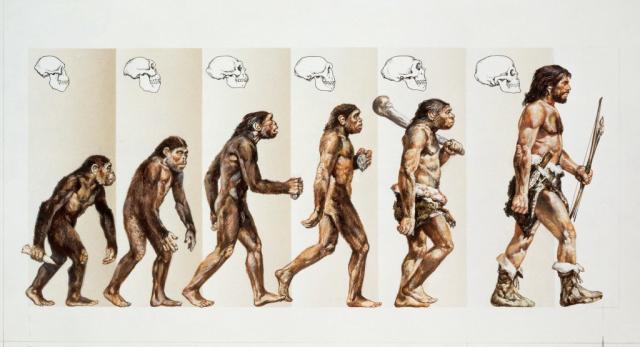
Genetic change: human ancestors lost tails

A genetic change in our ancient ancestors may partly explain the absence of tails in humans compared to monkeys, according to a recent study led by researchers at NYU Grossman School of Medicine.

Researchers at NYU Grossman School of Medicine compared the DNA of tailless apes and humans with that of tailed monkeys, revealing an insertion of DNA, AluY, shared by apes and humans but missing in monkeys. By engineering mice to examine the effects of this AluY insertion in the TBXT gene related to tail development, the study found various tail effects, including some mice born without tails. The research addresses the genetic basis of tail loss in human evolution, highlighting the insertion’s influence on alternative splicing and resulting in diverse tail lengths. The study emphasizes the intricate nature of genetic regulation and its role in species evolution. The research suggests that tail loss in primates, including humans, occurred around 25 million years ago, potentially adapting to ground life. Future experiments will explore potential trade-offs and the impact of tail loss on neural tube birth defects.