








Events Calendar

Mon
Tue
Wed
Thu
Fri
Sat
Sun
M
T
W
T
F
S
S
29
30
1
2
3
4
5
6
7
8
9
10
12
13
15
16
17
18
19
21
22
23
24
25
26
27
28
30
31
1
2
AACP Annual Meeting
2015-07-11 - 2015-07-15    
All Day
The AACP Annual Meeting is the largest gathering of academic pharmacy administrators, faculty and staff, and each year offers 70 or more educational programs that cut across [...]
Engage, Innovation in Patient Engagement
2015-07-14 - 2015-07-15    
All Day
MedCity ENGAGE is an executive-level event where the industry’s brightest minds and leading organizations discuss best-in-class approaches to advance patient engagement and healthcare delivery. ENGAGE is the [...]
mHealth + Telehealth World 2015
2015-07-20 - 2015-07-22    
All Day
The role of technology in health care is growing year after year. Join us at mHealth + Telehealth World 2015 to learn strategies to keep [...]
2015 OSEHRA Open Source Summit
2015-07-29 - 2015-07-31    
All Day
Join the Premier Open Source Health IT Summit! Looking to gain expertise in both public and private sector open source health IT?  Want to collaborate [...]
Events on 2015-07-11
AACP Annual Meeting
11 Jul 15
National Harbor, Maryland
Events on 2015-07-14
Events on 2015-07-20
Events on 2015-07-29
2015 OSEHRA Open Source Summit
29 Jul 15
Bethesda
Press Releases

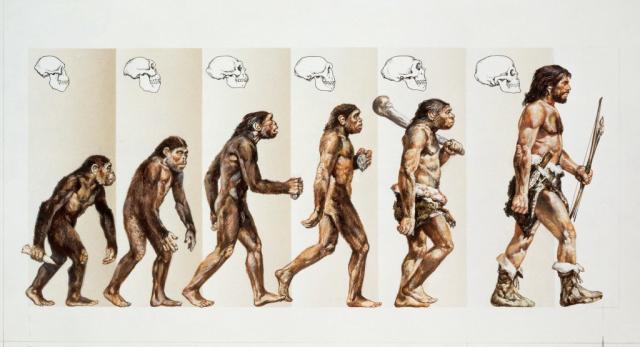
Genetic change: human ancestors lost tails

A genetic change in our ancient ancestors may partly explain the absence of tails in humans compared to monkeys, according to a recent study led by researchers at NYU Grossman School of Medicine.

Researchers at NYU Grossman School of Medicine compared the DNA of tailless apes and humans with that of tailed monkeys, revealing an insertion of DNA, AluY, shared by apes and humans but missing in monkeys. By engineering mice to examine the effects of this AluY insertion in the TBXT gene related to tail development, the study found various tail effects, including some mice born without tails. The research addresses the genetic basis of tail loss in human evolution, highlighting the insertion’s influence on alternative splicing and resulting in diverse tail lengths. The study emphasizes the intricate nature of genetic regulation and its role in species evolution. The research suggests that tail loss in primates, including humans, occurred around 25 million years ago, potentially adapting to ground life. Future experiments will explore potential trade-offs and the impact of tail loss on neural tube birth defects.