






































COVID-19 has thrown a massive wrench into the traditional employment model in the United States, and healthcare organizations and others need to plan now to craft a way to safely return workers to the workplace. Absent overarching federal policies and strategies to safely manage a return to business as usual, it will eventually fall to individual organizations to manage the process, said several panelists on a webinar on Friday entitled “The Return to Work Roller Coaster,” presented by Enterprise Health, a provider of occupational and employee health IT solutions.
Despite the significant challenges and the unknown extent of the epidemic in the U.S., it’s important to note that intelligent safety policies can enable a phased return to a semblance of normal operations, said Dr. Peter Lee, global medical director at GE and clinical professor at Yale School of Medicine. “One of the interesting dynamics is that we saw how our colleagues in China were able to unwind and get people back to work,” said Lee. “One of the first things to realize is that it’s possible to get everyone back to work. We’ve seen this in China; operations that had to be shut down are all up and running again.”
China has been able to ramp up a return to normal employment levels by risk-stratifying localities by the number of cases found through testing. But that’s dicier in the U.S., where providers and public health agencies have less access to sufficient COVID-19 testing capabilities. Lee urges organizations to know the “risk profile for the community in which you operate – follow all the regulatory demands that exist.” For example, there are different temperatures that are recognized as a fever, ranging from 100.4 degrees proposed by the governor of Ohio to 99.6 proposed by the mayor of Dallas.
For individual organizations, they need strong “site leadership,” Lee said. “You need someone who is accountable at every site – getting someone who is responsible is key. Think about site preparedness – who will enforce physical distance, shut down cafeterias and make hand sanitizers more available or enforce face coverings.” Data management is also important in managing employees and their potential exposure to the virus.
“What’s so unique about COVID is that it’s such a dynamic process for employees,” he said. “There are great ways of categorizing where our employees are, like being tested to have it, suspected to have it or having it. Each employee will migrate from category to category over time. You need a technology platform for the data, and also the ability to maneuver the data as the situation changes for each employee.” In a hospital setting, more formalized approaches will become more important over time, said Dr. Albert Rielly, general director of occupational health for Massachusetts General Hospital in Boston.
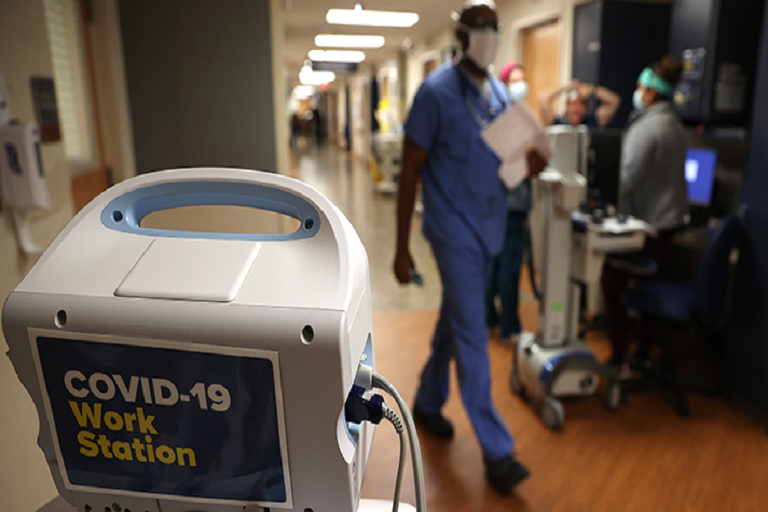
Because knowledge about COVID-19 is evolving all the time, the hospital is using an algorithm-based approach to monitor and assess its employees, he said. The Mass General system is computer-based. Staff must log in before every shift, and report their temperatures online. If they don’t report a temperature, they receive an email back that they must show to gain access to the facility. If they have symptoms of the disease, they can get testing to ascertain their health status, Rielly said.
The facility sets requirements for how long symptomatic workers must wait before they can be assessed for returning to work, and what constitutes being symptom-free (two negative swabs at least 24 hours apart, and no fever over that span). Asymptomatic staff are being treated in the same way as those who are exhibiting symptoms. It’s easy for employees to let down their guards and increase the likelihood that they can catch the disease.
“We’re seeing some workplace issues as we try to scale back up,” Rielly said. “Staff are going to break areas and eating lunch together, and asymptomatic staff took off their masks there. In Massachusetts, cases haven’t started to decline yet. “We’re going to start to see how to scale up. A lot of our staff are working from home or doing telemedicine. As things improve, there are a number of clinics that we’d like to reopen, like orthopedics. We’ll have to see about how we scale that back up.”
Employees who return to work in high-risk settings such as healthcare facilities also are likely to need additional emotional support, Rielly said. “Well-being is important, and many people have fear. Partners has resiliency groups and mental health webinars for staff. One of our affiliated facilities is also using smartphone apps for education and communicating with employees.”
A movement to return employees to work will raise new legal concerns, said Amy Adolay, a lawyer who specializes in occupational and employee health issues for the law firm of Krieg Devault. “We’re already seeing an increase in OSHA complaints from employees that are coming back to work, claiming that other employees are not following OSHA and CDC guidance” on physical distancing and other requirements, she said.
Some employees who have pre-existing health conditions may be at greater risk for life-threatening complications if they contract COVID, and if they are being asked to return to work, employers may need to honor their requests for reasonable accommodations for them to do their jobs, she added.
Employers also may struggle to closely monitor their workers. For example, the ability to ask them questions about their health “only if they are job-related and consistent with business necessity,” Adolay said.
“Also, if you’re not following federal guidance [on ensuring workplace safety], then you are opening yourself up to OSHA claims regarding safe workplace requirements.”


