






































































Events Calendar

Mon
Tue
Wed
Thu
Fri
Sat
Sun
M
T
W
T
F
S
S
27
12:00 AM - Arab Health 2020
29
1
7
10
12
14
16
20
23
25
27
28
29
1
Arab Health 2020
2020-01-27 - 2020-01-30    
All Day
ABOUT ARAB HEALTH 2020 Arab Health is an industry-defining platform where the healthcare industry meets to do business with new customers and develop relationships with [...]
12th International Conference on Acute Cardiac Care
2020-01-28 - 2020-01-29    
All Day
ABOUT 12TH INTERNATIONAL CONFERENCE ON ACUTE CARDIAC CARE Acute Cardiac Care has been undergoing a substantial transformation in recent years as the population ages and [...]
30 Jan
2020-01-30 - 2020-01-31    
All Day
The ICMHS conference is an international forum for the presentation of technological advances and research results in the fields of Medical and Health Sciences. The [...]
Annual Lower and Upper Canada Anesthesia Symposium 2020 (LUCAS)
2020-01-31 - 2020-02-02    
All Day
ABOUT ANNUAL LOWER & UPPER CANADA ANESTHESIA SYMPOSIUM 2020 (LUCAS) On behalf of the Departments of Anesthesia of McGill University, Queen’s University, and the University [...]
RF - 577th International Conference On Medical & Health Science - ICMHS 2020
2020-02-02 - 2020-02-03    
All Day
577th International Conference on Medical & Health Science - ICMHS 2020. It will be held during 2nd-3rd February, 2020 at Berlin , Germany. ICMHS 2020 [...]
ISER- 747th International Conference On Science, Health And Medicine ICSHM
2020-02-02 - 2020-02-03    
All Day
ISER- 747th International Conference on Science, Health and Medicine ICSHM is a prestigious event organized with a motivation to provide an excellent international platform for [...]
International Conference On Medical And Health SciencesICMHS-2020
2020-02-03 - 2020-02-04    
All Day
The ICMHS conference is an international forum for the presentation of technological advances and research results in the fields of Medical and Health Sciences. The [...]
Medlab Middle East 2020
2020-02-03 - 2020-02-06    
All Day
ABOUT MEDLAB MIDDLE EAST 2020 Medlab Middle East is the only medical laboratory industry event that offers manufacturers the opportunity to meet a diverse audience [...]
Cloud Architecture Implementation Healthcare 2020
2020-02-04 - 2020-02-06    
All Day
This summit brings together leaders from healthcare organizations to scale up their cloud infrastructure, implement cloud technology and share use cases about the success and [...]
4th Microbiome Movement - Drug Development Summit Europe 2020 - London, UK
2020-02-04 - 2020-02-06    
All Day
A unique forum focusing on pursuing disease causation to foster the creation of targeted Microbiome-based therapeutics, biomarkers and diagnostics. Time: 8:30 am - 5:50 pm [...]
Structural Heart Intervention And Imaging Feb 2020 CME Conference-San Diego
2020-02-05 - 2020-02-07    
All Day
The Scripps Structural Heart Intervention and Imaging conference features live case demonstrations, lectures from renowned faculty, hands-on workshops, and extensive satellite symposia. Time: 7:00 am [...]
Structural Heart Intervention And Imaging Feb 2020 CME Conference-San Diego
2020-02-05 - 2020-02-07    
All Day
The Scripps Structural Heart Intervention and Imaging conference features live case demonstrations, lectures from renowned faculty, hands-on workshops, and extensive satellite symposia. Time: 7:00 am [...]
18th Annual South Beach Symposium
2020-02-06 - 2020-02-09    
All Day
ABOUT 18TH ANNUAL SOUTH BEACH SYMPOSIUM The 18th Annual South Beach Symposium will take place in Miami Beach, Florida from February 6-9, 2020 at the [...]
Primary Care CME In Clearwater Beach, Florida February 2020
2020-02-08 - 2020-02-10    
All Day
Topics include latest hypertension guidelines, cancer screening, cholesterol management, immunizations, COPD, skin and soft tissue infections, etc. Time: 08:00 - 11:00
Primary Care CME In Clearwater Beach, Florida February 2020
2020-02-08 - 2020-02-10    
All Day
Topics include latest hypertension guidelines, cancer screening, cholesterol management, immunizations, COPD, skin and soft tissue infections, etc. Time: 08:00 - 11:00  
World Congress On Medical Imaging And Clinical Research WCMICR-2020
2020-02-09 - 2020-02-10    
All Day
The WCMICR conference is an international forum for the presentation of technological advances and research results in the fields of Medical Imaging and Clinical Research. [...]
Medical Design & Manufacturing (MD&M) West
2020-02-11 - 2020-02-13    
All Day
ABOUT MEDICAL DESIGN & MANUFACTURING (MD&M) WEST Medical Design & Manufacturing (MD&M) West is where serious professionals find the technologies, education, and connections to stay [...]
Third International Conference On Zika Virus And Aedes Related Infections
2020-02-13    
All Day
This Conference will bring together multidisciplinary experts aiming to tackle the challenges that Aedes related infections present including zika, dengue, yellow fever, and chikungunya. Time: [...]
The IRES - 791st International Conferences On Medical And Health Science ICMHS
2020-02-15 - 2020-02-16    
All Day
The IRES - 791st International Conferences on Medical and Health Science ICMHS aimed at presenting current research being carried out in that area and scheduled [...]
4th International Conference on Chronic Diseases
2020-02-17 - 2020-02-18    
All Day
ABOUT 4TH INTERNATIONAL CONFERENCE ON CHRONIC DISEASES It takes immense pleasure to invite you to attend the 4th International Conference on Chronic Diseases (Chronic Diseases [...]
European Gynecology and Obstetrics Congress
2020-02-17 - 2020-02-18    
All Day
ABOUT EUROPEAN GYNECOLOGY AND OBSTETRICS CONGRESS Gynecology 2020 destine to endeavor leading-edge memoranda of eminent keynote speakers, universal personalities, special sessions and poster presentations attracting [...]
18 Feb
2020-02-18 - 2020-02-20    
All Day
Technology Networks is a global online scientific publication that covers the latest research, industry news, and technologies. Our 12 online communities provide focused coverage of [...]
6th International Conference On Food And Beverages
2020-02-19 - 2020-02-20    
All Day
Meetings International Meetings Int. invites you to attend the ‘6th International Conference on Food and Beverages 2020” which is to be held on February 19-20, [...]
10th Global Summit on Neuroscience and Neuroimmunology
2020-02-19 - 2020-02-20    
All Day
ABOUT 10TH GLOBAL SUMMIT ON NEUROSCIENCE AND NEUROIMMUNOLOGY 10th Global Summit on Neuroscience and Neuroimmunology (Neuroimmunology 2020) is aimed at improving health across the globe, [...]
Mayo Clinic Nephrology And Transplantation For The Clinician 2020
2020-02-21 - 2020-02-22    
All Day
Nephrology and Transplantation for the Clinician: 18th Annual Update From Mayo Clinic is a two-day course designed to u-p-d-a-t-e participants on nephrology topics relevant to [...]
28th International Conference on Cancer Research and Pharmacology
2020-02-21 - 2020-02-22    
All Day
ABOUT 28TH INTERNATIONAL CONFERENCE ON CANCER RESEARCH AND PHARMACOLOGY PULSUS Conferences is glad to invite all the participants across the globe to attend 28th International [...]
Rocky Mountain Winter Conference On Emergency Medicine 2020
2020-02-22 - 2020-02-26    
All Day
Each day the conference starts with a hot breakfast followed by engaging, cutting edge didactics led by experts from the countrys top academic programs. Please [...]
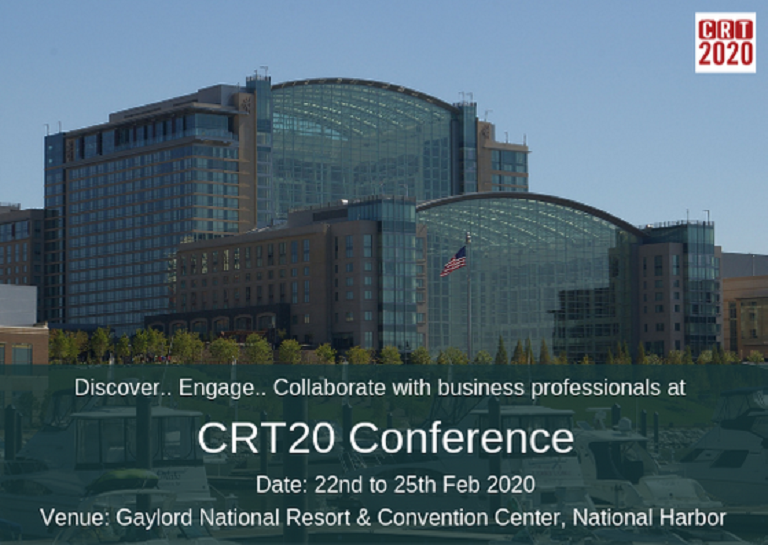
CRT20 Conference
2020-02-22 - 2020-02-25    
All Day
ABOUT CRT20 CONFERENCE CRT, one of the world’s leading interventional cardiology conferences, is attended by more than 3,000 interventional and endovascular specialists. At the 2019 [...]
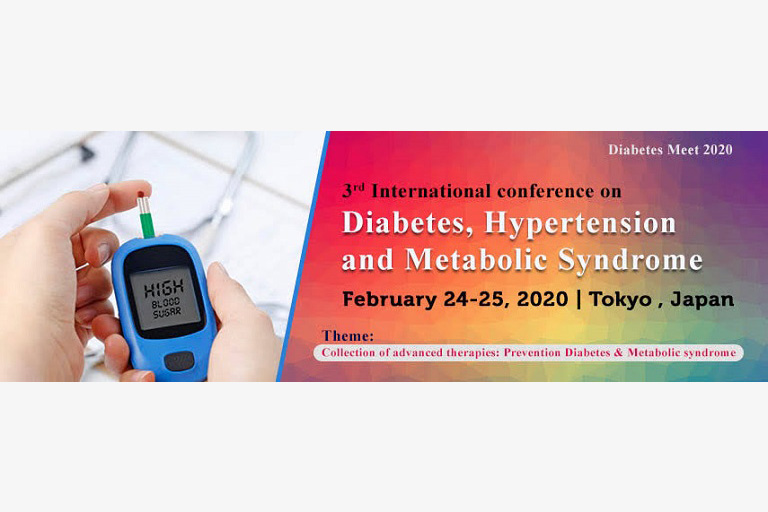
3rd International conference on  Diabetes, Hypertension and Metabolic Syndrome
2020-02-24 - 2020-02-25    
All Day
About Diabetes Meet 2020 Conference Series takes the immense Pleasure to invite participants from all over the world to attend the 3rdInternational conference on Diabetes, Hypertension and [...]
3rd International Conference on Cardiology and Heart Diseases
2020-02-24 - 2020-02-25    
All Day
ABOUT 3RD INTERNATIONAL CONFERENCE ON CARDIOLOGY AND HEART DISEASES The standard goal of Cardiology 2020 is to move the cardiology results and improvements and to [...]
Medical Device Development Expo OSAKA
2020-02-26 - 2020-02-28    
All Day
ABOUT MEDICAL DEVICE DEVELOPMENT EXPO OSAKA What is Medical Device Development Expo OSAKA (MEDIX OSAKA)? Gathers All Kinds of Technologies for Medical Device Development! This [...]
Events on 2020-01-27
Arab Health 2020
27 Jan 20
Dubai
Events on 2020-01-28
Events on 2020-01-30
Events on 2020-01-31
Events on 2020-02-03
Events on 2020-02-06
18th Annual South Beach Symposium
6 Feb 20
Miami Beach
Events on 2020-02-09
Events on 2020-02-11
Events on 2020-02-17
Events on 2020-02-18
18 Feb
Events on 2020-02-22
CRT20 Conference
22 Feb 20
National Harbor
Events on 2020-02-26
Articles

How an NPI Will Jump-Start Interoperability and Cut Costs

healthcare

By Thomas Grove, Principal,  Phoenix Health Systems a division of Medsphere Systems

Many EHR components were developed as early as 30 years ago, but it wasn’t until 2009 that the federal Meaningful Use incentive program precipitated wide-spread implementation of robust EHRs across healthcare. If the EHRs themselves are young, interoperability is still in its infancy. A large majority of acute care hospitals and other providers now have an HHS-certified EHR, providing the needed critical mass to make interoperability even possible.   But many barriers remain, not the least of which is a lack of standardized patient identification. Many industry leaders agree that achieving interoperability is one reason why it is time to move to a national patient identifier — but not the only reason.

The HIPAA architects realized back in 1996 that a standard for unique patient ID numbers was a must-have for accurate data sharing. The concept precipitated a storm of criticism and political pressure, warning of potential identity theft and a big brother-like, government-controlled database. The NPI initiative was quashed by Congress two years later.

Now the healthcare industry is close to having the all the technology needed to share healthcare data across enterprises and systems, and we still don’t have the patient identifier. And, it’s still essential for interoperability. The national patient identifier isn’t a solution to all interoperability problems, but it is a necessary element of any real solution.

To make exchanges of healthcare information today, we have to rely on an imprecise method of matching multiple demographic elements in a patient’s profile in the hopes of getting an overall match.  Let’s consider the challenges of matching patient’s names.  Even if we ignore the very real possibility of misspelling a patient’s name, there are many permutations:

  • Full names vs. nicknames – Pat Smith vs Patricia Smith
  • Middle names and initials – Patricia Smith vs. Patricia A Smith vs. Patricia Ann Smith
  • Hyphenated names and names with apostrophes – There are entirely too many permutations of Patricia Smith-O’Malley’s last name!
  • What happens to patient identification when Patricia Smith marries Bob O’Malley? The doctor’s office may reach out to a hospital for Patricia’s records only to be unable to match them, because the hospital isn’t aware of the name change. Perish the thought that after the mess is straightened out, Patricia Smith-O’Malley divorces Bob and remarries.

The key strategy being used today to avoid such fertile ground for error is to make matches using more than one data element. For example, the combination of name + date of birth + sex + Social Security number can provide quality matches. However,  differences in how the various elements are (or are not) collected and reported cause a significant number of non-matches. How big of a problem is this?

According to a recent AHIMA survey, more than half of health IT management professionals regularly work on fixing problems with patient matching and duplicate patient records. Very specific data about the size of this issue comes from a 2014 ONC study.   Kaiser Permanente, an organization with a strong managed data quality program, reported that when it attempted to match up records from within the same region (each of their 17 regions have separately implemented the same EHR) they have a success rate of 90%. When they attempted the same match with records from one of the other regions the match rate fell to 50%. If an institution with the same data policies and systems can only match patients 50% of the time, imagine the challenge that a regional health information exchange would face, trying to make matches between EHRs of different vendors, from organizations with different data management policies.

Another factor to consider: the high costs of mismatching. According to the same ONC report, each case of misidentification at the Mayo Clinic costs at least $1,200. Intermountain Healthcare spends between $4 million and $5 million per year on technologies and processes intended to ensure correct patient identification.

The simplest solution to identification accuracy is for each person to have a unique identifier that would be linked to all their records and provide a match each and every time.   We have something like this in the financial world – it’s the social security number.   The  SSN was never intended for use as a financial identifier, but essentially all citizens old enough to work (and non-citizens eligible to work) have one, so it serves the purpose quite well.   By extension, the SSN would be impractical as our national healthcare identifier, because there are many patients who do not have SSNs.  Also, there are instances in which duplicate SSNs have been issued. It is an irony that the  SSN is already used widely as one of the data elements in the matching process described earlier.

Considering that patient identification is so critical to solving interoperability challenges, why don’t we have an NPI?   The short answer, as I mentioned above, is politics.   Some of the old concerns remain, but have lessened somewhat, in particular the fear that a national ID number is a precursor to a government-controlled dystopian future.   The other major objection centers on privacy, and I believe it’s a complete red herring. Consider the following:

  • The privacy and security of a national patient ID number would be just as critical as with any other ID, e.g. a SSN or driver’s license.   The creation of a national patient identifier doesn’t create any new problems, just a new identifier that could present risks but very likely fewer, because we now have security technologies that could minimize vulnerabilities.
  • The risks created by using SSNs are already part of the patient matching scheme.  First, healthcare providers have no way to verify the authenticity SSNs presented by patients. Second, because SSNs are used so pervasively in healthcare as well as outside, they are relatively accessible to ne’er-do-wells who have illegitimate plans for them.
  • Finally, the current strategy of using a patient matching algorithm itself poses risks to privacy, in that it would be easy to disclose some of patient A’s information to patient B (or his representative) with a false positive match. Part of the costs of mismatches is due to such mistakes.

A new, unique patient ID number would eliminate these existing risks, if it were implemented correctly, including giving healthcare providers basic capabilities to validate it in real time. Such validations are routine when healthcare providers confirm patients’ insurance coverage upon registration.

Implementing a National Patient Identifier program with a solid validation solution and other tight protections is one critical step among many that will be needed to take interoperability from today’s embryonic state into a full grown reality. Bonus takeaways: it would create an additional barrier to medical fraud – a real and growing problem in the industry, and the high costs of patient mismatching will be reduced, if not eliminated.

CHIME has just announced a National Patient ID Challenge, a year-long competition intended to incentivize the private sector to develop a patient identifying solution that would ensure “100 percent accuracy in identifying patients in the United States.” Through a partnership with crowdsourcing innovation platform HeroX,  the winner will be awarded $1 million. The challenge is supported by other industry associations such as the AMA, AHIMA, HIMSS, and The Sequoia Project as well as EHR vendors Allscripts and Cerner.

It is heartening that these major industry influencers are actively resurrecting the cause for standard patient identification. Given that major steps in healthcare IT often take decades to fully implement, the time to give birth to the national patient identifier is now.


