





























Events Calendar

Mon
Tue
Wed
Thu
Fri
Sat
Sun
M
T
W
T
F
S
S
29
1
3
4
5
7
8
10
11
12
15
16
17
18
19
21
24
25
26
27
30
31
1
2
A Behavioral Health Collision At The EHR Intersection
2014-09-30    
2:00 pm - 3:30 pm
Date/Time Date(s) - 09/30/2014 2:00 pm Hear Why Many Organizations Are Changing EHRs In Order To Remain Competitive In The New Value-Based Health Care Environment [...]
Meaningful Use and The Rise of the Portals
2014-10-02    
12:00 pm - 12:45 pm
Meaningful Use and The Rise of the Portals: Best Practices in Patient Engagement Thu, Oct 2, 2014 10:30 PM - 11:15 PM IST Join Meaningful [...]
Adva Med 2014 The MedTech Conference
2014-10-06    
All Day
Adva Med 2014 The MedTech Conference October 6-8, 2014 McCormick Place Chicago, IL For more information, visit, advamed2014.com For Registration details, click here  
Public Health Measures Meaningful Use
2014-10-09    
12:00 pm - 12:45 pm
Public Health Measures Meaningful Use: Reporting on Public Health Measures Join Meaningful Use expert Jim Tate for a three part series of webinars addressing MU [...]
2014 Hospital & Healthcare I.T. Conference
2014-10-13    
All Day
Join us at our 2014 Hospital & Healthcare I.T. Conference and experience the following: Up to 125 Hospital & Healthcare I.T. executives from America’s most prestigious [...]
Connected Health Care 2014
Key Trends That will be Discussed at the Conference! Connected Healthcare 2014 is set to explore the crucial topics that are revolutionizing the connected health industry: [...]
HealthTech Conference
2014-10-14    
All Day
HealthTech Capital is a group of private investors dedicated to funding and mentoring new "HealthTech" start ups at the intersection of healthcare with the computer [...]
Health Informatics & Technology Conference (HITC-2014)
2014-10-20    
All Day
Information technology has ability to improve the quality, productivity and safety of health care mangement. However, relatively very few health care providers have adopted IT. [...]
HIMSS Amsterdam 2014
2014-10-20    
12:00 am
About HIMSS Amsterdam 2014 This year, the second annual HIMSS Amsterdam event will be taking place on 6-7 November 2014 at the Hotel Okura. The [...]
Patient Portal Functionality and EMR Integration Demonstration
2014-10-22    
2:00 pm - 3:30 pm
This purpose of this webcast is to present a demonstration to show how the Patient Portal integrates with EMR, as well as discuss how this [...]
Connected Health Symposium 2014
Symposium 2014 - Connected Health in Practice: Engaging Patients and Providers Outside of Traditional Care Settings Collaborating with industry visionaries, clinical experts, patient advocates and [...]
CHIME College of Healthcare Information Management Executives
2014-10-28 - 2014-10-31    
All Day
The Premier Event for Healthcare CIOs Hotel Accomodations JW Marriott San Antonio Hill Country 23808 Resort Parkway San Antonio, Texas 78761 Telephone: 210-276-2500 Guest Fax: [...]
The Myth of the Paperless EMR
2014-10-29    
2:00 pm - 3:00 pm
Is Paper Eluding Your Current Technologies; The Myth of the Paperless EMR Please join Intellect Resources as we present Is Paper Eluding Your Current Technologies; The Myth [...]
Events on 2014-09-30
Events on 2014-10-02
Events on 2014-10-06
Events on 2014-10-09
Events on 2014-10-13
Events on 2014-10-14
Connected Health Care 2014
14 Oct 14
San Diego
HealthTech Conference
14 Oct 14
San Mateo
Events on 2014-10-20
HIMSS Amsterdam 2014
20 Oct 14
Amsterdam
Events on 2014-10-23
Events on 2014-10-28
Events on 2014-10-29
Latest News

How Coronavirus enters the body: Here’s what researchers have found

How Coronavirus enters the body: Here’s what researchers have found
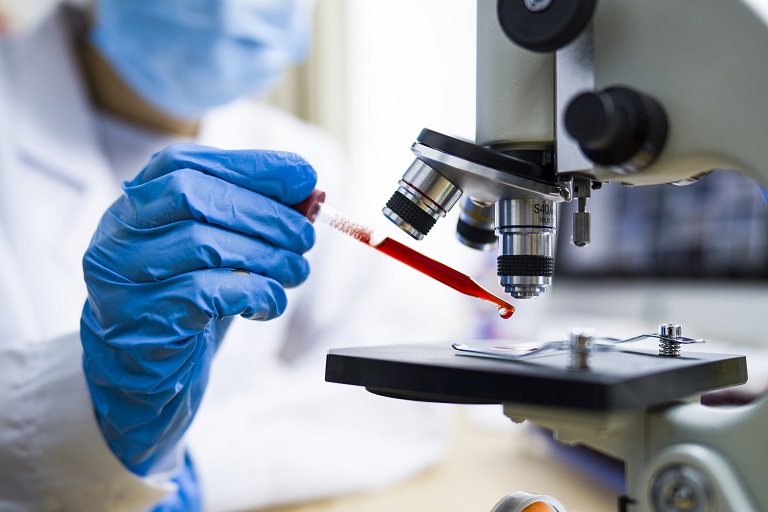
Scientist working with blood sample in laboratory

How Coronavirus infects and damages the human body: After the continuous research to understand how the novel Coronavirus affects people, some scientists have identified two specific types of cells in a human nose that are the initial infection points in a human body. According to a report by The Indian Express, it can be noted that the two cells- goblet cells and ciliated cells are two kinds of cell where the entry mechanism of SARS-CoV2 takes place and the virus begins to attack. This study, the report said, has been identified by researchers in University Medical Centre Groningen, Wellcome Sanger Institute (UK), University Côte d’Azur and CNRS, Nice. To be sure, Goblet cells are those that produce mucus within the nose and are found alongside the respiratory tract. Ciliated cells, on the other hand, are hair like cells that help sweep mucus or dust to the throat.

Now what actually happens, is the virus has a lock and key effect, the report said. This particular virus has a fatty envelope containing a spike protein on the surface. This protein unlocks another protein (ACE2) that is present on the human cell. After this is unlocked, the virus enters the human cell. There it uses a second protein called TMPRSS2 which allows the virus to reproduce and eventually leads it to the transmission within the cell.

How did researchers identify nasal cavity as an initial entry point for the virus?

The report mentioned that to identify the entry point for Coronavirus entry, they looked for all the organs that express the two proteins that are ACE2 and TMPRSS2 prominently. By looking at many tissues of non-infected people, the report added, it was found that cells from the lung, eye, nasal cavity, gut, kidney, heart and liver have these proteins. It was then identified that goblet cells and ciliated cells have the maximum amount of these proteins produced when compared to other cells. And therefore, acted as an initial path for the COVID-19 virus to enter the human body. It is to note that nasal cavity is highly accessible for the virus but this does not rule out other entry points for the virus.

The similar proteins have also been identified in the eye’s cornea and the lining of intestine. This makes the cornea another route and therefore the virus in some cases can also enter via tear ducts or a possible oral-faecal transmission. According to the report, the study has been carried out as it can help further understand the cell types that are responsible for mass transmission of the virus. It can provide a basis that can help develop a potential treatment to reduce the spread of the virus, the report said.


