

























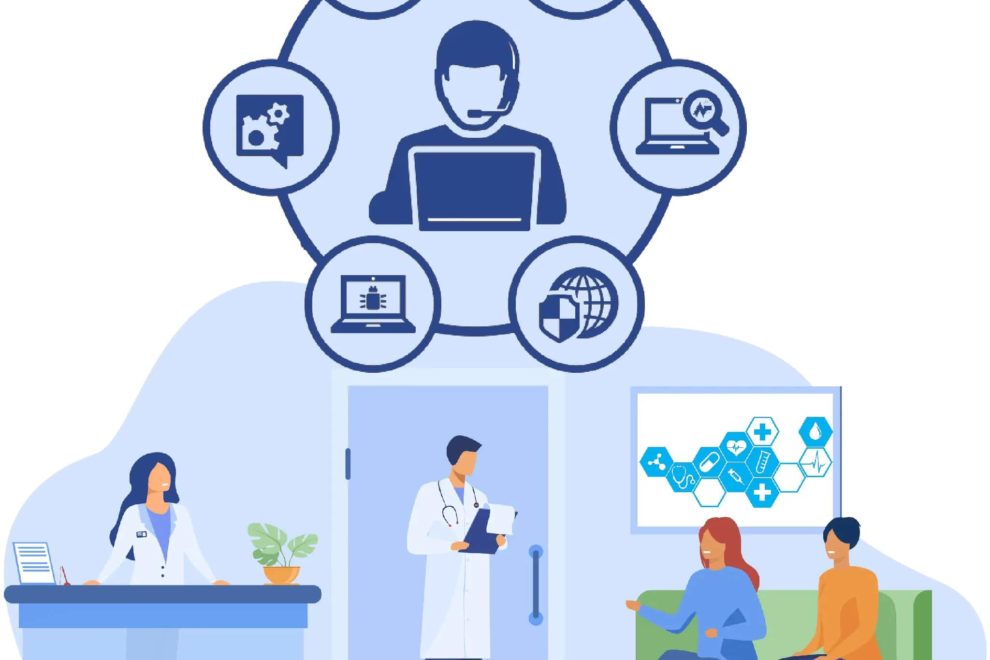
How Hospitals Are Using Tech To Avoid Errors
In the healthcare industry, a lot of sensitive information is constantly in play. Important information about health records, personal finance information, and other relevant facts about patients are at risk of being lost or stolen. Since most hospitals are now moving their operations online and use apps or programs to conduct business, they’re having to incorporate tech that will help them to avoid errors that could end up costing someone their privacy, or even their lives.
1. Telehealth Tools
Now more than ever, it’s important for hospitals to offer telehealth options to their patients. Being set up properly for telehealth generally involves government funding, particularly in rural areas, better WiFi connectivity, and requires the hospital to invest in their own tools. But it also means that hospitals will have to be prepared to move every aspect of care, to some degree, online.
Cloud accounting, for instance, is a way to handle the money side of business in a more efficient, streamlined way that will help avoid detrimental errors frequently made with physical accounting. In addition, having all health records and test results online will ensure that patients can take control of their own care, to an extent, and will result in much better communication between doctors and patients. And, long-term, it can save hospitals significant funds when in-patient care can be transferred to virtual home consultations.
2. Staff Management Tools
In order for a hospital to run smoothly and for care to be accomplished without error, there must be an appropriate level of management. By using a good management software, hospitals can accurately assess their needs and staff accordingly. A common problem with hospital staff is a tendency to over staff, resulting in unnecessary expense, or under staff, resulting in exhausted workers and poorly cared for patients. Hospitals can respond to patients’ needs in real time, becoming more efficient and error-free as a result.
3. Medical Care Technology
There are hundreds of software programs in existence that could help doctors care for their patients, but a few stand out as especially helpful and necessary for hospitals looking to lower their margin of error. Ultrasound imaging, for instance, is a technology that has advanced far enough in the last few years that doctors can now make accurate assessments from a single, non-intrusive test. Infection detection technology is another innovation that has proven incredibly helpful for hospitals.
Being able to prevent and accurately detect infections when they arise means the hospital can now consistently offer error-free care. They also mean that hospitals will spend less on preventative antibiotics, since they’ll be able to catch infections earlier and treat them more quickly. Infections are a common problem in hospitals, and being able to avoid them is a massive leap forward in a hospital’s success.
4. Apps For Smartphones and Tablets
Apps have become an easy, fast way for doctors to be more actively involved in their patient’s care, with minimal effort required. Apps can assist doctors in translation, making quick calculations, and even making clinical presentations. Moreover, it’s easier to access everything you need in one place, making it less likely for information to be lost or forgotten.

Of course, if you’re preparing to furnish your hospital staff with iPads, you’ll have to make sure they’re secured with every protection needed to keep that sensitive information safe. Breaches of patient information will have lasting implications for any hospital. But don’t let that scare you off – even just a few doctors having access to these sorts of apps can significantly boost productivity and is sure to impress patients with their modernity.
Joining the 21st century can be tough for institutions as old as hospitals, and can feel like a waste of time. After all, aren’t apps better left for leisure activities? But neglecting to use the wonderful tools that have been created in the last ten years will leave your hospital behind. Join the future, and keep your hospital error-free by using some of these technologies.


