











































Events Calendar

Mon
Tue
Wed
Thu
Fri
Sat
Sun
M
T
W
T
F
S
S
25
27
28
29
1
3
5
6
7
8
11
13
15
17
18
19
20
21
22
24
25
27
28
29
31
1
2
3
4
5
3rd International conference on  Diabetes, Hypertension and Metabolic Syndrome
2020-02-24 - 2020-02-25    
All Day
About Diabetes Meet 2020 Conference Series takes the immense Pleasure to invite participants from all over the world to attend the 3rdInternational conference on Diabetes, Hypertension and [...]
3rd International Conference on Cardiology and Heart Diseases
2020-02-24 - 2020-02-25    
All Day
ABOUT 3RD INTERNATIONAL CONFERENCE ON CARDIOLOGY AND HEART DISEASES The standard goal of Cardiology 2020 is to move the cardiology results and improvements and to [...]
Medical Device Development Expo OSAKA
2020-02-26 - 2020-02-28    
All Day
ABOUT MEDICAL DEVICE DEVELOPMENT EXPO OSAKA What is Medical Device Development Expo OSAKA (MEDIX OSAKA)? Gathers All Kinds of Technologies for Medical Device Development! This [...]
Beauty Care Asia Pacific Summit 2020 (BCAP)
2020-03-02 - 2020-03-04    
All Day
Groundbreaking Event to Address Asia-Pacific’s Growing Beauty Sector—Your Window to the World’s Fastest Growing Beauty Market The international cosmetics industry has experienced a rapid rise [...]
IASTEM - 789th International Conference On Medical, Biological And Pharmaceutical Sciences ICMBPS
2020-03-04 - 2020-03-05    
All Day
IASTEM - 789th International Conference on Medical, Biological and Pharmaceutical Sciences ICMBPS will be held on 4th - 5th March, 2020 at Hamburg, Germany . [...]
Global Drug Delivery And Formulation Summit 2020
2020-03-09 - 2020-03-11    
All Day
Innovative solutions to the greatest challenges in pharmaceutical development. Price: Full price delegate ticket: GBP 1495.0. Time: 9:00 am to 6:00 pm About Conference KC [...]
Inborn Errors Of Metabolism Drug Development Summit 2020
2020-03-10 - 2020-03-12    
All Day
Confidently Translate, Develop and Commercialize Gene, mRNA, Replacement Therapies, Small Molecule and Substrate Reduction Therapies to More Efficaciously Treat Inherited Metabolic Diseases. Time: 8:00 am [...]
Texting And E-Mail With Patients: Patient Requests And Complying With HIPAA
2020-03-12    
All Day
Overview:  This session will focus on the rights of individuals to communicate in the manner they desire, and how a medical office can decide what [...]
14 Mar
2020-03-14 - 2020-03-21    
All Day
Topics in Family Medicine, Hematology, and Oncology CME Cruise. Prices: USD 495.0 to USD 895.0. Speakers: David Parrish, MS, MD, FAAFP, Alexander E. Denes, MD, [...]
International Conference On Healthcare And Clinical Gerontology ICHCG
2020-03-14 - 2020-03-15    
All Day
An elegant and rich premier global platform for the International Conference on Healthcare and Clinical Gerontology ICHCG that uniquely describes the Academic research and development [...]
World Congress And Expo On Cell And Stem Cell Research
2020-03-16 - 2020-03-17    
All Day
"The world best platform for all the researchers to showcase their research work through OralPoster presentations in front of the international audience, provided with additional [...]
25th International Conference on  Diabetes, Endocrinology and Healthcare
2020-03-23 - 2020-03-24    
All Day
About Conference: Conference Series LLC Ltd is overwhelmed to announce the commencement of “25th International Conference on Diabetes, Endocrinology and Healthcare” to be held during [...]
ISN World Congress of Nephrology 2020
2020-03-26 - 2020-03-29    
All Day
ABOUT ISN WORLD CONGRESS OF NEPHROLOGY 2020 ISN World Congress of Nephrology (WCN) takes place annually to enable this premier educational event more available to [...]
30 Mar
2020-03-30 - 2020-03-31    
All Day
This Cardio Diabetes 2020 includes Speaker talks, Keynote & Poster presentations, Exhibition, Symposia, and Workshops. This International Conference will help in interacting and meeting with diabetes and [...]
Trending Topics In Internal Medicine 2020
2020-04-02 - 2020-04-04    
All Day
Trending Topics in Internal Medicine is a CME course that will tackle the latest information trending in healthcare today.   This course will help you discuss options [...]
2020 Summit On National & Global Cancer Health Disparities
2020-04-03 - 2020-04-04    
All Day
The 2020 Summit on National & Global Cancer Health Disparities is planned with the goal of creating a momentum to minimize the disparities in cancer [...]
Events on 2020-02-26
Events on 2020-03-02
Events on 2020-03-09
Events on 2020-03-10
Events on 2020-03-16
Events on 2020-03-26
Events on 2020-03-30
Events on 2020-04-02
Events on 2020-04-03
Articles

How Hospitals Can Increase Data Security

increase data security

How Hospitals Can Increase Data Security

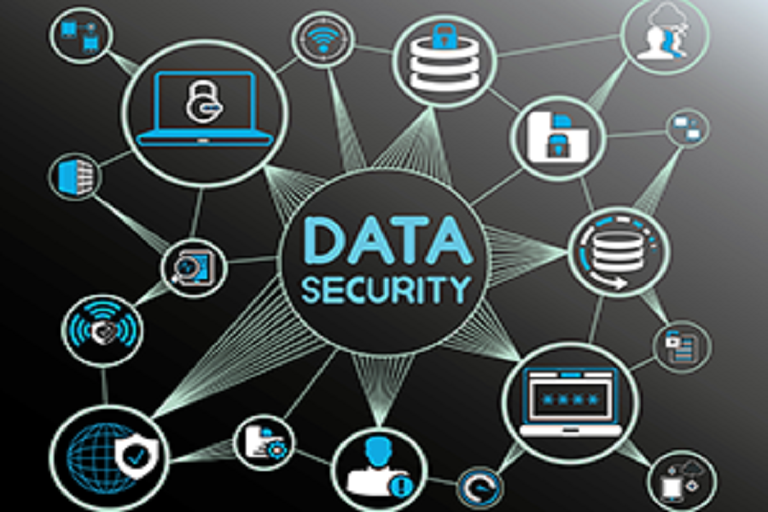
Data security is an ever-growing concern for businesses as more and more data moves online. Because hospitals store tons of highly sensitive data, they have a greater concern than most for ensuring their data is secure. It’s rare for a hospital to take every security measure they possibly could, and every weakness in the shell is another opportunity to improve defenses. Here are a few ways hospitals can start creating a nearly fireproof layer of security.

1. Solid Security Culture

No amount of security measures are going to keep a hospital safe from data breaches if everyone isn’t on board. The weakest link in any line of defense when it comes to cybersecurity is going to be the user, which means that anyone with access to sensitive data needs to have some level of training on best practices. Once in a while, someone will get a little sloppy and use a weak password or click on a link without checking to make sure it’s safe first.

To make sure this doesn’t happen frequently enough to be a problem, a culture of security has to be established within the hospital staff. There should be policies that are taught, upheld, and then enforced with extreme consistency, as integral to employee training as learning about the average 401k return. Some key policies include things like using multi-factor authentication, using strong passwords, and changing passwords regularly. Training on new software and ongoing education about cybersecurity should be ongoing, and employees should be encouraged to take responsibility for their own conduct.

2. Computer “Hygiene”

In an ideal world, a hospital would be able to employ IT experts to help them start and use their computers with efficiency and safety. But, in reality, it’ll be mostly healthcare employees without much expertise in that area. That’s why it’s very possible for computers to be used for years before anyone realizes that there is no antivirus software installed or tons of background apps are running for no reason.

There should be some guidelines established for making sure any employee can effectively start and use a hospital computer. It’s also important to regularly maintain and update your hardware and software and ensure that appropriate antivirus and anti-malware apps are installed. Over time, it’ll become necessary for any hospital to clean out old information, such as old employee accounts. Any data that is no longer being used should either be gotten rid of or archived, and any computer that is thrown out should be sanitized beforehand.

3. Mobile Device Protection

More and more healthcare operations are moving onto mobile devices, which has been a great innovation in making healthcare more accessible. However, mobile devices are automatically at greater risk than a stationary computer, because they’re more likely to be lost or stolen. Information contained on cell phones or laptops can also be corrupted more easily by electromagnetic interference, and information can easily be accidentally shown to unauthorized individuals.

That’s why it’s important for hospitals to assess whether the action is worth the risk – if there isn’t a good enough justification for sending sensitive information via mobile device, then it should probably be kept to computers. If the hospital goes forward with the data transfer, it’s important for that data to be encrypted, ensuring that if it is intercepted it will be impossible to steal. There should be concrete policies regarding taking hospital devices out of the building, such as for an employee working from home.

4. Emergency Plans

Lastly, it’s important for hospitals to be prepared in case a data breach does occur. Part of this is performing regular backups to external data servers so the information is safe no matter what. There should also be an order of operations and a clear line of authority established so that everyone knows their role in case of an emergency. The faster a situation can be resolved, the faster healthcare workers can get back to treating patients and saving lives.


