































Events Calendar

Mon
Tue
Wed
Thu
Fri
Sat
Sun
M
T
W
T
F
S
S
1
2
5
6
7
9
10
12
13
14
17
18
19
20
22
23
25
26
29
1
2
3
4
5
2014 OSEHRA Open Source Summit: Global Collaboration in Health IT
2014-09-03 - 2014-09-05    
8:00 am - 5:00 pm
OSEHRA is an alliance of corporations, agencies, and individuals dedicated to advancing the state of the art in open source electronic health record (EHR) systems [...]
Connected Health Summit
2014-09-04    
All Day
The inaugural Connected Health Summit: Engaging Consumers is the only event focused exclusively on the consumer-focused perspective of the fast-growing digital health/connected health market. The [...]
Health Impact MidWest
2014-09-08    
All Day
The HealthIMPACT Forum is where health system C-Suite Executives meet.  Designed by and for health system leaders like you, it provides an unmatched faculty of [...]
Simulation Summit 2014
2014-09-11    
All Day
Hilton Toronto Downtown | September 11 - 12, 2014 Meeting Location Hilton Toronto Downtown 145 Richmond Street West Toronto, Ontario, M5H 2L2, CANADA Tel: 416-869-3456 [...]
Webinar : EHR: Demand Results!
2014-09-11    
2:00 pm - 2:45 pm
09/11/14 | 2:00 - 2:45 PM ET If you are using an EHR, you deserve the best solution for your money. You need to demand [...]
Healthcare Electronic Point of Service: Automating Your Front Office
2014-09-11    
3:00 pm - 4:00 pm
09/11/14 | 3:00 - 4:00 PM ET Start capitalizing on customer convenience trends today! Today’s healthcare reimbursement models put a greater financial risk on healthcare [...]
e-Patient Connections 2014
2014-09-15    
All Day
e-Patient Connections 2014 Follow Us! @ePatCon2014 Join in the Conversation at #ePatCon The Internet, social media platforms and mobile health applications are enabling patients to take an [...]
Free Webinar - Don’t Be Denied: Avoiding Billing and Coding Errors
2014-09-16    
1:00 pm - 2:00 pm
Tuesday, September 16, 2014 1:00 PM Eastern / 10:00 AM Pacific   Stopping the denial on an individual claim is just the first step. Smart [...]
Health 2.0 Fall Conference 2014
2014-09-21    
12:00 am
We’re back in Santa Clara on September 21-24, 2014 and once again bringing together the best and brightest speakers, newest product demos, and top networking opportunities for [...]
Healthcare Analytics Summit 14
2014-09-24    
All Day
Transforming Healthcare Through Analytics Join top executives and professionals from around the U.S. for a memorable educational summit on the incredibly pressing topic of Healthcare [...]
AHIMA 2014 Convention
2014-09-27    
All Day
As the most extensive exposition in the industry, the AHIMA Convention and Exhibit attracts decision makers and influencers in HIM and HIT. Last year in [...]
2014 Annual Clinical Coding Meeting
2014-09-27    
12:00 am
Event Type: Meeting HIM Domain: Coding Classification and Reimbursement Continuing Education Units Available: 10 Location: San Diego, CA Venue: San Diego Convention Center Faculty: TBD [...]
AHIP National Conferences on Medicare & Medicaid
2014-09-28    
All Day
Balancing your organization’s short- and long-term needs as you navigate the changes in the Medicare and Medicaid programs can be challenging. AHIP’s National Conferences on Medicare [...]
A Behavioral Health Collision At The EHR Intersection
2014-09-30    
2:00 pm - 3:30 pm
Date/Time Date(s) - 09/30/2014 2:00 pm Hear Why Many Organizations Are Changing EHRs In Order To Remain Competitive In The New Value-Based Health Care Environment [...]
Meaningful Use and The Rise of the Portals
2014-10-02    
12:00 pm - 12:45 pm
Meaningful Use and The Rise of the Portals: Best Practices in Patient Engagement Thu, Oct 2, 2014 10:30 PM - 11:15 PM IST Join Meaningful [...]
Events on 2014-09-04
Connected Health Summit
4 Sep 14
San Diego
Events on 2014-09-08
Health Impact MidWest
8 Sep 14
Chicago
Events on 2014-09-15
e-Patient Connections 2014
15 Sep 14
New York
Events on 2014-09-21
Health 2.0 Fall Conference 2014
21 Sep 14
Santa Clara
Events on 2014-09-24
Healthcare Analytics Summit 14
24 Sep 14
Salt Lake City
Events on 2014-09-27
AHIMA 2014 Convention
27 Sep 14
San Diego
Events on 2014-09-28
Events on 2014-09-30
Events on 2014-10-02
Articles

How Hospitals Can Increase Data Security

increase data security

How Hospitals Can Increase Data Security

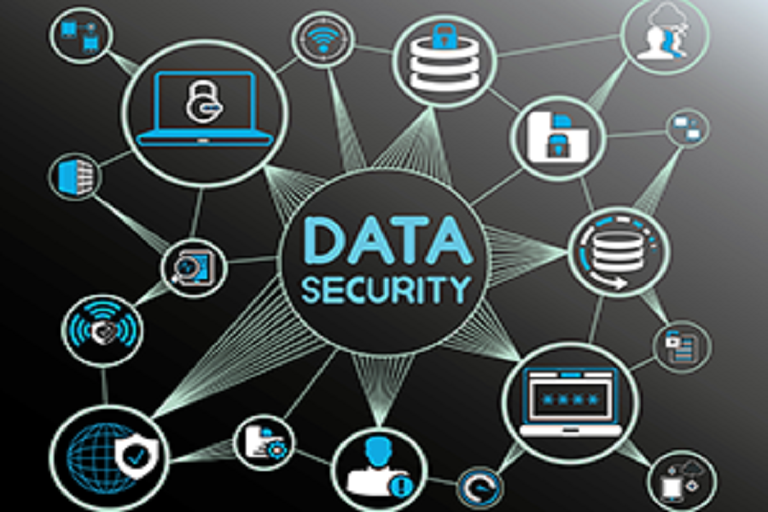
Data security is an ever-growing concern for businesses as more and more data moves online. Because hospitals store tons of highly sensitive data, they have a greater concern than most for ensuring their data is secure. It’s rare for a hospital to take every security measure they possibly could, and every weakness in the shell is another opportunity to improve defenses. Here are a few ways hospitals can start creating a nearly fireproof layer of security.

1. Solid Security Culture

No amount of security measures are going to keep a hospital safe from data breaches if everyone isn’t on board. The weakest link in any line of defense when it comes to cybersecurity is going to be the user, which means that anyone with access to sensitive data needs to have some level of training on best practices. Once in a while, someone will get a little sloppy and use a weak password or click on a link without checking to make sure it’s safe first.

To make sure this doesn’t happen frequently enough to be a problem, a culture of security has to be established within the hospital staff. There should be policies that are taught, upheld, and then enforced with extreme consistency, as integral to employee training as learning about the average 401k return. Some key policies include things like using multi-factor authentication, using strong passwords, and changing passwords regularly. Training on new software and ongoing education about cybersecurity should be ongoing, and employees should be encouraged to take responsibility for their own conduct.

2. Computer “Hygiene”

In an ideal world, a hospital would be able to employ IT experts to help them start and use their computers with efficiency and safety. But, in reality, it’ll be mostly healthcare employees without much expertise in that area. That’s why it’s very possible for computers to be used for years before anyone realizes that there is no antivirus software installed or tons of background apps are running for no reason.

There should be some guidelines established for making sure any employee can effectively start and use a hospital computer. It’s also important to regularly maintain and update your hardware and software and ensure that appropriate antivirus and anti-malware apps are installed. Over time, it’ll become necessary for any hospital to clean out old information, such as old employee accounts. Any data that is no longer being used should either be gotten rid of or archived, and any computer that is thrown out should be sanitized beforehand.

3. Mobile Device Protection

More and more healthcare operations are moving onto mobile devices, which has been a great innovation in making healthcare more accessible. However, mobile devices are automatically at greater risk than a stationary computer, because they’re more likely to be lost or stolen. Information contained on cell phones or laptops can also be corrupted more easily by electromagnetic interference, and information can easily be accidentally shown to unauthorized individuals.

That’s why it’s important for hospitals to assess whether the action is worth the risk – if there isn’t a good enough justification for sending sensitive information via mobile device, then it should probably be kept to computers. If the hospital goes forward with the data transfer, it’s important for that data to be encrypted, ensuring that if it is intercepted it will be impossible to steal. There should be concrete policies regarding taking hospital devices out of the building, such as for an employee working from home.

4. Emergency Plans

Lastly, it’s important for hospitals to be prepared in case a data breach does occur. Part of this is performing regular backups to external data servers so the information is safe no matter what. There should also be an order of operations and a clear line of authority established so that everyone knows their role in case of an emergency. The faster a situation can be resolved, the faster healthcare workers can get back to treating patients and saving lives.


