






















Events Calendar

Mon
Tue
Wed
Thu
Fri
Sat
Sun
M
T
W
T
F
S
S
30
2
3
4
5
6
7
9
12
13
14
15
17
19
22
25
27
12:00 AM - HLTH 2019
28
29
30
31
1
2
3
01 Oct
2019-10-01 - 2019-10-02    
All Day
The UK’s leading health technology and smart health event, bringing together a specialist audience of over 4,000 health and care professionals covering IT and clinical [...]
08 Oct
2019-10-08 - 2019-10-09    
12:00 am
Looking to maximize the efficiency of your current Revenue Cycle solution? Join us as we present strategies for analyzing your MEDITECH Revenue Cycle, and learn from other [...]
2019 Southwest Dental Conference
2019-10-10 - 2019-10-11    
All Day
ABOUT 2019 SOUTHWEST DENTAL CONFERENCE For 91 years, the Southwest Dental Conference has been the meeting of choice for quality professional development and innovative educational [...]
Annual Conference & Exhibition Lyotalk USA 2019
2019-10-10 - 2019-10-11    
All Day
ABOUT ANNUAL CONFERENCE & EXHIBITION LYOTALK USA 2019 Lyotalk is USA’s largest annual conference on Lyophilization/Freeze Drying. Lyotalk attracts gathering from of 150+ experts from [...]
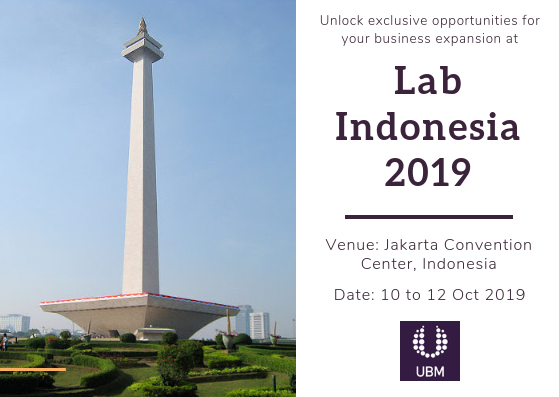
Lab Indonesia 2019
2019-10-10 - 2019-10-12    
All Day
ABOUT LAB INDONESIA 2019 LabAsia is Southeast Asia’s leading laboratory exhibition, serving as the region’s trade platform for laboratory equipment & services suppliers to engage [...]
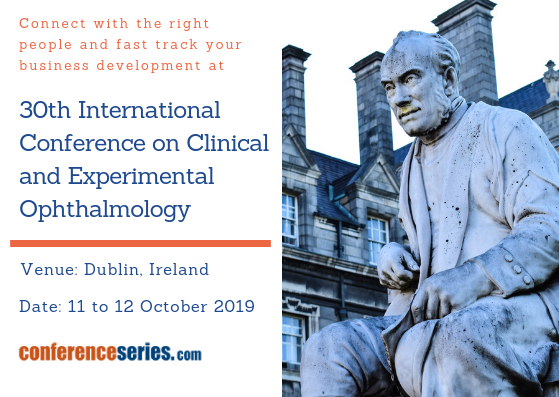
30th International Conference on Clinical and Experimental Ophthalmology
2019-10-11 - 2019-10-12    
All Day
ABOUT 30TH INTERNATIONAL CONFERENCE ON CLINICAL AND EXPERIMENTAL OPHTHALMOLOGY The 30th International Conference on Clinical and Experimental Ophthalmology is going to be held during October [...]
7th International Conference on Cosmetology & Beauty 2019
Cosmetology and Beauty 2019 passionately welcomes each one of you to attend a global conference in the field of cosmetology which is held on October [...]
16 Oct
2019-10-16 - 2019-10-17    
All Day
ABOUT 17TH INTERNATIONAL CONFERENCE ON CANCER RESEARCH AND THERAPY Cancer Research Conference 2019 coordinates addressing the principal themes and in addition inevitable methodologies of oncology. [...]
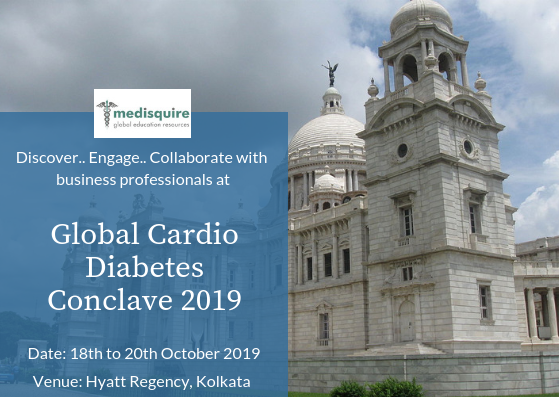
Global Cardio Diabetes Conclave 2019
2019-10-18 - 2019-10-20    
All Day
ABOUT GLOBAL CARDIO DIABETES CONCLAVE 2019 A strong correlation between cardiovascular diseases and diabetes is now well established. The American Heart Association considers that individuals [...]
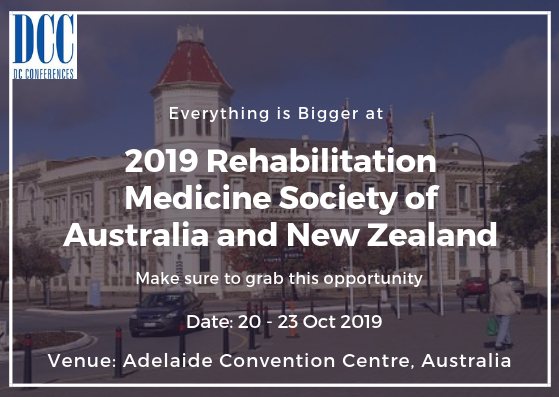
2019 Rehabilitation Medicine Society of Australia and New Zealand
2019-10-20 - 2019-10-23    
All Day
ABOUT 2019 REHABILITATION MEDICINE SOCIETY OF AUSTRALIA AND NEW ZEALAND On behalf of Rehabilitation Medicine Society of Australia and New Zealand (RMSANZ) and the organising [...]
21 Oct
2019-10-21 - 2019-10-23    
All Day
ABOUT GLOBAL CONFERENCE ON SURGERY AND ANESTHESIA (GCSA 2019) Global Conference on Surgery and Anesthesia (GCSA 2019) scheduled on October 21-23 2019 in Dubai, UAE [...]
21 Oct
2019-10-21 - 2019-10-22    
All Day
ABOUT 10TH INTERNATIONAL CONFERENCE ON MASS SPECTROMETRY AND CHROMATOGRAPHY ME Conferences is excited to announce the “10th International Conference on Mass Spectrometry and Chromatography” that [...]
MEDICAL JAPAN 2019 TOKYO
2019-10-23 - 2019-10-25    
All Day
ABOUT MEDICAL JAPAN 2019 TOKYO B to B Trade Show Covering All the Products/Services/Technologies in the Healthcare Industry! MEDICAL JAPAN TOKYO, a sister show of [...]
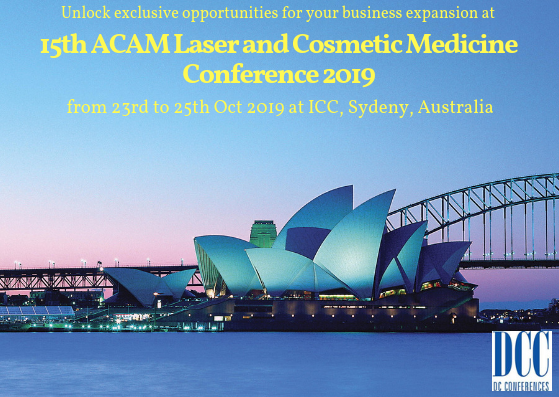
15th ACAM Laser and Cosmetic Medicine Conference 2019
2019-10-23 - 2019-10-25    
All Day
ABOUT 15TH ACAM LASER AND COSMETIC MEDICINE CONFERENCE 2019 As the new president of ACAM, I am delighted to welcome you all to the 15th [...]
23rd European Nephrology Conference
2019-10-24 - 2019-10-25    
All Day
ABOUT 23RD EUROPEAN NEPHROLOGY CONFERENCE Theme: The Imminent of Nephrology: Current & Advance Approaches to treat Kidney Diseases 23rd European Nephrology Conference is the world’s [...]
FNCE 2019 Food & Nutrition Conference & Expo
2019-10-26 - 2019-10-29    
All Day
ABOUT FNCE 2019 – FOOD & NUTRITION CONFERENCE & EXPO Experience dynamic educational opportunities not available elsewhere. Gain access to new trends, perspectives from expert [...]
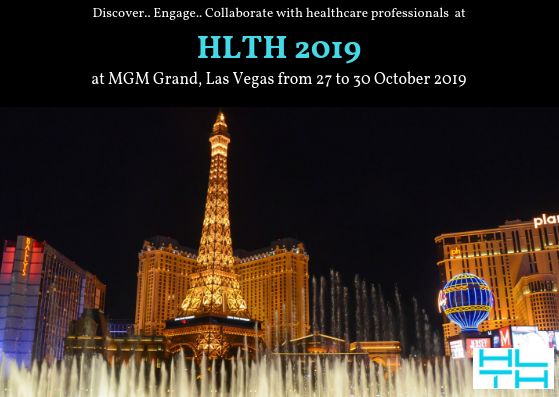
HLTH 2019
2019-10-27 - 2019-10-30    
All Day
ABOUT HLTH 2019 HLTH is the largest and most important conference for health innovation. It’s an unprecedented, large-scale forum for collaboration across senior leaders from [...]
Events on 2019-10-01
01 Oct
Events on 2019-10-08
08 Oct
8 Oct 19
Massachusetts
Events on 2019-10-10
Events on 2019-10-18
Global Cardio Diabetes Conclave 2019
18 Oct 19
Bidhannagar
Events on 2019-10-23
Events on 2019-10-24
Events on 2019-10-26
Events on 2019-10-27
HLTH 2019
27 Oct 19
Las Vegas
Latest News

How MRI’s Work and Why They’re an Essential Medical Technology

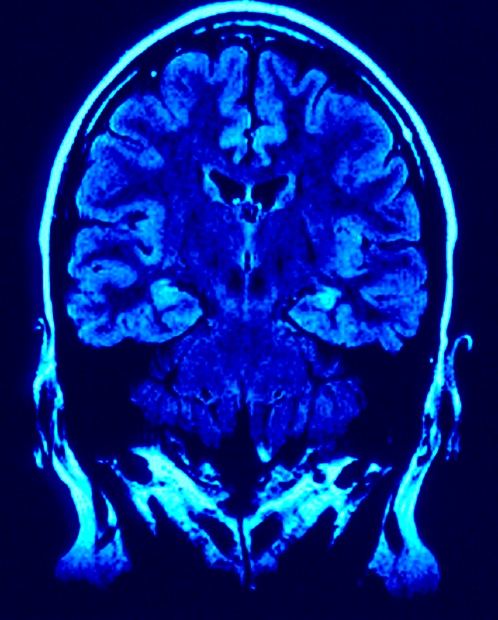
MRI, or Magnetic Resonance Imaging, is a relatively new medical technology that generates a three-dimensional image of a patient’s body. It is conveniently non-invasive and does not employ harmful radiation. More than 60 million MRI scans are performed each year.
How Do MRIs Work?

The atoms inside our bodies spin in random directions like children’s tops. An MRI employs a magnetic field twice as strong as the Earth’s to align these atoms. The field is created by an electric current flowing through a coil of wires suspended in liquid helium to reduce resistance as much as possible. This is called a superconducting magnet.

The magnetic field forces about half of the spinning atoms’ protons to point north (toward the patient’s head), and about half to point south (to his/her feet). Each northbound atom is cancelled out by a southbound atom…except for a select few. The MRI then delivers a radio frequency(RF) pulse. Remember those unmatched atoms? The RF pulse makes them spin in the other direction. When the pulse shuts off, the outlier atoms return to their original position, giving off energy that transmits a signal to a computer. The computer creates an image based on these signals.

There are three smaller, gradient magnets inside the superconducting magnet. The gradient magnets switch on and off quickly, altering the large magnetic field to zero in on a specific area of the body. The use of gradient magnets means that patients don’t have to move around inside the machine to get a precise scan.
The Improbable History of The MRI

Few people know that the entire basis of today’s MRI technology almost collapsed because of a small misunderstanding. In the early 1970s, Dr. Raymond Damadian was the first person to brave his own MRI scanning contraption, submitting his body to extreme magnetic fields in the name of science.

But…nothing happened. Damadian’s years of research, which were inspired by the Nuclear Magnetic Resonance(NMR) technology used on rocks and minerals, could’ve been for nothing. The theoretical physicists who dismissed his ideas would be proven right.

Then a graduate student with a smaller body offered to try Damadian’s scanner–and the resulting image was clear as day. The Food and Drug Administrator approved MRI technology in 1989. And that groundbreaking original machine, nicknamed the “Indomitable,” is now owned by the Smithsonian Institution.

Scientist Paul C. Lauterbur of Stony Brook University is officially credited with the invention of the MRI. Lauterbur was the first to use gradients to produce MRI images in 2D and 3D.
Why MRI?

During the 1970s, the national “war on cancer” grew urgent. Dr. Damadian’s own grandmother, who died of cancer, was a huge inspiration for his work. He estimated that tumors would emit different signals than healthy tissue, because they contained more water and thus more hydrogen atoms.

He was correct. MRI scans can detect tumors, but that’s just the beginning. They can also help doctors diagnose multiple ailments and abnormalities in the brain, spine, female pelvis, prostate, gastrointestinal tract, soft tissue, vascular system, and more.

The future of MRI is bright, as scientists look for ways to accommodate a wider range of patients and make the MRI scanning process more comfortable for all. MRI images can be used alongside other medical images like mammograms and ultrasounds to provide better patient care. PACS radiology technology allows medical organizations to efficiently store and send these diverse images together. Scientists continue to develop specialized MRI methods to obtain better results.
The Power of MRI

In 2013 alone, 108 of every 1,000 Americans had an MRI scan. That number has been on the rise since the introduction of the technology. Magnetic Resonance Imaging continues to prove its worth as one of the most elegant, painless ways of detecting health conditions before they become serious for the patient.


