




































Events Calendar

Mon
Tue
Wed
Thu
Fri
Sat
Sun
M
T
W
T
F
S
S
25
27
28
29
1
3
5
6
7
8
11
13
15
17
18
19
20
21
22
24
25
27
28
29
31
1
2
3
4
5
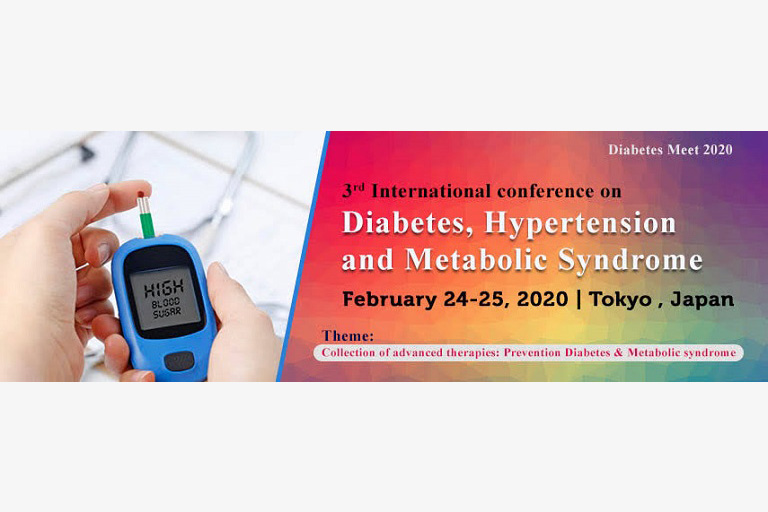
3rd International conference on  Diabetes, Hypertension and Metabolic Syndrome
2020-02-24 - 2020-02-25    
All Day
About Diabetes Meet 2020 Conference Series takes the immense Pleasure to invite participants from all over the world to attend the 3rdInternational conference on Diabetes, Hypertension and [...]
3rd International Conference on Cardiology and Heart Diseases
2020-02-24 - 2020-02-25    
All Day
ABOUT 3RD INTERNATIONAL CONFERENCE ON CARDIOLOGY AND HEART DISEASES The standard goal of Cardiology 2020 is to move the cardiology results and improvements and to [...]
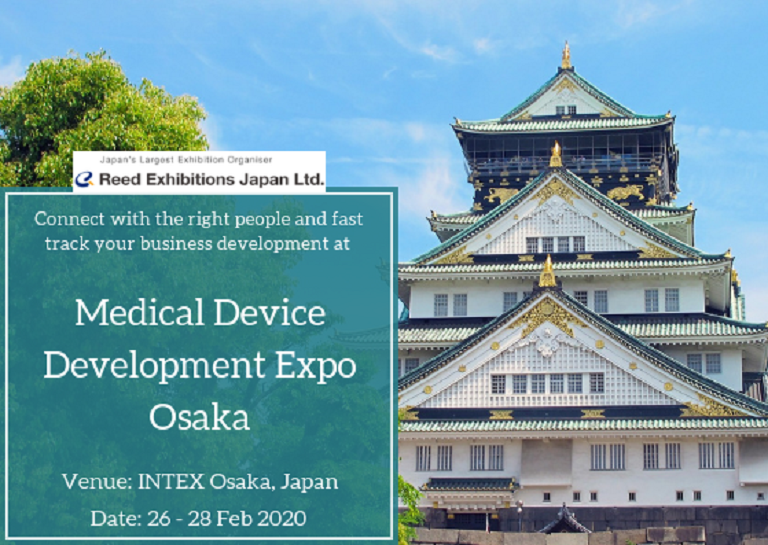
Medical Device Development Expo OSAKA
2020-02-26 - 2020-02-28    
All Day
ABOUT MEDICAL DEVICE DEVELOPMENT EXPO OSAKA What is Medical Device Development Expo OSAKA (MEDIX OSAKA)? Gathers All Kinds of Technologies for Medical Device Development! This [...]
Beauty Care Asia Pacific Summit 2020 (BCAP)
2020-03-02 - 2020-03-04    
All Day
Groundbreaking Event to Address Asia-Pacific’s Growing Beauty Sector—Your Window to the World’s Fastest Growing Beauty Market The international cosmetics industry has experienced a rapid rise [...]
IASTEM - 789th International Conference On Medical, Biological And Pharmaceutical Sciences ICMBPS
2020-03-04 - 2020-03-05    
All Day
IASTEM - 789th International Conference on Medical, Biological and Pharmaceutical Sciences ICMBPS will be held on 4th - 5th March, 2020 at Hamburg, Germany . [...]
Global Drug Delivery And Formulation Summit 2020
2020-03-09 - 2020-03-11    
All Day
Innovative solutions to the greatest challenges in pharmaceutical development. Price: Full price delegate ticket: GBP 1495.0. Time: 9:00 am to 6:00 pm About Conference KC [...]
Inborn Errors Of Metabolism Drug Development Summit 2020
2020-03-10 - 2020-03-12    
All Day
Confidently Translate, Develop and Commercialize Gene, mRNA, Replacement Therapies, Small Molecule and Substrate Reduction Therapies to More Efficaciously Treat Inherited Metabolic Diseases. Time: 8:00 am [...]
Texting And E-Mail With Patients: Patient Requests And Complying With HIPAA
2020-03-12    
All Day
Overview:  This session will focus on the rights of individuals to communicate in the manner they desire, and how a medical office can decide what [...]
14 Mar
2020-03-14 - 2020-03-21    
All Day
Topics in Family Medicine, Hematology, and Oncology CME Cruise. Prices: USD 495.0 to USD 895.0. Speakers: David Parrish, MS, MD, FAAFP, Alexander E. Denes, MD, [...]
International Conference On Healthcare And Clinical Gerontology ICHCG
2020-03-14 - 2020-03-15    
All Day
An elegant and rich premier global platform for the International Conference on Healthcare and Clinical Gerontology ICHCG that uniquely describes the Academic research and development [...]
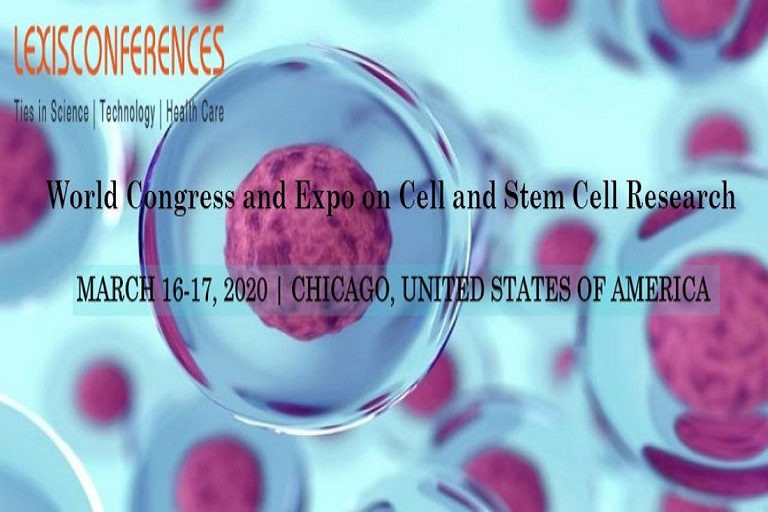
World Congress And Expo On Cell And Stem Cell Research
2020-03-16 - 2020-03-17    
All Day
"The world best platform for all the researchers to showcase their research work through OralPoster presentations in front of the international audience, provided with additional [...]
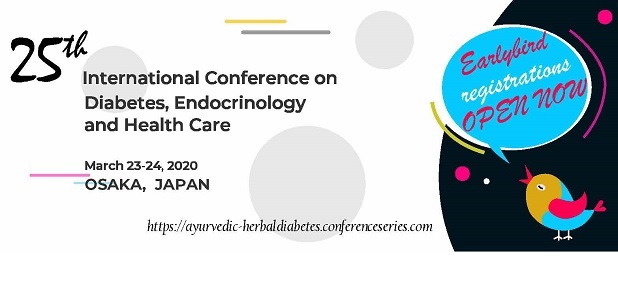
25th International Conference on  Diabetes, Endocrinology and Healthcare
2020-03-23 - 2020-03-24    
All Day
About Conference: Conference Series LLC Ltd is overwhelmed to announce the commencement of “25th International Conference on Diabetes, Endocrinology and Healthcare” to be held during [...]
ISN World Congress of Nephrology 2020
2020-03-26 - 2020-03-29    
All Day
ABOUT ISN WORLD CONGRESS OF NEPHROLOGY 2020 ISN World Congress of Nephrology (WCN) takes place annually to enable this premier educational event more available to [...]
30 Mar
2020-03-30 - 2020-03-31    
All Day
This Cardio Diabetes 2020 includes Speaker talks, Keynote & Poster presentations, Exhibition, Symposia, and Workshops. This International Conference will help in interacting and meeting with diabetes and [...]
Trending Topics In Internal Medicine 2020
2020-04-02 - 2020-04-04    
All Day
Trending Topics in Internal Medicine is a CME course that will tackle the latest information trending in healthcare today.   This course will help you discuss options [...]
2020 Summit On National & Global Cancer Health Disparities
2020-04-03 - 2020-04-04    
All Day
The 2020 Summit on National & Global Cancer Health Disparities is planned with the goal of creating a momentum to minimize the disparities in cancer [...]
Events on 2020-02-26
Events on 2020-03-02
Events on 2020-03-09
Events on 2020-03-10
Events on 2020-03-16
Events on 2020-03-26
Events on 2020-03-30
Events on 2020-04-02
Events on 2020-04-03
Latest News

How MRI’s Work and Why They’re an Essential Medical Technology

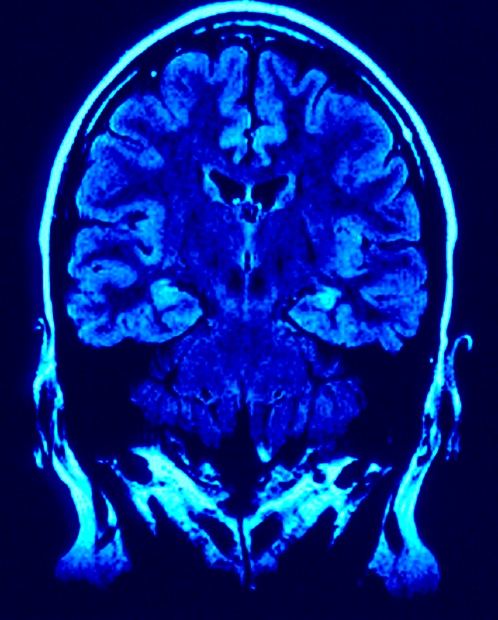
MRI, or Magnetic Resonance Imaging, is a relatively new medical technology that generates a three-dimensional image of a patient’s body. It is conveniently non-invasive and does not employ harmful radiation. More than 60 million MRI scans are performed each year.
How Do MRIs Work?

The atoms inside our bodies spin in random directions like children’s tops. An MRI employs a magnetic field twice as strong as the Earth’s to align these atoms. The field is created by an electric current flowing through a coil of wires suspended in liquid helium to reduce resistance as much as possible. This is called a superconducting magnet.

The magnetic field forces about half of the spinning atoms’ protons to point north (toward the patient’s head), and about half to point south (to his/her feet). Each northbound atom is cancelled out by a southbound atom…except for a select few. The MRI then delivers a radio frequency(RF) pulse. Remember those unmatched atoms? The RF pulse makes them spin in the other direction. When the pulse shuts off, the outlier atoms return to their original position, giving off energy that transmits a signal to a computer. The computer creates an image based on these signals.

There are three smaller, gradient magnets inside the superconducting magnet. The gradient magnets switch on and off quickly, altering the large magnetic field to zero in on a specific area of the body. The use of gradient magnets means that patients don’t have to move around inside the machine to get a precise scan.
The Improbable History of The MRI

Few people know that the entire basis of today’s MRI technology almost collapsed because of a small misunderstanding. In the early 1970s, Dr. Raymond Damadian was the first person to brave his own MRI scanning contraption, submitting his body to extreme magnetic fields in the name of science.

But…nothing happened. Damadian’s years of research, which were inspired by the Nuclear Magnetic Resonance(NMR) technology used on rocks and minerals, could’ve been for nothing. The theoretical physicists who dismissed his ideas would be proven right.

Then a graduate student with a smaller body offered to try Damadian’s scanner–and the resulting image was clear as day. The Food and Drug Administrator approved MRI technology in 1989. And that groundbreaking original machine, nicknamed the “Indomitable,” is now owned by the Smithsonian Institution.

Scientist Paul C. Lauterbur of Stony Brook University is officially credited with the invention of the MRI. Lauterbur was the first to use gradients to produce MRI images in 2D and 3D.
Why MRI?

During the 1970s, the national “war on cancer” grew urgent. Dr. Damadian’s own grandmother, who died of cancer, was a huge inspiration for his work. He estimated that tumors would emit different signals than healthy tissue, because they contained more water and thus more hydrogen atoms.

He was correct. MRI scans can detect tumors, but that’s just the beginning. They can also help doctors diagnose multiple ailments and abnormalities in the brain, spine, female pelvis, prostate, gastrointestinal tract, soft tissue, vascular system, and more.

The future of MRI is bright, as scientists look for ways to accommodate a wider range of patients and make the MRI scanning process more comfortable for all. MRI images can be used alongside other medical images like mammograms and ultrasounds to provide better patient care. PACS radiology technology allows medical organizations to efficiently store and send these diverse images together. Scientists continue to develop specialized MRI methods to obtain better results.
The Power of MRI

In 2013 alone, 108 of every 1,000 Americans had an MRI scan. That number has been on the rise since the introduction of the technology. Magnetic Resonance Imaging continues to prove its worth as one of the most elegant, painless ways of detecting health conditions before they become serious for the patient.


