
































How Technology Can Improve Hospital Management
The healthcare industry is one that is fundamental to modern life. However, hospitals aren’t always well oiled machines, because there is simply too much to be done. That is especially true during a global pandemic. Luckily, technological advancements are making the management of a medical facility much more streamlined. Here’s what you need to know.
Automation
The concept of automation is not a new one. However, the topic of automation typically concerns machinery built to perform repetitive tasks so humans don’t have to. However, recent technological advancements have provided people with ways to automate even more complex procedural tasks. This has tremendous benefits for the medical industry, an industry in which paperwork accounts for the majority of the work that needs done from day to day.
Artificial Intelligence
One of the most important facets of automation clerical work is artificial intelligence. After all, the reason that these things couldn’t be automated sooner is they require a dynamic intelligence that machines have historically lacked. AI itself isn’t exactly new, but it has typically been fairly limited. That remains true, to an extent, but machine learning and natural language processing have made great strides toward improving AI.
Machine learning is, much like learning in general, the way in which an AI can improve a skill through the repetition of pertinent tasks. This means that a machine can be programmed and then continue to improve upon its ability to perform a task without the need for further hand coded updates. The primary downside to this is that it takes a long time for computers to learn certain skills that have historically been hard to program in the first place. Machine learning operations seek to shorten that time by integrating the learning process into the development process so that AI is smarter at launch.
Natural language processing is the ability of an AI to understand the meaning behind speech. While machines have been pretty good at hearing or reading with keywords in mind, more recent AI can now more effectively equate one word with a similar counterpart, something that can be seen in action on Google. It also enables AI to understand a sentence as a whole in order to account for natural human speech that will necessarily vary from person to person.
Internet of Things
Another great way to automate the collection, storage, and processing of information is IoT technology. The Internet of Things design philosophy is that of using internet connectivity to improve upon everyday objects and to generally connect and consolidate all of the various functions of a given space. This can most easily be seen in the smart house trend, but it has even more impactful ramifications in a medical facility.
For example, having the readouts of various vital monitoring devices automatically recorded, stored, and sorted in a central database eliminates much of the work that would otherwise go into tracking a patient’s status. This also makes the information more readily accessible and easier to share, saving even more time at every subsequent instance that the information is needed. Furthermore, that central database can help doctor’s more quickly diagnose patients by rapidly comparing and contrasting the symptoms of the patients with various illnesses, and this process can be done automatically as soon as the information is available to the system.
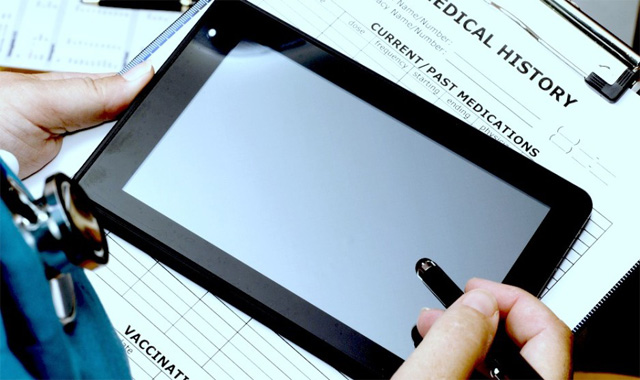
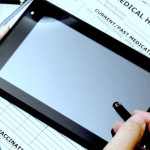
Devices such as dedicated medical tablet computers and software such as self reporting apps can help make patient information widely available instantly and remotely, further improving the efficiency of the proceedings and, in turn, the accuracy of the information in question and the efficacy with which it is stored and organized.
Medical professionals are pillars of modern society, but they often have to fight an uphill battle. Where technology has always excelled is making life easier, and this same logic can be applied to the medical industry in order to save time and energy on paperwork in order to let doctors spend more of their time treating patients and preventing unnecessary contact.


