

























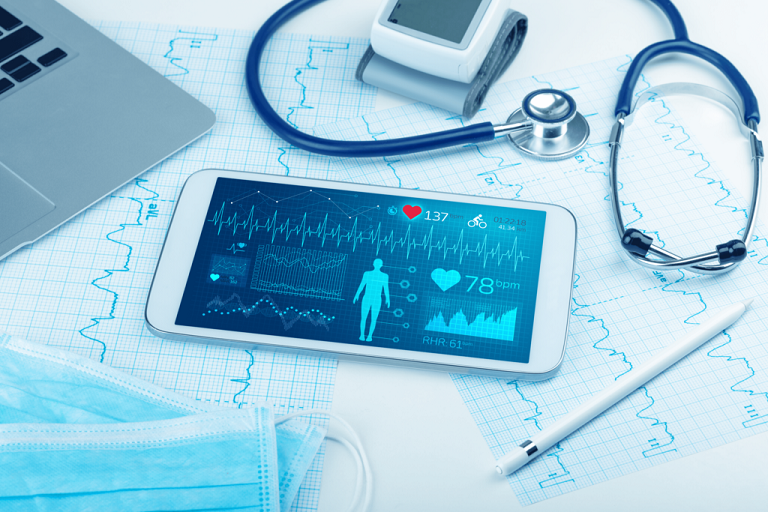
Over the years, technology has improved the way we deliver healthcare to patients. In addition to the increasingly sophisticated medical equipment, doctors can now treat some of their patients remotely and track patient data in real-time. These are just a couple of ways that technology has had a positive impact on patient care, and every day new advances are being made.
Electronic Health Records
For many years, healthcare providers kept patient records in manila file folders. Flipping through the accumulated pages of handwritten notes and lab results was the only way to find what you needed. With the advent of electronic health records, doctors can now find patient information much more quickly, and if they happen to be working in a different office that day, they’ll still have access to the data. In addition to the benefit for healthcare providers, most practices also provide a patient portal, so patients now have access to their medical records and test results as well.
The Internet of Things
You may be familiar with SIRI and Alexa, both voice-activated devices that send commands to other devices or applications over the Internet. Smart home technology is another familiar example. This network of electronic devices is known as the Internet of Things (IoT), and its technology has brought about considerable advances in healthcare. IoT healthcare solutions include wearable technology such as heart monitors, implanted devices including pacemakers, and stationary medical equipment used at home or in the hospital. These electronics allow healthcare providers to monitor their patients no matter where they are, as long as there is Internet service. They can also send trigger alerts and provide real-time data so physicians can act quickly, which may save lives.
Telemedicine
Telemedicine is a method of providing virtual clinical visits via phone or videoconference. It is a service that may, in many cases, eliminate the need for an office visit. Most insurance companies now offer some form of this time-saving service. While people were slow to adopt the idea of telemedicine, the COVID-19 pandemic has generated a considerable increase in its use, because the doctor’s office or emergency room may present the risk of getting them sicker. Depending on the situation, a physician may be able to make a diagnosis, develop a treatment plan and send a prescription order to the pharmacy, all without the patient going to the office. Now that people have begun to see the benefits of telemedicine, providers will likely see increased use of this service.
Mobile App Technology
Technology can also help to keep us healthy by using smartphone applications for weight and fitness tracking, in addition to connecting to IoT devices. There are also apps for relaxation, deep breathing, meditation, soothing background sounds and first-aid information all at your fingertips.
Robotics and 3D Printing
Because of COVID-19, research in robotics has been brought to the forefront recently, as healthcare workers are overburdened and at constant risk of becoming infected themselves. Robots can do simple tasks, such as taking temperatures and disinfecting patient rooms, which reduces healthcare workers’ exposure to sick patients. They can perform complicated tasks as well and are already being used to assist with some surgeries, such as neurosurgery, where maximum precision is critical.
Advances in 3D printing have made it possible to build everything from custom made prosthetic devices to artificial skin. Pharmaceutical companies are now using 3D pill printing to formulate new medicines, and are moving toward offering personalized prescriptions to address patient’s problems with certain medications.
Healthcare delivery has gone through a significant transformation in recent years, much of it the result of new technology. From digitized health records to monitoring devices, medical professionals have more data at their fingertips than ever before. Through online portals, patients finally have direct access to their medical records. We’ll see even more advances in robotics, and 3D printing capabilities in the future as technology continues to influence the healthcare industry.


