

















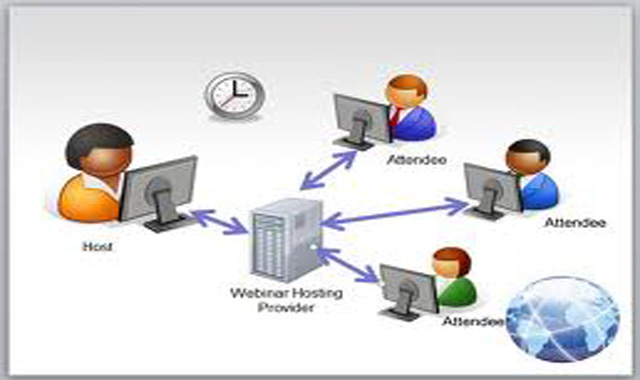


















One of the greatest challenges facing the global healthcare community in the post-COVID-19 era will be to improve the handling of health data to provide better connectivity between health systems that remain fragmented and disjointed. That’s the view of Bernardo Mariano Jr, CIO and director, digital heath and innovation at the World Health Organization, who was speaking during a recent webinar hosted by HIMSS, ‘Accelerating Health Systems’ Digital Transformation: Why Digital Health must be the new standard in a post-COVID-19 world’, which was moderated by HIMSS president and CEO, Hal Wolf.
Mariano said the pandemic had opened up three battle fronts for the future of healthcare: public health security, the rapid development of digital solutions, and cybersecurity. All three must coalesce, with the ideal outcome being a global surveillance system that brings data from multiple countries, enabling a rapid response to future crises, but also using analytics to share learning.
Gold rush
“In the financial sector, data is the new gold,” he said. “In the healthcare sector, data is the new blood. So we need to make sure that we have principles and policies around how we manage and handle it, how we ensure ethics, how we monetise or demonetise health data. How do we ensure that the principles around the management of data address the challenges that we have today?” The answer, said Mariano, lies in taking health data to the next level – to stop being guided by principles rooted in silos, and find ways to draw the data from multiple sources so that we can ensure the algorithms deliver meaningful health gains.
While some countries have achieved a degree of integration that overcomes the information connectivity gap, the community has to find ways to take the lessons of the pandemic forward rather than reverting to pre-COVID models. “Finland is a showcase for how digital systems can help during a crisis,” said Päivi Sillanaukee, director general for the country’s ministry of social affairs and health. She said that when a country has already gone through a discussion about data use, it can be at the core of discovering ways to make that data available for research – and ultimately the development of digital solutions and AI services.
Information gap
Benedict Tan, group chief digital strategy officer at Singapore Health Services, suggested that even during the height of the pandemic, privacy concerns might still be putting the brakes on global collaboration. “Philosophically, I don’t know what is happening on the ground, but I feel that different labs, researchers and countries are working independently,” he said. Imagine the difference, he added, if everyone collaborated and shared data to find a common benefit.
But the acceleration of digital transformation caused by the pandemic has also created a new ‘Wild West’, according to Pravene Nath, global head for digital health strategy, personalised healthcare, at Roche. The shift in selective health data disclosure requirements and governance demands a new framework for what privacy means, and how disclosure should happen – all of which will create new intersections with the data.
Real-world data
The translation of real-world clinical data into regulatory-grade data that can be used to demonstrate the effectiveness of particular treatments could emerge from new partnerships with healthcare entities, said Nath. This will bring new ways of mapping health data, normalising it and building it into standardised data models. “We have to leverage what we’ve been doing, accelerate it and bring it out with real-time data access,” he said.
From a crisis that has generated too much information and no time to process or review it clinically, a new model must emerge that combines patients’ willingness to share health data with a new definition of interoperability that is practical, useful and problem-oriented. Ultimately, said Bernardo Mariano, there is one overwhelming lesson to take away from this pandemic. Globally, we must change our health data policies and change data governance, in order to accelerate the adoption of digital technologies that really delivesr the benefits of closing the information gap.


