






























Exclusive Article by Lindsey Patterson at EMRIndustry.com
How Satellite Technology is Changing the Game
A newborn baby in Benin, West Africa has stopped nursing and is constantly crying. Having limited medical skills and resources, a local healthcare worker turns to Satellite Internet Technology to consult with a skilled pediatrician on a live feed from halfway around the world. The doctor gives the baby a remote examination, discusses the baby’s symptoms and vital signs with the healthcare worker, then makes a diagnosis and prescribes a course of treatment. Using medications and other tools provided by a charitable organization, the healthcare worker treats the baby as prescribed. Within hours the crying newborn is calm, nursing and thriving.
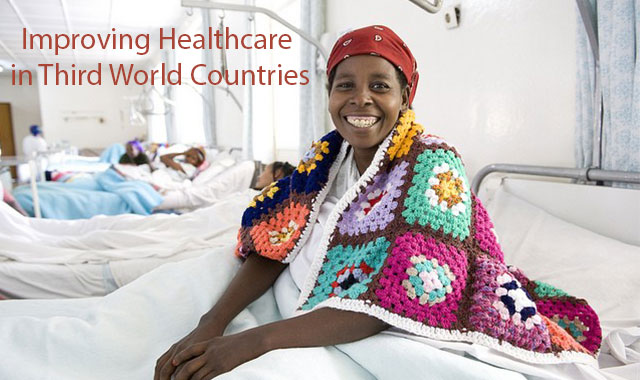
Welcome to the world of the 21st century — a world where Satellite Communications Technology (SCT) and VSAT equipment is dramatically improving the quality of healthcare in third world countries.
Back in 2004, following a comprehensive effort to identify the real-world needs of doctors, the European Space Agency (ESA) concluded that, “…satellite technology has real potential and can be a key element for improving the way medicine is applied today.” The agency then proposed an initiative “to bring forward eHealth and Telemedicine via satellite,” the ultimate goal being “to create and implement a comprehensive telematics platform devoted to Global Health over Satellite.”
Today, a number of organizations rely on Satellite technology to provide better healthcare in third world countries.
Naranya Health, India
Headquartered in Bengaluru, India, Naranya Health is a multi-specialty hospital chain operating in India— a nation with an estimated 400 million impoverished people. From its origins as a massive cardiac care center built on the outskirts of Bangalore in 2001, Naranya Health now boasts a network of over 57 facilities throughout India. Offering medical care in over 30 specialty areas of medicine, including cardiology, oncology, neurology, orthopedics, nephrology, urology, and gastroenterology, Naranya Health is also one of the largest telemedicine networks in the world. Using Skype and other Satellite enabled technologies, the organization has extended its reach to patients in over 100 healthcare facilities throughout India and more than 50 in Africa.
http://www.narayanahospitals.com/about-us/nh-overview
Medecins Sans Frontiers International, Switzerland
(Aka Doctors Without Borders)
From its early beginnings in 1971 in Paris, France, Medecins Sand Frontiers (MSF) — also known as Doctors Without Borders — has grown into a worldwide movement, based in Switzerland and consisting of 23 associations serving over 70 countries across the globe. Founded on the philosophy that poor people in underserved areas deserve more than third-rate medical care, MSF strives to provide high-quality care to patients regardless of race, religion or political affiliation.
Telemedicine via Satellite Communications Technology (SCT) is a key component of MSF’s healthcare delivery system for underserved populations. In a video on the organization’s website
http://blogs.msf.org/en/staff/blogs/house-call-to-chad/video-using-telemedicine-in-our-projects
Dr. Raghu Venugopal, an MD living in Toronto Canada, explains how the MSF telemedicine system is linking healthcare professionals working in remote MSF field hospitals with specialists from around the world to provide expert diagnostic support on patient cases in real time.
To illustrate how the MSF field doctors can access global expertise, Dr. Venugopal shares his experience on a recent visit to the Democratic Republic of Congo. While working in a remote area, Dr. Venucopal encountered a case that went beyond his own skillset, and he used MSF’s telemedicine portal to receive external support.
While examining a 40-year-old woman complaining of serious abdominal pain, Dr. Venucopal performed an abdominal ultrasound examination of the woman’s gall bladder, liver, kidneys and heart. Detecting a number of abnormal white nodules in the woman’s liver, the doctor uploaded a series of ultrasound images to the MSF telemedicine website and sent the images to a radiologist located in the United States. Within 48 minutes the radiologist responded, explaining that the nodules were benign calcifications in the liver that posed no real problem for the patient. Ruling out liver disease, Dr. Venucopal was able to successfully treat the patient. In conclusion, the doctor emphasized that telemedicine technology brings the best medical care to the patients who need it most.
National Centre for Maternal and Child Health (NCMCH), Mongolia
Eight years ago, Mongolian women facing serious pregnancy complications could only get proper treatment at the National Centre for Maternal and Child Health (NCMCH) in Ulaanbaatar, the nation’s capital. Then in 2007, thanks to funding from the United Nations Population Fund (UNFPA) and the Luxembourg Government, a Telemedicine Network began bringing critical maternal healthcare to remote areas throughout Mongolia. Now doctors can consult with specialists, in real time, without ever having to leave the exam room.
http://www.unfpa.org/news/remote-mongolia-telemedicine-connects-pregnant-women-faraway-care
Serving all of Mongolia’s 21 provincial hospitals, the Telemedicine Network has the potential to extend maternal care to some 40,000 Mongolian women each year. The network also provides critical online training and materials to teach doctors and health workers how to diagnose the more complex clinical conditions that pregnant women may present with.
Thus far, hundreds of medical professionals throughout Mongolia have received training through the Telemedicine Network. According to Altanchimeg, a skilled midwife practicing at NCMCH who is quoted in a recent article on the UNFPA website, “Telemedia is a great tool to deliver healthcare and train professionals in the remote areas of Mongolia.”
Thanks to Satellite technology, telemedicine is playing a major role in delivering a higher standard of healthcare to patient populations in third world countries around the globe.


