





























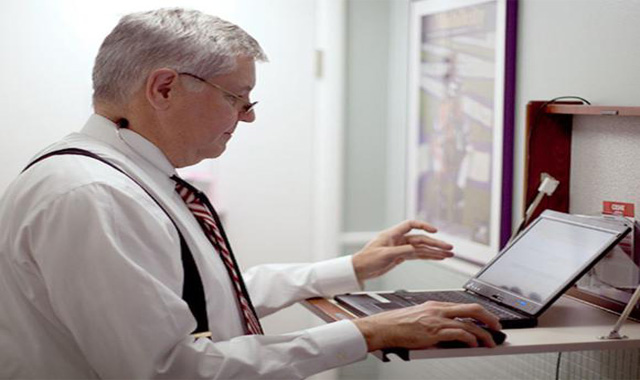
One focus of the ongoing UK health reforms is improving access to the best healthcare for more people.
Technology is a cost-effective and increasingly potent means to connect local clinics with medical centres in large cities and their specialists.
Given the importance of digitising healthcare, there is a need to ensure clinicians, doctors and nurses are kept up to date with technology that can follow them from the hospital room to their office and even to the A&E.
One of the biggest beneficiaries of this emphasis on technology has been electronic health records (EHRs). They, alongside mobile health and telehealth, are changing the way organisations think about their work and care for patients, with the ultimate goal of improve care through technology efficiency.
With EHRs, for example, patients’ health information is available in one place, when and where it is needed. This means that healthcare providers have access to the information they need – at the time they need it most – to make informed decisions.
In addition, by placing accurate and complete information about patients’ health and medical history at their fingertips, they can give the best possible care at the point of care. This can lead to a better patient experience and, most importantly, better patient outcomes.
However, the dismantling of the NHS National Programme for IT (NPflT) in 2011 now means that the NHS no longer provides IT centrally, at a time when more and more hospitals are switching to electronic records.
Decentralising the system has meant that many are now faced with making their own IT decisions and, with no main parent hub, this makes the need for connected infrastructure more important than ever.
System interoperability has also become more of a challenge, with clinical healthcare providers and commissioners needing to know what information to share, how to share it, what it means for coding and structure, and how to get info in i-readable form.
The way forward
To help alleviate some of these problems, companies like HP are already helping to replace static computer systems and cumbersome computer carts in hospitals and care facilities, with the latest mobile solutions such as the HP ElitePad Healthcare Tablet.
These solutions give healthcare personnel the freedom to move about without having to constantly disconnect or log-in, saving valuable time in an industry where time equals lives.
Dependable, high-performance devices are critical in the medical world, where reliance on EHRs, e-prescriptions and clinical workflows help healthcare professionals to deliver the best possible care.
Tablets are another technology being embraced by the healthcare profession; revolutionising the way data is entered, captured and retrieved at the point-of-care. They provide physicians, pharmacists and nurses with up-to-date patient information at their fingertips, and can also help reduce errors.
Equally important, they make it easier for clinicians to review patient records, lab results, and prescription drug information.
However, many of the devices currently in use are not designed for the specific needs of the healthcare industry and, as a result, many organisations end up simply handing the tech over to their employees, regardless of appropriateness.
Therefore, in order to ensure that the profession is getting the products it needs, hardware manufacturers are increasingly collaborating with other leading healthcare companies to develop specialist devices.
One example is the HP ElitePad Healthcare Tablet, which allows users to give patients higher quality care without constraints. Security concerns are addressed via an integrated encrypted smart card reader and an optional fingerprint reader, as well as HP Client Security and HP BIOS Protection solutions to keep the device and data protected.
More than just a device, it has the security, manageability, and support that healthcare organisations require in their IT environments.
Technology today affects every single aspect of modern society. In fact, there isn’t an industry out there that hasn’t been affected by the hi-tech revolution. Nowhere is this immense impact more apparent than in the field of medicine and healthcare.
It is clear that technological breakthroughs are revolutionising the way healthcare is being delivered and that modern technology, from device to records, has changed the structure and organisation of the entire medical field.


