






Hospital-acquired infections cause a significant number of morbidity and mortality every year. As a result, more efforts are being put into adopt infection control practices that can strengthen the healthcare infrastructure. These practices can prevent, monitor,and manage transmission of diseases from patients to staff, patient-to-patient, or among the staff working at different healthcare facilities. The practices are basically grounded in social science, epidemiology, infectious diseases, and healthcare system in general.Transmission of germs through poor hand hygiene is a huge threat, especially among emerging countries. According to the experts, the top leaders in the global infection control market are big on innovation and managing the prices to make preventive measures affordable for all.
Trends in Infection Control and Healthcare
Lack of hand hygiene can lead to transmission of fatal infections like weak immune system, Ebola epidemic, and antibiotic resistant germs. The types and effects of hospital borne diseases don’t change overnight but the way they are dealt with has definitely evolved. Rapid adoption of healthcare IT has changed the scenario over the past few years. Governments and non-governmental bodies from around the world are adamant on infection control practices. This reflects on the policy reforms, stringent safety and hygiene regulations, and rising investments in infection prevention programs. Here are the top trends observed in this rapidly growing industry:
Telehealth
The vast healthcare sector has always been in need for centralization of services, facilities, and processes. Telehealth makes healthcare economically viable and achieve lean management of different aspects of advanced health and well being services. Shared electronic healthcare records and telecommunication technology make access to infection control programs manage on various levels. Another extremely essential advantage of telehealth services is the reduced number of patients physically accessing the hospitals. Research suggests that this trend automatically controls the prevalence of hospital-acquired infections. Trends like this can drive the adoption of advanced technologies for convenient and effective healthcare.
Virtual Reality
The advent of augmented and virtual reality in healthcareis proving to be a big boon as far as infection control is concerned. The healthcare infrastructure and functioning is undergoing developments around the augmented reality (AR) and virtual reality (VR) technologies. These technologies will allow infection control experts implement initiatives like medical waste management, terminal cleaning, and hand hygiene among other activities to control infections.The technology is also anticipated to play crucial role in terms of design and architecture of the hospitals that will be built in the near future. Experts suggest that the hardware devices will witness steady rise in demand and deployment in near future.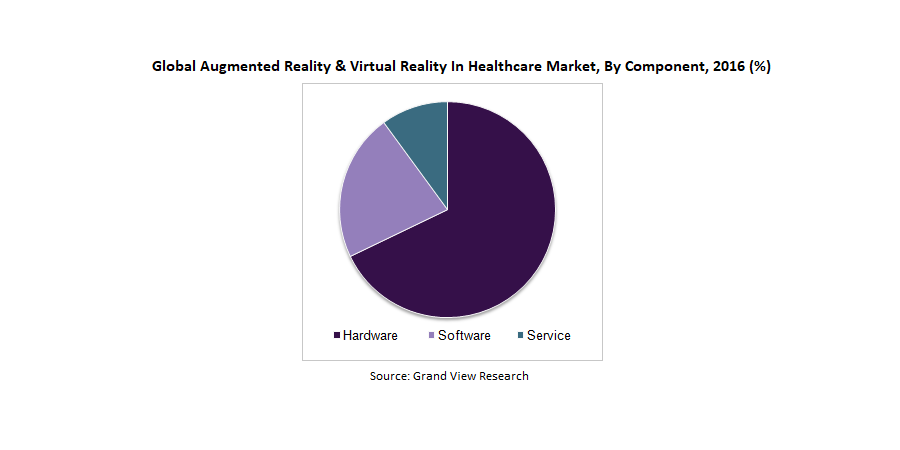
Retail vs. Clinics
Convenience of consumers—patients is paramount for the healthcare sector. As a result, more and more organizations are adopting retail clinics instead of the conventional micro-clinics. This practice is expected to positively influence infection control as it will prevent transmission of pathogens due to the environmental control practices. This is possible through the new mode of operations that creates boundaries between retail and clinic environments.
Future Business Opportunities
Experts are of the opinion that innovation is the major aspect dictating infection control practices in the global healthcare industry. Introduction of advanced sterilization equipment in hospital settings can prevent transmission of various life-threatening infections. Adoption of electronic monitoring systems to monitor hygiene practices and sanitization compliance is anticipated to work in favor of successful implementation of infection control programs. Among the key focus areas for the providers operating in the market are hand hygiene, sterilization, injection safety, disinfection, and cleaning. Technological advancements and rising awareness are anticipated to create growth opportunities for the key players in the years to come.
According to a report published by Grand View Research, Inc.; the global infection control market is expected to reach past a valuation of around USD 258.3 billion by the year 2025. The market is anticipated to witness a steady CAGR around 6.2% throughout the forecast period. (2018 to 2025). In the recent past, hospitals was the largest end-use segment. It is also projected to witness the fastest growth in terms of CAGR in the forthcoming years. Among the type of infection control products, consumables led the overall market in terms of market share due to rising adoption for disinfection and sterilization among other infection control procedures.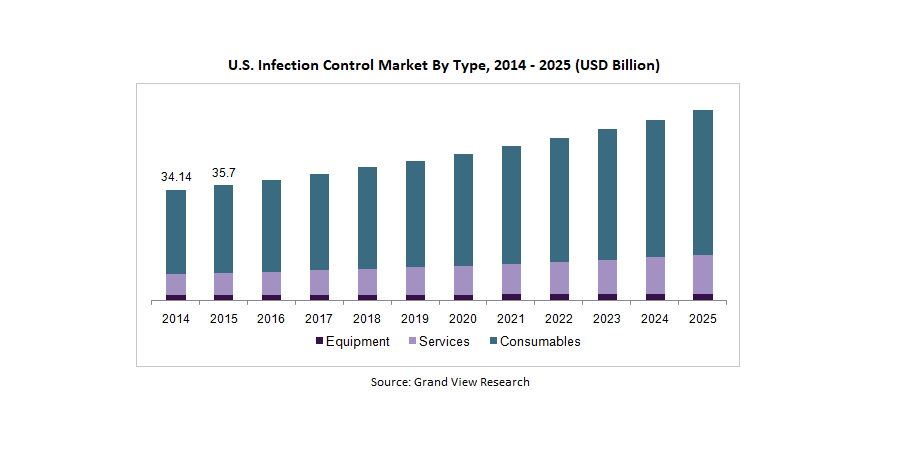
Another trend observed among major companies like Advanced Sterilization Products, Cantel Medical Corporation, Kimberly-Clark Health Care, 3M, STERUS Corporation is outsourcing. Most companies are targeting developing regions like Asia Pacific and Middle East and Africa to establish lasting and collaborative partnerships to introduce better infection control services.In conclusion, updated approaches and advancing technologies are anticipated to present healthier facilities to implement infection control in the most effective manner.
Author Name:
Rucha Kamdi
Author Bio:
Rucha works in the capacity of team leader at Grand View Research and manages over 12 researchers and analyst. She has done her masters in business administration (marketing). Backed by bachelors degree in pharmaceutical sciences and over 8 years of industry experience, Rucha has a track record in market estimation, custom & syndicate research and consulting. Rucha has more than 100 research studies under her belt from biotechnology, pharmaceuticals, Healthcare IT industry, and medical devices, that includes infection control domain analysis for developed and emerging economies across the globe.
Author Image: