

















































Events Calendar

Mon
Tue
Wed
Thu
Fri
Sat
Sun
M
T
W
T
F
S
S
28
29
30
31
1
2
3
4
5
6
9
10
12
16
17
19
22
23
27
29
30
1
10th Asian Conference on Emergency Medicine (ACEM 2019)
ABOUT 10TH ASIAN CONFERENCE ON EMERGENCY MEDICINE (ACEM 2019) It is a great pleasure and an honor to extend to you a warm invitation to [...]
APAPU SPUNZA Conference 2019
2019-11-08 - 2019-11-10    
All Day
ABOUT APAPU/ SPUNZA CONFERENCE 2019 We look forward to welcoming you to the combined APAPU/ SPUNZA meeting in Perth – the first time the event [...]
2nd World Cosmetic and Dermatology Congress
2019-11-11 - 2019-11-12    
All Day
ABOUT 2ND WORLD COSMETIC AND DERMATOLOGY CONGRESS 2nd World Cosmetic and Dermatology Congress is going to be held at Helsinki, Finland during November 11-12, 2019. International Congress on Cosmetic [...]
Global Experts Meet on Advanced Technologies in Diabetes Research and Therapy
2019-11-11 - 2019-11-12    
All Day
ABOUT GLOBAL EXPERTS MEET ON ADVANCED TECHNOLOGIES IN DIABETES RESEARCH AND THERAPY It is an incredible delight and a respect to stretch out our warm [...]
Global Congress on Cancer Immunology and Epigenetics
2019-11-13 - 2019-11-14    
All Day
ABOUT GLOBAL CONGRESS ON CANCER IMMUNOLOGY AND EPIGENETICS Epigenetics Conference, The world’s largest Epigenetics Conference and Gathering for the Research Community. Join the Global Congress [...]
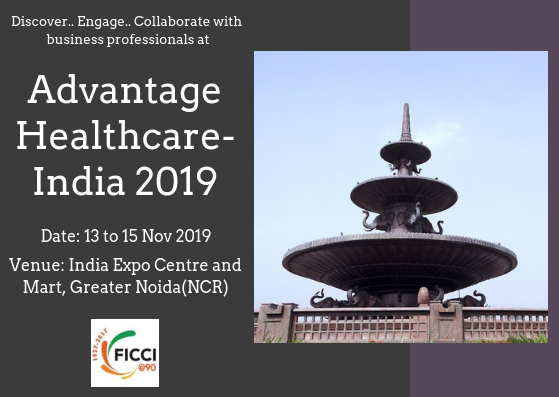
Advantage Healthcare-India 2019
ABOUT ADVANTAGE HEALTHCARE-INDIA 2019 ADVANTAGES OF HEALTHCARE AND WELLNESS INDUSTRY IN INDIA: State of the art Hospitals with Excellent Infrastructure Largest pool of Highly qualified [...]
4th International Conference on Obstetrics and Gynecology
2019-11-14 - 2019-11-15    
All Day
ABOUT 4TH INTERNATIONAL CONFERENCE ON OBSTETRICS AND GYNECOLOGY Theme: Current Breakthroughs and Innovative Approaches towards Improving Women’s Reproductive HealthIt’s our pleasure to invite all the [...]
Encompass Health at AAPM&R 2019 in San Antonio
2019-11-15 - 2019-11-17    
All Day
Encompass Health at AAPM&R 2019 in San Antonio San Antonio, Texas Nov 14, 2019 11:00 a.m. CST Headed to AAPM&R’s 2019 Annual Assembly? Swing by [...]
7th Annual Congress on Dental Medicine and Orthodontics
ABOUT 7TH ANNUAL CONGRESS ON DENTAL MEDICINE AND ORTHODONTICS Dentistry Medicine 2019 is a perfect opportunity intended for International well-being Dental and Oral experts too. [...]
ABOUT MEDICA 2019
2019-11-18 - 2019-11-21    
All Day
ABOUT MEDICA 2019   MEDICA is the world’s largest event for the medical sector. For more than 40 years it has been firmly established on [...]
7th Annual Congress on Dental Medicine and Orthodontics
2019-11-18 - 2019-11-19    
All Day
ABOUT 7TH ANNUAL CONGRESS ON DENTAL MEDICINE AND ORTHODONTICS Dentistry Medicine 2019 is a perfect opportunity intended for International well-being Dental and Oral experts too. [...]
20 Nov
2019-11-20 - 2019-11-21    
All Day
  Connected Insurance: The USA’s Premier Gathering Defining the Future of Insurance Since the year 2000, 50 percent of the Fortune 500 companies have disappeared [...]
International Conference on Pathology and Infectious Diseases
2019-11-21 - 2019-11-22    
All Day
ABOUT INTERNATIONAL CONFERENCE ON PATHOLOGY AND INFECTIOUS DISEASES Infectious disease 2019 gathers the world’s leading scientists, researchers and scholars to exchange and share their professional [...]
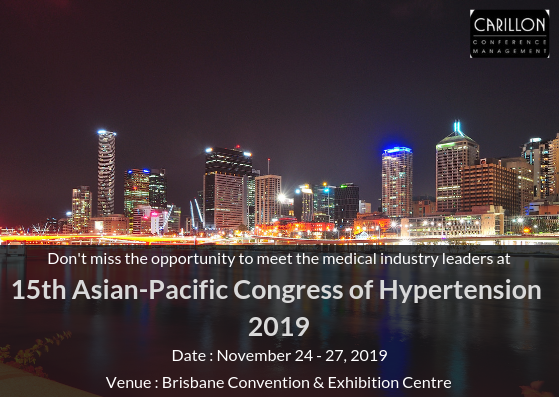
15th Asian-Pacific Congress of Hypertension 2019
2019-11-24 - 2019-11-27    
All Day
ABOUT 15TH ASIAN-PACIFIC CONGRESS OF HYPERTENSION 2019 The Asian-Pacific Society of Hypertension will hold the 15th Asian Pacific Congress of Hypertension (APCH2019) in Brisbane, Australia, [...]
18th Annual Conference on Urology and Nephrological Disorders
2019-11-25 - 2019-11-26    
All Day
ABOUT 18TH ANNUAL CONFERENCE ON UROLOGY AND NEPHROLOGICAL DISORDERS Urology 2019 is an integration of the science, theory and clinical knowledge for the purpose of [...]
2nd World Heart Rhythm Conference
2019-11-25 - 2019-11-26    
All Day
ABOUT 2ND WORLD HEART RHYTHM CONFERENCE 2nd World Heart Rhythm Conference is among the World’s driving Scientific Conference to unite worldwide recognized scholastics in the [...]
Digital Health Forum 2019
ABOUT DIGITAL HEALTH FORUM 2019 Join us on 26-27 November in Berlin to discuss the power of AI and ML for healthcare, healthcare transformation by [...]
2nd Global Nursing Conference & Expo
ABOUT 2ND GLOBAL NURSING CONFERENCE & EXPO Events Ocean extends an enthusiastic and sincere welcome to the 2nd GLOBAL NURSING CONFERENCE & EXPO ’19. The [...]
International Conference on Obesity and Diet Imbalance 2019
2019-11-28 - 2019-11-29    
All Day
ABOUT INTERNATIONAL CONFERENCE ON OBESITY AND DIET IMBALANCE 2019 Obesity Diet 2019 is a worldwide stage to examine and find out concerning Weight Management, Childhood [...]
Events on 2019-11-07
Events on 2019-11-08
Events on 2019-11-13
Events on 2019-11-14
Events on 2019-11-15
Events on 2019-11-20
20 Nov
20 Nov 19
Chicago
Events on 2019-11-21
Events on 2019-11-24
15th Asian-Pacific Congress of Hypertension 2019
24 Nov 19
Merivale St & Glenelg Street
Events on 2019-11-26
Digital Health Forum 2019
26 Nov 19
Marinelli Rd Rockville
Events on 2019-11-28
Articles

Instructions to Manage an EMR Implementation

emr implementation

The use of electronic medical records (EMR) can have a transformational effect on health care in the United States. As more medical practices implement EMR systems, it is possible to use data to coordinate care, reduce inefficiencies and improve quality of care. There are some basic steps for managing an EMR implementation in a primary care setting.

Instructions:

Planning

1. Decide on an end goal. Before starting any EMR implementation project, your medical practice must have clear and realistic expectations about goals and priorities. Use this framework to create an implementation plan that will best meet your needs.

2. Build a multidisciplinary planning and implementation team. The team can make or break an implementation. A physician or other clinician should have a lead role on the team, ensuring that there is buy-in among the clinical staff and that implementation decisions are in line with patient care.

3. Evaluate your practice. It is important to collect current and historical information about patient demographics, practice patterns, finances, staff composition and other key data. This allows you to refine your goals and expectations and identifies some of the potential areas of your practice that need to be redesigned using an EMR system.
4. Evaluate your practice workflow. Implementation of an EMR always involves “remodeling” practice procedures and physical space. Evaluating the existing daily patterns will help you identify the best possible design for the new system.
5. Do your homework before selecting an EMR product vendor. Use your planning framework to clearly identify the key goals and outcomes your expect from a system and prioritize functions accordingly. In addition, there are some trusted entities that can provide reliable guidelines to vendor selection. The Institute of Medicine has issued a list of key functions for all EMR systems. The Certification Commission for Healthcare Information Technology certifies EMR systems. In addition, medical societies and associations also often provide guidance to members who are considering EMR implementation.
6. Install the physical infrastructure required for EMR. This might include wiring, wireless capability, computer stations, laptops and servers.

7. Test that the hardware, wiring and network are working properly. It is better to take time in advance to verify that all components are functional than to start an implementation, only to find that there are hardware problems.

8. Conduct ongoing computer training for staff at all levels of the organization. Implementing a standardized training checklist is often the best way to ensure that all staff have the knowledge and capability they need to begin the EMR implementation process. This is also a good time to solicit staff feedback about potential problems or ideas to improve the process. It is critical that the staff team be working well together and understand expectations before beginning to use the new system.

9. Establish and communicate protocols for system use and for information exchange. Staff should be clear about privacy rules and how they interface with the new system.

10. Continue to provide training based on earlier staff feedback. As more staff train and practice with the system, more details will emerge that require modification. Now is the time to make changes to proposed workflow plans and protocols.

11. Test add-on programs or modules to make sure the system is functioning smoothly. For example, electronic prescribing and other tools are often extra modules that interface with the main system.

12. Communicate with your patients. Now is the time to “warn” your patients that your practice will be undergoing a big change and that workflow may be slowed or interrupted. Patients will likely be more understanding if they know what to expect.

13. Install and test the system software. At least a few days prior to the “go live” date when the system will be up and running the first time, do a real-time run through with staff. Some practices use staff as stand-in patients to test the system in as realistic conditions as possible. This is your last chance to work out any bugs before using the system with real patients.

14. Pre-load some data for patients who have appointments in the first few weeks. This will reduce some of the stress on the first day of EMR use.

15. Make sure your patients are aware that everyone is in learning mode and that things will smooth out once staff become accustomed to the new system.
16. Continue team meetings to solicit ongoing feedback. Even the smoothest implementation will require some continual modifications until the system works for everyone. It is important to keep the implementation team intact even after the initial rollout to maintain staff morale and help make necessary modifications.

17. Evaluate workflow. It is impossible to anticipate every detail of the workflow changes required to implement an EMR system. Ongoing evaluation and staff feedback are important in order to make modifications along the way.


18. Continue communicating with your patients. There will always be glitches with any new system. The best way to prevent problems is to keep patients well informed, reassure them that staff are working hard to create an efficient system of care and that patience is appreciated.
