




















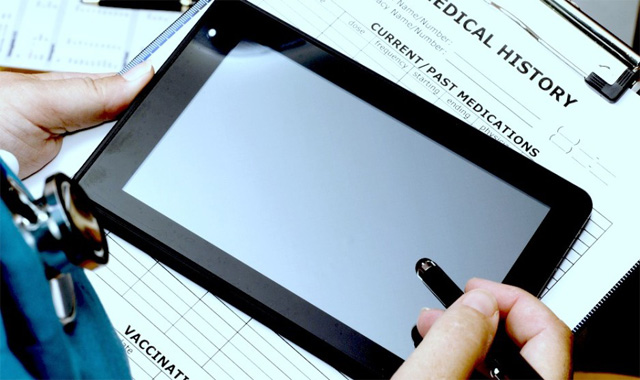





















The electronic medical record is one example of why managers should ask themselves a crucial question about big data at the start of every new project. Mary Shacklett reveals that question.
There are few better uses for big data and analytics than their potential role in medical predictive analysis and the betterment of healthcare outcomes. Central to this effort is the electronic medical record (EMR), a daunting attempt to reconcile medical records across hospitals, clinics, physicians’ offices, and labs.
The promise of a universal EMR is that a patient can be treated anywhere because any healthcare provider will have complete access to the patient’s medical history including prescriptions. If the EMR works as hoped, medical mistakes (which kill approximately 100,000 people in the U.S. annually) can be reduced.
Equally important is the ability to run analytics on data that is both transactional and unstructured.
“In the cloud, we can analyze patient histories and outcomes from hundreds of healthcare institutions and come up with predictive analytics for various scenarios,” noted Charles Lougheed, CEO of Explorys, a healthcare analytics service.
However, getting the EMR to work as advertised so that it not only feeds big data but also facilitates productive business processes is no small matter.
Doctors are considered major resisters to EMR adoption. They complain that the requirement to type on-the-spot information into the EMR hampers their ability to interact with patients and interrupts the logical flow of patient interactions. Some doctors are becoming more anxious about their performance bonuses getting tied to their use of the EMR. Another concern of some doctors is what appears to them to be the wholesale elimination of valuable patient paper records that are not being scanned into new systems so they can be used as data.
There appears to be persisting disconnects between facilitating the EMR and supporting the dynamics of doctor and patient interactions. And if we are to capitalize on long- and short-term healthcare analytics derived from big data (as well as the introduction of automated diagnostic tools), there is the argument that paper healthcare records should not simply be discarded. In fact, including the paper records in a system conversion would very likely lead to more accurate diagnoses for patients with well-chronicled medical histories and contribute significant value to long-term healthcare trends analysis.
This is not to say that the EMR won’t ultimately fulfill its promise. However, it does raise the question of whether healthcare institutions, in a race to meet deadlines and regulatory requirements, aren’t limiting the informational richness of new systems by not incorporating older data from paper records that might be critical for longer-term healthcare analytics. In this sense, the ultimate question becomes: Should big data (and its harnessing and analytics) be a consideration for every project? If the answer is yes, additional tasks and longer project timelines will likely be needed.
You should weigh the pros and cons of orchestrating projects for big data efforts with your business sponsors and then make your decisions. Meanwhile, the EMR has shown us that there is a big data question that should be asked for every new system project. Source


