

































At first thought, medical records may not seem like the most exciting topic. But, wait. There is more to medical records than you may think. In fact, as we wrote a few months ago in our first post on why and how Jacaranda Health is redesigning our medical records, “medical records are getting a lot of buzz these days.”
Our first post noted that most medical records are poorly designed. It’s why, at Jacaranda, we wanted to look at what makes a solid, useful medical record – on paper. As we make the move towards electronic medical records (EMR), it was important that we looked at how we use the records and what we’ve learned thus far from designing, producing, and rolling out our new medical documentation.

First, a quick update. We have had our re-designed medical records in place for nine months now, and document every consultation. Our clients also carry an abbreviated medical record card that is updated at every visit, to encourage continuity of care and improve communication between ourselves and other facilities at which our clients may seek care. Our records primarily consist of checklists and prescribed options, and minimize writing freely without clear guidelines, and this has allowed us to transfer the records fairly seamlessly from paper to an EMR (watch out for a separate blog on this, coming soon).
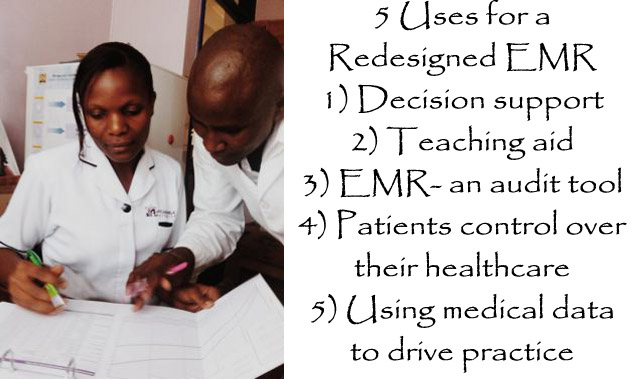
There are five ways that we use medical records to improve care for our clients:
1) Decision support
Our medical records include quick guides and instructions based on our protocols: for example, how often to check vital signs, at what age to administer specific immunizations, etc. The inclusion of these guidance points have been instrumental in providing high-quality care.
For example, through discussions with staff we learned early on that nurses were under the impression that providing quality care meant providing all patient education and information in one visit. This is particularly relevant for resource-constrained environments where women often do not attend the recommended four antenatal care visits. We have worked with our clinical staff to segment, pick, and choose the essential information to be covered during the ANC period, and indicate what education and information should be shared with patients at which antenatal visit. This has allowed us to streamline our consultations, and tailor the information that patients get. They are not overwhelmed by information at any one visit, nor do they have the same information repeated at every visit.
2) Teaching aid
As a part of our continuing medical education program for our workforce, Jacaranda runs weekly case reviews, monthly clinical teaching, and regular morbidity and mortality analyses. All of these are entirely dependent on the medical record. Through the medical documentation we are able to follow a patient’s clinical path at Jacaranda, identifying the points of good quality care that were provided, and the times at which individual or process-level factors led to failings in their care. Identifying these factors allows us to address them immediately, and prevents other patients facing the same difficulties. For instance, case reviews based on our medical records have indicated occasional significant variance in the management of patients due to ambiguous terminology within our clinical protocols. By immediately re-wording these protocol, we are able to ensure that all our clients consistently receive the same high-quality care from all our staff at Jacaranda facilities.
3) “If it wasn’t documented, it wasn’t done”: The medical record as an audit tool
Regular audits of our medical records allows us to check for documentation completeness and adherence to protocol, and address areas of consistent errors. Through individual and group feedback sessions using data from our documentation audits, we are able to reinforce the mantra “If it wasn’t documented, it wasn’t done”.
4) Giving patients control over their healthcare
As we mentioned previously, part from the facility based records, Jacaranda has developed an abbreviated medical record card for our patients to carry with them. These records are updated at each consultation, and carry basic essential clinical information from each consultation, essential education, and important health tips and advice. The card was developed with a focus on patient-centered care, and empowers patients to take control of their healthcare both through knowledge of danger signs and other health topics as well as highlighting for them what aspects of care they should expect to have addressed at each consultation.
5) Using medical data to drive practice
As a part of our Quality Improvement efforts, we have put systems in place to continuously assess our processes and outcomes. Data including patient demographics, clinical metrics, and flow trends allow us to provide our workforce with tangible evidence of areas of strength and weakness in our clinical practice, and help management to set and monitor goals to work towards in improving the care we provide. An ongoing example of this is our referral records – by tracking the timing and types of our referrals to other, higher-level facilities, we have been able to identify service areas that we could provide internally, preventing the need for referral. These types of services areas include PMTCT, ultrasound, comprehensive laboratory services, cervical see and treat services, and paediatric consultations.
These are just a few of the many lessons we have learned in the past year as we continue to roll out and improve our medical records. Redesigning the medical record is an important part of ensuring that Jacaranda is doing all we can to consistently innovate, provide excellent care to the women who need it, and ultimately contribute to improving and saving lives. Share your ideas, below, for redesigning medical records. What works for you? What doesn’t?


